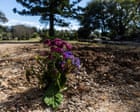
History is rarely written in books. Sometimes, it is simply paved over.
Imagine standing at the edge of an ordinary patch of earth, perhaps near an overgrown fence line or beneath the indifferent shade of a suburban park. To the casual passerby, it is nothing more than dirt, grass, and the quiet rustle of leaves. But beneath that thin crust of topsoil lies something sacred, forgotten, and profoundly fragile. Here rest the bones of the nameless, the poor, the institutionalized, and the overlooked—those who slipped through the safety nets of their own eras and were laid to rest in communal graves.
For generations, society operated on an unspoken bargain: when a life ended without the means for a proper funeral, the state would handle the rest. Yet "handling the rest" frequently meant quiet burials in mass trenches, unmapped and unmarked. Over time, those plots faded from memory. Municipalities expanded. Subdivisions crept outward. Parking lots paved the grief away.
Then, the revelations surface.
In New South Wales, a sudden, urgent review has been triggered following harrowing discoveries about the state of these communal resting places. Advocates, historians, and descendants are speaking out, demanding answers not just from local authorities, but reaching all the way to the Prime Minister's office. The core question is stark: how did we allow the dead to become invisible twice?
To understand the weight of this moment, we have to look past the bureaucratic language of government reviews and press releases. We have to look at what it means to be forgotten.
The Architecture of Erasure
Let us walk through a hypothetical afternoon in the archives.
A local historian—call her Margaret—bends over a yellowed, water-stained ledger from the late nineteenth century. The ink is iron gall, faded to a ghostly brown. Pages rustle with the dry sound of autumn leaves. Column by column, she traces the entries: name, date, cause of death, and a plot number that no longer exists on any modern map.
Plot 402. Unknown male. Approximate age: 30.
Plot 403. Infant. Paupers’ section.
In many historical municipal cemeteries, communal graves were not peaceful churchyards with weeping willows and polished marble. They were utilitarian solutions to an administrative problem. Bodies were placed close together, sometimes stacked, in municipal land set aside because it held no commercial value. When the space filled up, the records were often filed away and left to mould in damp basements.
Over decades, municipal boundaries shifted. Record-keeping systems transitioned from handwritten paper ledgers to fragmented digital databases, and in the shuffle, entire sections of cemeteries vanished from active oversight. Maintenance budgets dried up. Fences rusted and fell. Brush took over.
When modern construction crews accidentally unearth human remains during infrastructure upgrades, the shock isn't just about the sudden halt of a project. It is the jarring realization that our modern feet are treading daily upon ground that was never formally respected, properly closed, or adequately preserved.
This is why the NSW review matters. It is an attempt to reconstruct a shattered mirror, piecing together the identities of people who were discarded simply because they died poor.
The Human Cost of Silence
We like to think of death as an equalizer, but in the archives of communal graves, inequality followed people straight into the earth.
Consider the emotional resonance for modern descendants. Even if a family lost touch with an ancestor generations ago, the human instinct to mourn, to visit, and to acknowledge a life lived remains hardwired into our psychology. When a grave is unmapped, that pathway is permanently severed. There is no headstone to touch. There is no specific earth to stand upon.
Instead, there is a generalized void.
When news breaks of neglected or compromised burial sites, the grief ripples outward. It affects Indigenous communities whose ancestral burial grounds were routinely desecrated or ignored by colonial expansion. It affects immigrant families whose forebears arrived with nothing, died in public hospitals, and were interred quietly without ceremony.
The public outcry is not merely driven by sentimentality. It is driven by a deep moral intuition: a society is judged by how it treats the most vulnerable, and that standard does not stop at the moment of expiration. If we allow the dead to be treated as waste products of municipal bookkeeping, we erode the very empathy that binds the living together.
Public pressure has steadily mounted, pushing leaders to move past defensive stonewalling. Calls directed at the Prime Minister and state premiers are demanding standardized national frameworks for historical cemetery preservation, comprehensive ground-penetrating radar surveys of suspected sites, and strict legal protections preventing future commercial encroachment on communal burial grounds.
Turning the Page
Change, when it finally arrives, is rarely clean. It comes wrapped in committee reports, legislative amendments, and uncomfortable admissions of past institutional neglect.
The urgent review commissioned in New South Wales is a step toward daylight. It forces local councils and state agencies to audit their own histories, reconciling lost maps with physical reality. It requires technological investment—using modern geophysical imaging to peer beneath the turf without disturbing the resting dead, mapping the contours of forgotten trenches with forensic precision.
Yet legislation and radar can only do half the work. The rest belongs to us.
We have to retrain our vision. We must look at our parks, our industrial borders, and our expanding cities with a heightened awareness of the layers beneath our feet. Every city is a palimpsest, written over again and again by those who came before us.
When we ignore the communal graves of the past, we practice a form of cultural amnesia. We pretend that our comfort today was not built upon the anonymous struggles of those who endured the epidemics, economic depressions, and social abandonments of yesterday.
The ground beneath us is holding a conversation we have spent decades ignoring. Now, the voices are getting too loud to tune out.
The review will run its course. Headlines will shift. But the earth remains, keeping its quiet watch over the history we tried to forget, waiting for us to finally learn how to look down.