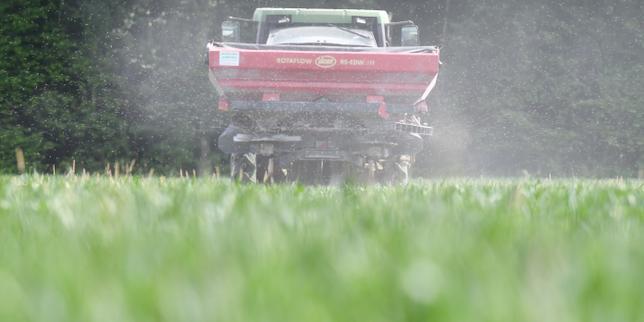
If you think the tension in the Persian Gulf is just about oil prices or tanker seizures, you're missing the most dangerous part of the story. It's about what’s on your dinner plate. Specifically, it's about the massive, invisible supply chain of nitrogen and phosphate fertilizers that keeps global agriculture from collapsing.
When Iran threatens to close the Strait of Hormuz, they aren't just squeezing the world’s fuel supply. They’re effectively holding a knife to the throat of global food security. I’ve watched commodity markets react to Middle Eastern instability for years, and the pattern is always the same. We focus on the price at the pump while ignoring the fact that without the chemical precursors flowing through that narrow waterway, crop yields would crater within a single season.
It’s a brutal reality of the modern world. We’ve traded regional self-sufficiency for a hyper-efficient, high-yield system that depends entirely on a few volatile geographic chokepoints. Iran knows this. They understand that fertilizers are the ultimate geopolitical lever.
The nitrogen trap and Iranian leverage
Most people don't realize that Iran is a massive player in the fertilizer world. They aren't just selling crude oil. They're one of the largest producers of urea and ammonia in the region. These aren't just chemicals. They're the literal building blocks of life for the corn, wheat, and soy that feed the planet.
Making nitrogen-based fertilizer requires incredible amounts of natural gas. Iran sits on some of the largest gas reserves on earth. This gives them a massive competitive advantage. When sanctions hit or when conflict flares, that supply doesn't just disappear from the Iranian economy. It vanishes from the global market.
I’ve seen how this plays out in real-time. If Iranian urea exports get blocked, prices don't just go up by a few percentage points. They skyrocket. Farmers in Brazil, India, and across Europe suddenly find themselves priced out of the market. When they can't afford to fertilize their fields, the next harvest is smaller. Prices at your local supermarket go up six months later. It’s a slow-motion car crash that starts in a 21-mile-wide strip of water.
Why the Strait of Hormuz matters for phosphate
While nitrogen is about gas, phosphate is about logistics. A huge chunk of the world’s phosphate rock and processed fertilizer moves through the Gulf. We’re talking about millions of tons of material every year.
The Strait of Hormuz is the world's most important energy chokepoint, but it's also a food chokepoint. About 20% of the world's liquefied natural gas (LNG) and a significant portion of the sulfur used to process phosphate move through here. If the Strait closes, the production of "green" and "gray" fertilizers across the entire Middle East comes to a grinding halt.
It’s not just about Iranian production. It’s about the neighbors. Saudi Arabia, Qatar, and the UAE are all massive exporters of fertilizer components. They all rely on the Strait. A conflict involving Iran doesn't just isolate one country. It paralyzes the entire region's ability to help feed the world.
The Brazil connection you probably missed
If you want to see who’s really sweating when Iran makes a move, look at Brazil. Brazil is an agricultural superpower, but it's also an import junkie. They import nearly 85% of their fertilizer.
Iran has been a key supplier of urea to Brazil for years. In exchange, Brazil sends corn and soybeans back to Tehran. It's a "food for fertilizer" swap that keeps both nations afloat. If a war breaks out, this trade route dies instantly.
Imagine the impact. Brazil is the world’s top exporter of soybeans, beef, and poultry. If their farmers can’t get Iranian urea, the global supply of protein takes a massive hit. You’re not just paying more for bread. You’re paying more for every burger, every chicken wing, and every carton of eggs. The chain of events is direct and unforgiving.
Natural gas as a weapon of mass hunger
We need to stop thinking about natural gas as just something that heats homes. In the context of the Middle East, gas is the raw material for food. When Iran threatens to disrupt the flow of gas or shutter its own plants due to conflict, they’re engaging in a form of economic warfare that targets the most vulnerable people on earth.
The Haber-Bosch process, which turns gas into fertilizer, is responsible for feeding about 50% of the current global population. That’s not a typo. Half of us are only here because of synthetic nitrogen.
When the Persian Gulf becomes a war zone, that process breaks. Even if the plants aren't bombed, the insurance rates for tankers become so high that shipping the product becomes a nightmare. I’ve seen shipping companies refuse to enter the Gulf during periods of high tension. When the ships stop moving, the soil stops getting the nutrients it needs.
The hidden cost of regional instability
Conflict in Iran doesn't just mean higher prices. It means supply chain shifts that take years to fix. If the world decides to "de-risk" from Middle Eastern fertilizer, where does it go?
Russia? They're already under heavy sanctions and using their own fertilizer exports as a political tool.
China? They’ve started restricting exports to keep their internal prices low.
The options are thin. This is why the Iranian situation is so precarious. We’ve built a global food system that relies on a handful of actors who don't necessarily like each other. The "efficiency" of the global market has created a terrifying lack of "resilience." One wrong move by a commander in the Revolutionary Guard, and a farmer in Iowa or a family in Cairo feels the pain.
What happens if the Strait actually closes
Let’s be direct. If the Strait of Hormuz is blocked for any significant amount of time, we aren't just talking about a recession. We’re talking about a global food crisis that would dwarf the 2022 price spikes.
Nitrogen fertilizer prices would likely triple overnight. Supply chains would scramble to find alternatives that don't exist in the necessary volumes. We’d see immediate export bans from other producing nations as they try to protect their own food security.
It's a domino effect. The lack of fertilizer leads to lower yields. Lower yields lead to higher food prices. Higher food prices lead to social unrest. We saw this during the Arab Spring, and we’ll see it again. Food is the ultimate political stabilizer. Iran knows that by threatening the Strait, they’re threatening the stability of every government that depends on cheap imports.
Breaking the dependency cycle
It’s easy to feel helpless when looking at these maps, but there’s a movement toward changing how we handle this risk. Smart farmers are starting to look at precision agriculture to reduce their fertilizer needs. We’re seeing more investment in "green ammonia," which uses renewable energy instead of natural gas.
But these changes take time. We don't have a decade to wait if a conflict erupts next month. The immediate reality is that we're tethered to the geopolitical whims of the Iranian regime and the safety of the Strait of Hormuz.
You can take action by diversifying where you get your information and understanding that the "news" about the Middle East is always "news" about your wallet. Support local food systems where possible. Advocate for national policies that prioritize domestic fertilizer production and nutrient recycling. The less we depend on a single 21-mile stretch of water, the safer our dinner tables will be. The era of ignoring the chemistry of geopolitics is over. Start paying attention to the ships in the Gulf, because they're carrying your next meal.