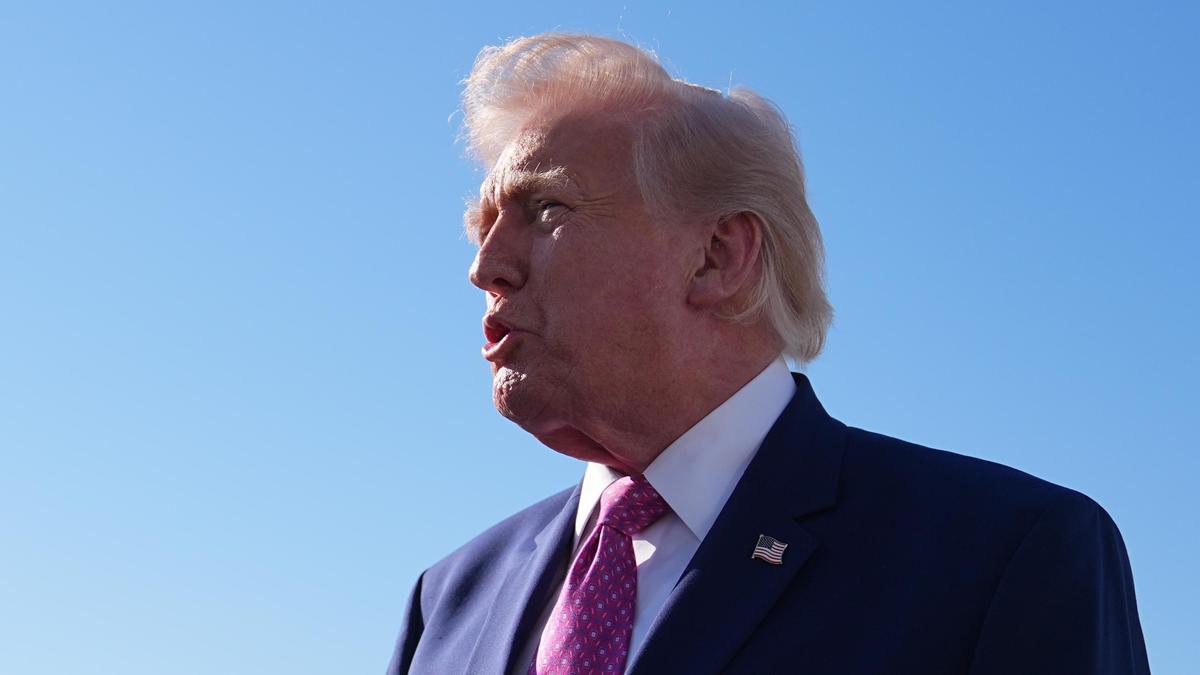
Donald Trump is betting the stability of the Middle East on a handwritten promise from Beijing. In a revelation that underscores the erratic nature of modern high-stakes diplomacy, the President confirmed on Wednesday that he engaged in a private exchange of letters with Chinese leader Xi Jinping, specifically demanding that China cease any military pipelines to Tehran. According to Trump, Xi’s response was a flat denial. "He wrote me a letter saying that, essentially, he's not doing that," Trump told Fox Business Network. This admission confirms that the White House is treating the avoidance of a Chinese-armed Iran as a personal favor between strongmen rather than a verified treaty.
The stakes could not be higher. As a two-week ceasefire between the United States and Iran hangs by a thread, the ghost of Chinese weaponry looms over the Pentagon. While the President projects confidence in his relationship with Xi, his administration is simultaneously threatening 50% tariffs on any nation caught supplying the Islamic Revolutionary Guard Corps (IRGC). This "carrot and stick" approach—relying on a "big, fat hug" from Xi while brandishing trade war weaponry—reveals a presidency operating on instinct rather than institutional consensus.
The Secret Satellites and Shoulder Missiles
The central tension in this narrative isn't just about what Trump says, but what the intelligence community sees. Despite Xi's epistolary assurances, the ground reality suggests a far more porous border between Chinese technology and Iranian capability. Recent intelligence reports indicate that Beijing has been preparing to deliver advanced Man-Portable Air Defense Systems (MANPADS) to Tehran, potentially routing them through third-party intermediaries to maintain plausible deniability.
Even more damning are reports regarding the TEE-01B satellite. Leaked documents suggest the IRGC acquired this Chinese-built spy satellite in late 2024. If true, the "denial" Xi sent to the White House is a semantic game. China may not be "giving" weapons in a traditional state-to-state transfer, but its corporate entities and "private" aerospace firms are effectively providing the eyes and ears Iran needs to target U.S. bases with precision. Trump's reliance on a letter ignores the complex web of Chinese state-owned enterprises that function as the regime's unofficial armory.
Oil for Peace is a Dangerous Trade
Trump’s geopolitical logic is straightforward, if perhaps overly simplistic. He views China’s dependence on Middle Eastern oil as his ultimate leverage. "He's somebody that needs oil. We don't," Trump noted during his interview, referring to the U.S. energy independence that allows him to blockade Iranian ports without fearing a domestic gas price spike. By "permanently opening" the Strait of Hormuz—a claim that ignores the reality of continued naval skirmishes and a mere trickle of pre-war traffic—Trump believe he is doing China a favor that Xi must repay with military restraint.
The flaw in this logic is the 25-year cooperation agreement between Beijing and Tehran. China has committed to investing $400 billion in Iran in exchange for a steady, discounted oil supply. To China, Iran is not just a gas station; it is a strategic bulwark against U.S. hegemony in the region. Xi Jinping is a chess player who understands that a weakened Iran serves Washington, while a resilient Iran keeps the U.S. military bogged down in a "forever war," far away from the South China Sea.
The 50 Percent Tariff Threat
By tying military aid to trade penalties, Trump has effectively merged the Department of Defense with the Office of the U.S. Trade Representative. This 50% tariff threat is a blunt instrument designed to force China’s hand before the scheduled summit between the two leaders next month. It is a gamble that assumes the Chinese economy, already struggling with structural shifts and previous trade wars, cannot withstand another massive hit to its export sector.
However, Beijing’s response has been one of cold defiance. Chinese Ministry of Foreign Affairs officials have dismissed the allegations of arms transfers as "purely fabricated" and warned of immediate countermeasures. This sets the stage for a summit that is less about peace and more about a high-stakes standoff. If Trump arrives in Beijing and the intelligence continues to show Chinese parts in Iranian drones or Chinese missiles in IRGC hands, the "hug" he expects may turn into a suffocating economic grip.
Verification over Validation
The veteran observers of the 2020s know that in the "New Cold War," a leader's word is only as good as the satellite imagery that confirms it. Trump’s belief in the power of personal correspondence is a throwback to an era of diplomacy that may no longer exist. While he boasts of "opening" the Strait of Hormuz for the world, the maritime industry remains paralyzed by high insurance premiums and the threat of Iranian mines.
The true test of the Trump-Xi letters won't be found in the text of the messages, but in the ruins of the next skirmish. If U.S. pilots find themselves being locked onto by Chinese-made radars, the President's letters will be remembered not as a diplomatic masterstroke, but as a historic deception. Washington is currently operating on the hope that Xi Jinping fears American tariffs more than he values an Iranian ally.
History suggests that China rarely chooses between its economic interests and its strategic ones; it simply finds more creative ways to pursue both.