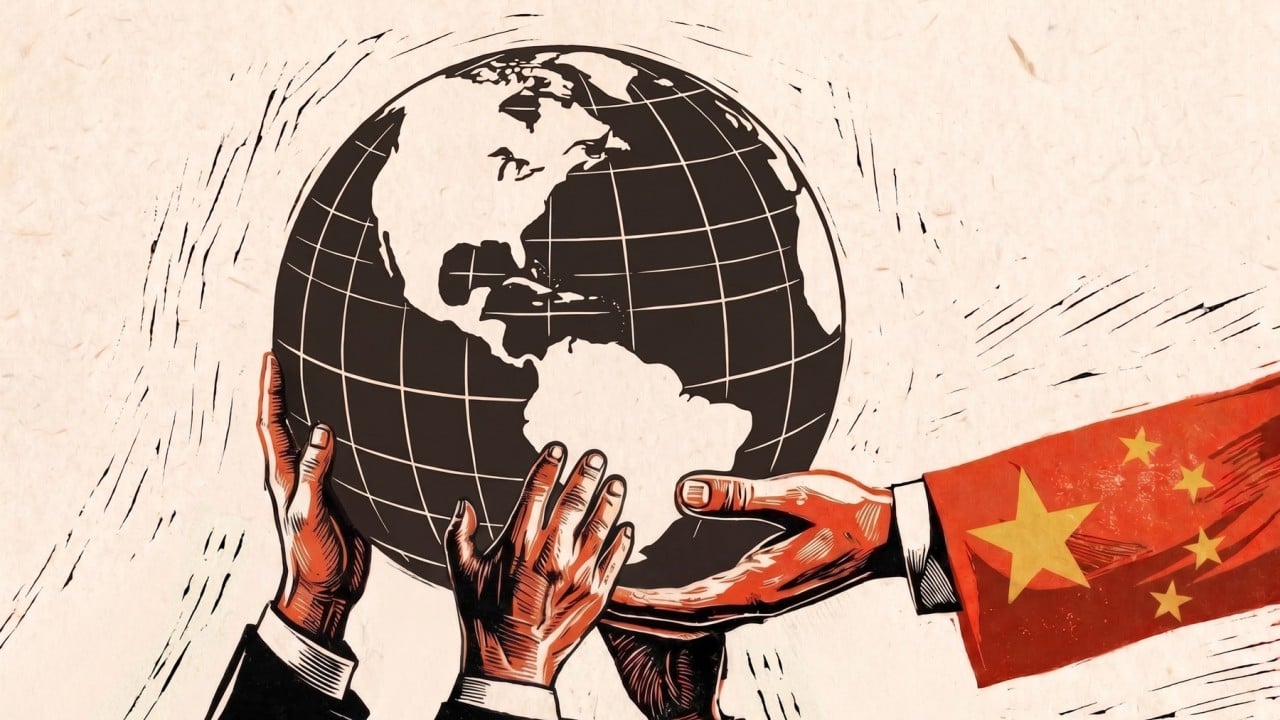
For decades, the West defined a great power through a singular, immutable lens: aircraft carriers patrolling blue water, reserve currencies backing global commerce, and alliances forged through shared ideological values. Beijing is systematically dismantling that definition. By decoupling national capacity from traditional Western benchmarks, China is seeking to transform the very meaning of great power status into something transactional, technological, and fiercely sovereign. This is not merely a diplomatic pivot; it is a foundational rewriting of the international order that leaves traditional analysts scrambling to catch up.
The strategic shift relies heavily on redefining global responsibility. Historically, Washington and its partners expected dominant states to act as global policemen, underwriting security architectures and promoting universal governance norms. Beijing has inverted this expectation. Through initiatives like the Belt and Road and various multilateral development frameworks, Chinese statecraft frames leadership not through military intervention or values-based lecturing, but through infrastructure, trade dependency, and non-interference. Learn more on a similar topic: this related article.
Take, for instance, Beijing's diplomatic footprint in the Middle East. When traditional security patrons struggle to broker lasting stability, Chinese officials step in as economic enablers rather than security guarantors. To a developing nation starved for capital, this model offers a compelling alternative. It trades political reform requirements and human rights benchmarks for immediate, tangible asphalt, ports, and digital networks. By offering development without strings attached, Beijing posits that a true great power builds economies rather than policing borders.
Yet, this calculated redefinition carries acute vulnerabilities that standard geopolitical commentary often glosses over. A superpower built primarily on economic dependency and supply chain dominance is acutely sensitive to external shocks. When foreign markets de-risk or erect tariff walls, the structural fragility of a purely trade-centric superpower becomes glaringly apparent. Furthermore, Beijing's aversion to formal alliance-building means it commands transactional partners rather than loyal allies. In moments of acute geopolitical crisis, a ledger of commercial debtors rarely translates into a coalition of willing defenders. Additional analysis by The New York Times explores comparable views on this issue.
The technological dimension of this transformation reveals an even starker divergence from Western playbooks. Rather than competing solely on the terrain of open, interoperable global standards, Beijing has aggressively championed sovereign internet controls, digital authoritarianism export models, and localized financial messaging. By fragmenting the global technological commons, the state demonstrates that a great power does not need to dominate a universal system if it can construct and control its own parallel ecosystem.
Neighboring states in East Asia observe these ambitions with a mixture of awe and deep apprehension. While governments across the region eagerly integrate into Chinese-led supply chains, they simultaneously invite a heavier American security footprint and accelerate their own military modernization programs. This friction exposes the core contradiction of Beijing's grand strategy. Pushing for regional deference while asserting maritime claims through aggressive grey-zone tactics generates the exact counter-coalitions that Chinese strategists seek to prevent.
Ultimately, the quest to alter the grammar of global dominance forces an uncomfortable realization upon Western capitals. The challenge is not simply that a rival is matching traditional metrics of strength, but that the rules of the competition have changed while the scoreboard remained the same. Whether this alternative architecture of power can endure the pressures of economic slowdown and demographic strain remains the defining question of the century. Beijing is betting that the world cares more about prosperity than political liberty, and the global South is currently hedging its bets on the outcome.