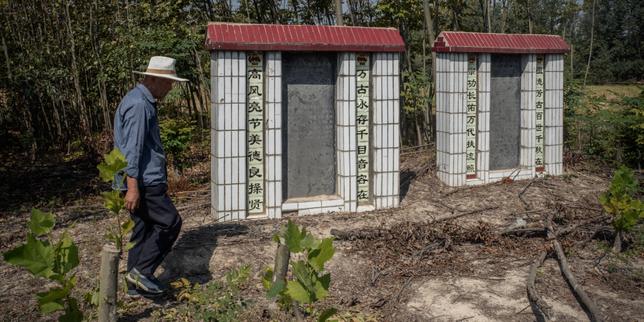
History is written by the victors. Sometimes, it is simply rewritten out of existence. Between 1958 and 1962, the People’s Republic of China suffered through a catastrophic demographic collapse known officially as the Three Years of Great Chinese Famine. Millions perished. Entire villages were emptied, grain reserves were squandered to feed an ideological obsession, and survivors endured horrors that remained legally and socially unmentionable for decades.
Today, this event occupies a strange spatial anomaly in the global historical record. It is simultaneously the largest man-made famine in human history and a ghostly footnote in official domestic education. Understanding why this memory is suppressed requires examining how totalitarian governance weaponizes historiography. State-sanctioned narratives demand perfection. When a political system rests its legitimacy on infallibility, mass starvation ceases to be a historical fact and becomes a threat to national security.
The Architecture of Catastrophe
The roots of the disaster lay in the disastrous economic campaign launched by Mao Zedong known as the Great Leap Forward. The central premise was simple, brutal, and entirely detached from agricultural reality. Beijing commanded the peasantry to abandon traditional farming methods, melt down their agricultural tools in backyard furnaces to produce substandard steel, and reorganize into massive people's communes.
Collectivization destroyed private incentives overnight. Private plots were confiscated. Livestock was communized and subsequently slaughtered because peasants refused to work livestock for a state that offered no return.
Compounding these structural failures was the Lysenkoist pseudo-science imported from the Soviet Union. Local cadres were ordered to plant seeds much deeper than normal, based on the absurd theory that plants of the same class would not compete if pushed underground. Fields were sown at densities up to ten times higher than previous norms. Crops withered before breaking the surface.
When harvests failed, the state refused to acknowledge the shortfall. Local officials, terrified of being labeled rightist counter-revolutionaries, engaged in a grotesque competition of inflated reporting. They claimed record-shattering yields while barns were empty. Grain was requisitioned based on these fictitious surpluses, leaving nothing behind for the peasants who grew it.
The Politics of Starvation
The mechanics of the famine were not merely passive; they were administrative. Grain exports to the Soviet Union and Eastern Bloc continued while citizens starved in the provinces. Granaries were locked tight under armed guard, protected by cadres who prioritized political compliance over human life.
"Better half of the people die so that the other half can eat their fill."
Mao’s infamous pragmatic cynicism set the tone for a regime that viewed human collateral as an acceptable cost of industrial modernization. Millions died not simply because food was scarce, but because the distribution system was weaponized against populations deemed politically unreliable or economically unproductive.
In provinces like Anhui, Henan, and Gansu, the death toll reached apocalyptic proportions. Survivors resorted to desperate measures. Yizi er shi—exchanging children to eat them—became a documented reality in areas where all vegetation, bark, and leather had already been consumed. Local gazetteers compiled decades later hint at cannibalism, though these records are heavily redacted and strictly restricted to internal academic circulation.
The Erasure of Collective Memory
How does a society erase a catastrophe that claimed between fifteen and forty-five million lives? The Chinese Communist Party executed a masterclass in information control long before the advent of the internet.
First, the official terminology was sanitized. For decades, the state rejected the word famine entirely. The official lexicon labeled the period the Three Years of Natural Disasters, framing the calamity as an act of God—unprecedented droughts and floods—rather than an indictment of central planning. Weather records from the era show normal meteorological patterns, but meteorology is easily subordinated to political decree.
Second, archives were sealed. Access to census data, grain requisition logs, and local public security bureau records remains tightly restricted. Researchers who attempt to cross-reference demographic dips with administrative directives find themselves blocked by bureaucratic walls or subjected to harassment.
Third, domestic historiography was insulated. Textbooks mention the economic setbacks of the era in vague, euphemistic prose, attributing difficulties to "severe natural calamities" and "shortcomings and errors in the work." The causal link between centralized coercion and mass mortality is severed. A generation of urban youth grew up knowing virtually nothing about the horrors that occurred in their grandparents' rural villages.
The Cost of Amnesia
Suppressing history carries a heavy recurring toll. When a nation cannot audit its own past, it forfeits the mechanisms required to prevent systemic failure. The silence surrounding the famine paved the way for subsequent tragedies, most notably the Cultural Revolution, which erupted just a few years later with a similar disregard for human life and institutional stability.
Independent historians, most notably Dutch-Chinese academic Frank Dikötter and Chinese journalist Yang Jisheng, defied enormous political pressure to document the era. Yang Jisheng’s monumental work, Tombstone, draws on decades of archival research hidden away in provincial repositories before state security tightened the screws. His motivation was personal; his adoptive father starved to death in 1959.
Yang understood a fundamental truth that authoritarian states fear above all else: memory is resistance. When a government dictates not only the future but the past, remembering becomes an act of political defiance. The bones buried in shallow graves across the rural heartland cannot speak for themselves. The responsibility falls on those who refuse to let the official silence become permanent.
As the state transitions into a digital leviathan equipped with advanced facial recognition, algorithmic censorship, and real-time narrative policing, the battleground for history has shifted from paper archives to the digital cloud. Yet, truth has a way of outlasting bronze and paper. Every time a survivor whispers a forgotten name to a grandchild, the architecture of denial fractures just a little bit more.