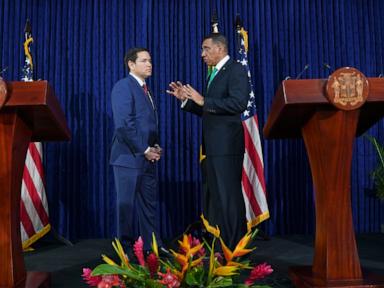
The mainstream media is treating the Biden administration’s backdoor talks with Jamaica over third-country migrant processing as a sudden geopolitical emergency. They call it a "widening rift" in the Caribbean. They frame it as a breakdown in regional diplomacy.
They are looking at the wrong map.
This isn't a diplomatic failure. It is a highly calculated, deeply flawed exercise in outsourcing American border enforcement to islands that are already economically redlined. The lazy consensus insists that Washington is bullying its southern neighbors into taking on its messy asylum baggage. The reality is far worse: Washington is attempting to use financial leverage to turn sovereign Caribbean nations into offshore holding pens, ignoring the economic reality that these micro-economies will collapse under the weight of imported instability.
I have spent years analyzing regional security budgets and migration flows across the Americas. I have watched Western policymakers throw nine-figure aid packages at developing nations, expecting them to magically build functional judicial and detention infrastructures overnight. It fails every single time.
The Illusion of the Third-Country Fix
Let’s dismantle the premise of the "safe third country" strategy. The corporate press wants you to ask: Is Jamaica ready to handle US migrants? That is the wrong question. The real question is: Why is the United States pretending that a nation dealing with its own severe domestic security hurdles can act as a regional shock absorber?
When the US negotiates to send third-country migrants—predominantly from Haiti, Cuba, and Venezuela—to Kingston, it isn't solving a crisis. It is shifting the geographic coordinate of a ledger entry.
The Structural Break Down
To understand why this strategy is fundamentally broken, you have to look at the economic architecture of the Caribbean Community (CARICOM).
- The GDP Disparity: Jamaica’s economy relies heavily on tourism and remittances. Its infrastructure is built to move visitors in and out efficiently, not to process, house, and legally adjudicate thousands of asymmetric asylum claims.
- The Judicial Bottleneck: The Jamaican judicial system is already overburdened. Adding international maritime law and complex refugee status determinations to their docket will paralyze local courts.
- The Security Paradox: Washington expects local forces to manage migrant populations when those exact forces are currently stretched thin managing domestic gang dynamics and transnational lottery scam syndicates.
Imagine a scenario where a multinational corporation unloads its toxic waste onto a mid-sized subcontractor that lacks the specialized facility to treat it, pays them a nominal fee, and declares the environmental issue "solved." That is exactly what third-country processing looks like on a geopolitical scale.
Dismantling the Consensus
Public discourse around this issue is plagued by two distinct, equally naive viewpoints.
| The Mainstream Narrative | The Counter-Intuitive Reality |
|---|---|
| Washington is fracturing its alliance with CARICOM by forcing this deal. | Washington is exploiting CARICOM’s economic vulnerability with short-term cash injections that undermine long-term sovereignty. |
| Jamaica will benefit from increased US security funding and intelligence sharing. | The incoming capital will be swallowed by specialized migrant infrastructure, leaving domestic security underfunded. |
| This strategy will deter migrants from making dangerous sea voyages. | It merely alters the route. Migrants do not stop moving; they adapt to new human smuggling vectors. |
The "rift" everyone is gossiping about isn't ideological. It’s financial. CARICOM leaders aren't offended by the morality of the request; they are terrified of the operational costs. They know that once you accept the first planeload or cutter-load of migrants, you become an official subsidiary of US Homeland Security.
The Hidden Cost of Outsourced Borders
Let’s talk about the downside of my own argument. If the US doesn’t use third-country processing, it faces an immediate, unmitigated administrative backlog at its own ports of entry. It forces domestic politicians to make hard, unpopular choices about detention, deportation, and asylum reform at home. Outsourcing is popular because it keeps the optics clean for voters in Ohio and Florida. Out of sight, out of mind.
But the hidden cost is the destabilization of the near abroad.
"When you destabilize a regional hub like Jamaica by introducing an unmanageable administrative and security burden, you create a secondary migration crisis five years down the line."
Look at the historical precedents. Look at the shifts in Mexico after it agreed to various iterations of the "Remain in Mexico" policy. It didn't stop the flow. It empowered the cartels, turned border cities into humanitarian crisis zones, and corrupted local municipalities. Now, imagine that exact dynamic played out on an island nation with zero geographical buffer.
Stop Asking If It's Legal—Ask If It's Functional
People often ask: Does this violate international maritime law or the 1951 Refugee Convention?
Stop looking at the legal abstractions. The legalities are easily bypassed with bilateral memoranda of understanding and clever diplomatic phrasing. Focus instead on the raw mechanics.
To run a functional migrant processing center, you need:
- High-throughput biometric databases integrated with international agencies.
- A pool of specialized immigration attorneys who speak the languages of the origin countries.
- Secure, humane holding facilities that meet international human rights standards to avoid crippling sanctions.
Jamaica does not have these resources sitting idle. Building them from scratch using US foreign aid dollars takes years. By the time the facilities are operational, the migration patterns will have shifted entirely. The geopolitical winds move faster than construction crews.
The Hard Truth Nobody Wants to Face
The US-Caribbean partnership is broken because it is built on a foundation of transactional dependency. Washington treats the region as a buffer zone rather than a network of sovereign partners.
If you want to stop the widening rift in the Caribbean, you don't do it by dangling financial aid packages tied to migrant absorption metrics. You do it by fixing the broken economic engines of the region, cracking down on the US-origin illegal firearms flooding Jamaican ports, and accepting that border management cannot be effectively outsourced to nations running on a fraction of your budget.
Stop looking for a magic bullet in Kingston. Stop cheering or jeering the diplomatic theater. The crisis isn't at the perimeter of the empire; it is in the refusal of the empire to manage its own borders.
Pack up the bilateral talking points. Stop the flights before they start.