The international media plays a predictable tape every summer.
A typhoon spins up in the Western Pacific, heavy rains flood a southern Chinese province, and the headlines immediately scream about a coming apocalypse. The narrative is always the same: China is a fragile house of cards bracing for collapse under the weight of climate chaos, its infrastructure failing, and its leadership caught flat-footed. Don't miss our earlier post on this related article.
It is a comforting story for Western commentators. It is also entirely wrong.
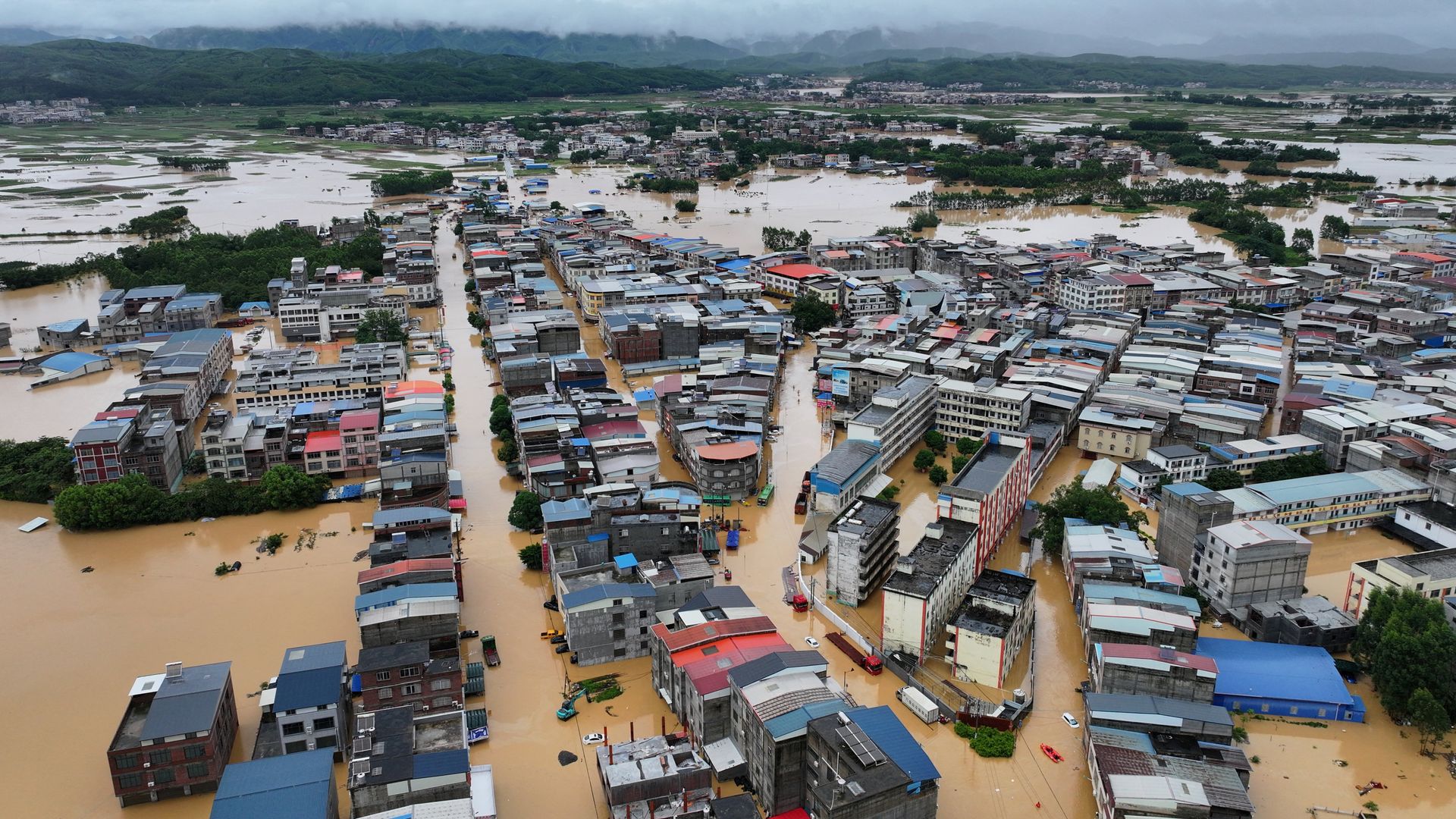
When you look past the sensationalized body counts and the breathless live-ticker updates, you find a completely different reality. China is not bracing for a super typhoon with trembling knees. It is managing it with a level of industrial and civil engineering precision that the West can barely comprehend. The "lazy consensus" views these weather events as unprecedented crises. In reality, they are stressful but thoroughly factored-in stress tests for the world's most resilient infrastructure grid. If you want more about the background here, TIME offers an informative breakdown.
We need to stop treating seasonal weather patterns in East Asia as systemic black swan events. They are grey rhinos—highly predictable, heavily mitigated, and increasingly monetized.
The Misery Index: Why Raw Casualty Counts Lie
Every mainstream article on Chinese floods leads with a death toll. It is a cheap journalistic trick designed to imply structural failure.
Let's look at the actual data. If you analyze the historical trajectory of natural disaster fatalities in China over the last four decades, the trend line does not just slope downward—it craters. In the 1990s, summer floods along the Yangtze River routinely claimed thousands of lives and displaced millions. Today, when a comparable volume of water hits the same basins, the death toll is frequently kept to the dozens or lower.
Why? Because China treated flood mitigation as a national security imperative, not a budgetary afterthought.
When a Western outlet reports that "multiple people died" during a thunderstorm in Guangdong, they are missing the forest for a single tree. Any loss of life is tragic, but comparing a handful of fatalities in a province of 126 million people to a systemic failure is statistically illiterate. For context, look at how the United States handles localized extreme weather. When Hurricane Katrina hit New Orleans, or when Hurricane Sandy paralyzed New York, the structural collapse was absolute and prolonged. Power was out for weeks. Supply chains dissolved.
In China, when a super typhoon makes landfall, the response is industrial-scale evacuation and rapid infrastructure restoration. The state moves millions of people out of harm's way within 48 hours using high-speed rail networks and synchronized regional bus fleets. It is an operational feat that no Western democracy can match, yet it is routinely framed as "desperate bracing."
The Sponge City Illusion and the Hard Truth of Concrete
You cannot talk about Chinese flood management without some urban planning analyst bringing up the "Sponge City" initiative.
Launched a decade ago, the program aims to make urban areas absorb, store, and purify rainwater using permeable pavements, green roofs, and constructed wetlands. The media loves this concept because it sounds eco-friendly and futuristic. Predictably, the moment a street in Zhengzhou or Shenzhen floods, these same analysts declare the Sponge City model a failed gimmick.
This shows a fundamental misunderstanding of hydraulic engineering.
The Hard Engineering Reality: No amount of porous asphalt or community gardens can absorb 300 millimeters of rain falling in a six-hour window. Physics does not care about your green PR campaign.
Sponge cities were never designed to stop super typhoons or once-in-a-century deluges. They were built to manage everyday urban runoff and prevent routine localized waterlogging. When a massive meteorological event hits, the heavy lifting is done by brutalist, unsexy, hard engineering: massive underground retention deep-tunnels, high-capacity pumping stations, and heavily reinforced river dikes.
I have spent years looking at how major industrial hubs protect their assets. The companies that survive do not rely on "nature-based solutions" during a crisis. They rely on the fact that China has poured more concrete into water conservancy over the last twenty years than the rest of the world combined. The Three Gorges Dam gets all the press, but the real story is the thousands of micro-reservoirs and automated sluice gates controlling every major tributary across the country.
The Wrong Question: Is the Economy Bracing for Impact?
Global markets panic every time a typhoon approaches the Pearl River Delta or the Yangtze River Delta. Investors ask: "Will this shut down the global tech supply chain? Will Ningbo-Zhoushan port close? Will Apple face iPhone delays?"
They are asking the wrong questions. The right question is: "How fast will they recover?"
The metric that matters isn't the duration of the storm; it is the mean time to repair (MTTR). In the West, if a major storm knocks out a regional power grid, residents wait days—sometimes weeks—for private utility companies to argue over insurance claims and deploy skeleton crews.
In China, the response is military in its precision and execution. State Grid Corporation of China can mobilize tens of thousands of repair technicians from neighboring, unaffected provinces before the storm even clears. They roll in with convoys of specialized vehicles, mobile generation units, and drone fleets to map line breaks. Power is usually restored to critical industrial zones within hours of landfall.
Consider the manufacturing facilities in Shenzhen or Dongguan. These are not flimsy warehouses. They are fortress-like ecosystems with localized backup power, independent water filtration systems, and on-site housing for workers. When a red alert is issued, production might pause for a shift, but the supply chain does not break. It bends, absorbs the kinetic energy of the storm, and snaps back into place.
Dismantling the "People Also Ask" Flawed Assumptions
Let's address the underlying assumptions that drive public curiosity about these events, because most of them are built on a foundation of outdated tropes.
"Why is China so vulnerable to flooding?"
The premise is flawed. China is not geographically more vulnerable than any other major landmass; it is simply more populated. The major economic engines of China—the Yangtze Delta, the Pearl River Delta, and the North China Plain—are historically alluvial floodplains. Civilization grew there because of the water, not in spite of it. To ask why China floods is to ask why the sky is blue. The real story is how a nation built high-tech megacities on top of historical swamps and managed to keep them dry 99% of the time.
"Are China's dams making the flooding worse?"
This is a favorite talking point for geopolitical contrarians who want to find malice in every piece of infrastructure. The argument goes that dams hold back too much water, then are forced to release it during heavy rains, exacerbating downstream flooding.
This ignores the basic mechanics of reservoir management. Chinese hydrologists use sophisticated satellite telemetry and AI-driven predictive modeling to calculate runoff days in advance. They execute pre-discharges—lowering reservoir levels before the storm hits—to create capacity for the incoming deluge. Without this coordinated system of upstream retention, the downstream cities would be completely wiped out during a major typhoon. The dams are the only reason these river valleys remain habitable.
The Dark Side of the Resiliency Machine
To be fair, this hyper-centralized, engineering-first approach is not without its costs. It would be disingenuous to present it as a flawless system.
When you prioritize the collective safety of a major economic hub, someone else pays the price. During extreme weather events, Chinese authorities routinely make cold, utilitarian calculations. If a river is about to breach its banks and threaten a city of 10 million people or a critical industrial zone, they will deliberately breach a dike upstream, flooding rural agricultural land and small villages to relieve the pressure.
+---------------------------+-----------------------------------+
| Protected Zone (Cities)   | Sacrifice Zone (Rural Areas)     |
+---------------------------+-----------------------------------+
| High population density   | Low population density            |
| Critical tech fabrication | Agricultural land                 |
| High-speed rail hubs      | Secondary roads                   |
| Full flood defenses       | Deliberate inundation pathways    |
+---------------------------+-----------------------------------+
The farmers lose their crops, their homes are ruined, and they are forced into temporary shelters. The state pays compensation later, but the immediate economic and emotional toll on these rural communities is brutal. It is a top-down, authoritarian triage that would cause endless litigation and political paralysis in a Western country. It works to save the macro-economy, but it is a grim process to watch unfold.
Stop Looking at the Clouds; Look at the Grid
The next time you see a headline about China "bracing" for a super typhoon, ignore the sensationalism. The storm is just a catalyst. The real story is the invisible, hyper-engineered apparatus that rises to meet it.
While Western infrastructure crumbles under the weight of routine summer heatwaves and winter freezes, China has built an industrial floor that treats extreme weather as an operational variance to be optimized away. They aren't panicking. They are running a playbook they have perfected over decades.
The storm will pass, the water will recede, and the factories will keep humming. The real crisis isn't happening in the Western Pacific; it's happening in the minds of Western analysts who refuse to see the world as it actually is.