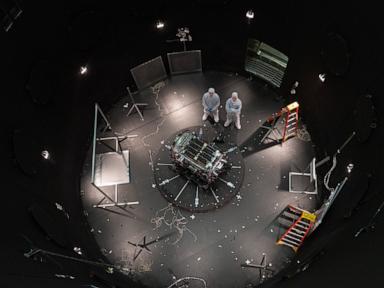
In a cleanroom in Veldhoven, the air is filtered so thoroughly that a single speck of dust would be a catastrophe. It is quieter than a tomb. There, a machine the size of a double-decker bus uses drops of molten tin and high-powered lasers to create a light so pure it doesn't exist naturally on Earth. This is the extreme ultraviolet (EUV) lithography machine, built by ASML. It is the only way the world knows how to print the microscopic blueprints of the modern age.
Without it, your phone is a brick. Your car is a lawn ornament. The artificial intelligence everyone is shouting about is just a ghost without a body.
But last week, the people who build these machines and the people who use them to forge chips—TSMC—sent a tremor through the financial world. It wasn't a crash. It was something more unsettling. It was a sigh. And in the world of high-stakes technology, a sigh can be louder than an explosion.
The numbers on the ledger looked fine, even good. ASML reported net sales of 7.5 billion euros. TSMC, the Taiwanese giant that produces over 90% of the world’s most advanced processors, reported a 54% jump in profit. On paper, the cathedral is glowing. Yet, the moment these reports hit the wire, investors started clawing for the exits. ASML’s stock took its deepest one-day dive in a quarter-century.
Why? Because the silicon world is currently split in two, and the bridge between them is buckling.
The Two Worlds of Silicon
To understand why a profitable company’s stock would plummet, you have to look at what the machines are actually doing. Imagine a massive, high-end kitchen. On one side, a frantic chef is preparing a banquet for a thousand people who are all screaming for "AI." He cannot get enough stoves. He is buying every burner ASML can ship. This is the world of Nvidia and high-end data centers.
On the other side of the kitchen, the areas dedicated to smartphones, PCs, and cars are quiet. The ovens are lukewarm. The customers are still full from the feast they had two years ago.
ASML’s lowered sales guidance for 2025 told a specific story: the rest of the world isn't ready to upgrade yet. We are witnessing a divergence. AI is a rocket ship, but the "traditional" tech sector—the stuff we actually use in our daily lives—is still stuck in a post-pandemic hangover.
Consider a hypothetical engineer named Elias. Elias works for a mid-tier chipmaker in Germany that supplies sensors for electric vehicles and industrial robots. A year ago, Elias was told to order three new lithography systems to prepare for a surge in demand. Today, his boss told him to cancel the order. The warehouses are still full of unsold inventory from 2023. The "recovery" everyone promised hasn't arrived.
When ASML says their "logic" customers are being cautious, they are talking about Elias. They are talking about the fact that while we are obsessed with ChatGPT, we aren't buying enough new Volkswagens or Dell laptops to justify billion-dollar expansions.
The Geopolitical Shadow
Then there is the matter of the map.
TSMC sits on an island that is the most contested piece of geography on the planet. Every time they report record earnings, it is a reminder of how precarious our reality is. We have built the entire digital infrastructure of the human race on a fault line.
Washington has been tightening the screws on what kind of technology can be shipped to China. ASML, a Dutch company, finds itself caught in a pincer movement between its biggest customer and its most powerful ally. Roughly 20% of ASML’s order backlog is tied to China. If those orders vanish because of new export rules, the "glass floor" of their valuation doesn't just crack; it disappears.
TSMC’s CEO, C.C. Wei, tried to calm the waters by saying AI demand is "real" and "insane." He isn't lying. The demand for the chips that train AI models is vertical. But TSMC is a massive ship. Even if the AI engine is screaming at full throttle, if the hull—the smartphone and PC market—is dragging through thick mud, the ship slows down.
The Anxiety of the Peak
There is a psychological phenomenon in investing called "peak cycle anxiety." It’s the feeling you get at a party when the music is still playing, but you notice the host has stopped putting out fresh ice. You start looking for your coat.
The stock moves we saw following these earnings weren't about the present. They were about the fear that we have reached the limit of what "hype" can sustain. Investors are looking at the massive capital expenditures—the billions spent on these machines—and asking: "When do we see the money?"
If Microsoft, Google, and Meta are spending tens of billions on chips, they eventually need to sell AI products that recoup that cost. If the consumer doesn't show up to pay for those AI features, the buying stops. And when the buying stops, the first person to feel it isn't the software company; it’s the person building the machine that builds the chip.
ASML is the "canary in the coal mine" because they sit at the very beginning of the supply chain. It takes years to build their machines. If their order book shrinks today, it means the world’s tech giants think the economy will be cold two years from now.
The Human Cost of the Microscopic
It is easy to get lost in the billions. It is harder to see the people.
Behind every TSMC earnings report are thousands of engineers in Hsinchu working twelve-hour shifts, wearing "bunny suits" that prevent them from even scratching their noses, all to ensure that a wafer of silicon doesn't have a single microscopic flaw. Their lives are dictated by the "yield"—the percentage of chips that actually work.
When the market panics, it isn't just numbers on a screen. It’s the freezing of hiring. It’s the delay of new factories in Arizona or Germany. It’s the cooling of an entire ecosystem that has defined the last thirty years of human progress.
The volatility of these stocks is a reflection of our own uncertainty about the future. Are we entering a golden age of machine intelligence, or are we just building a very expensive cathedral to a god that hasn't arrived yet?
The disconnect between TSMC’s record profits and ASML’s lowered guidance is a warning. It suggests that while the "new" world of AI is booming, the "old" world that pays the bills is tired.
We are leaning heavily on a very thin sliver of the market to carry the entire weight of the global economy.
The machines in Veldhoven will keep firing their lasers. The engineers in Taiwan will keep etching their patterns. But the silence in the order books tells us that the rest of the world is waiting for a sign. We are looking for proof that all this silicon is actually making our lives better, rather than just making our processors hotter.
The next few months won't be defined by how many chips we can make. They will be defined by whether we have anything left to build with them.
The light in the cleanroom is blinding, but it's getting harder to see what's right in front of us.