The Pacific Ocean does not care about borders. It knows nothing of the Continuous Journey Regulation. It only knows depth, current, and the indifferent roll of the tide.
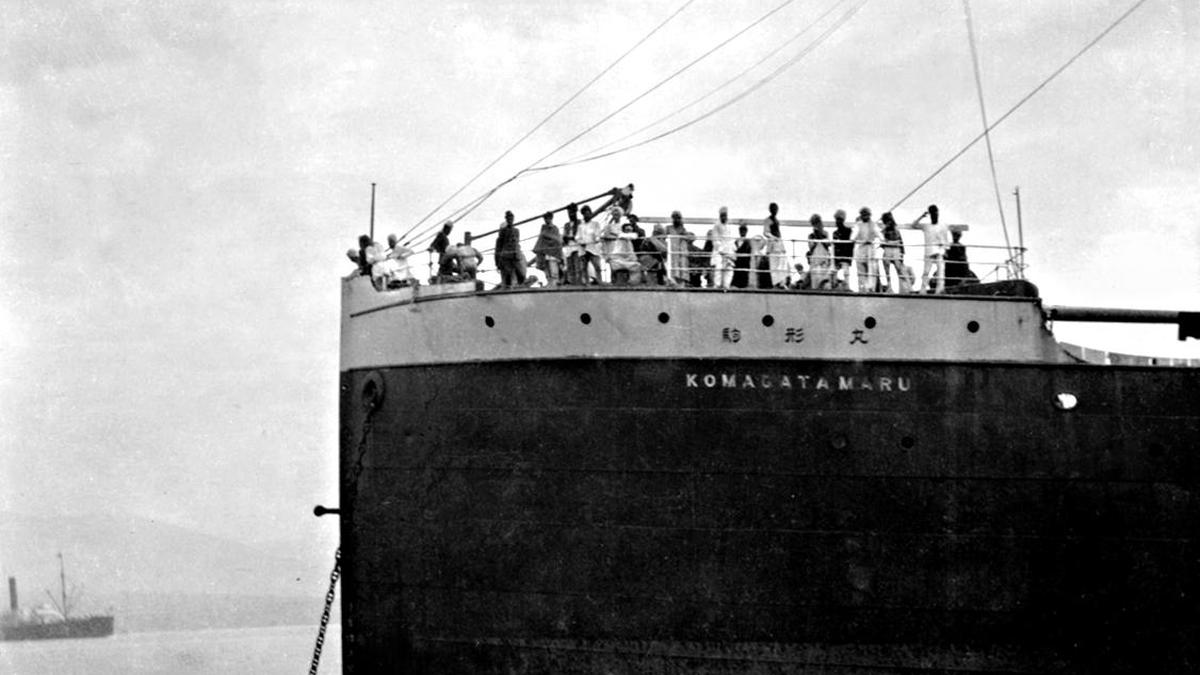
In May 1914, the Komagata Maru, a Japanese steamship chartered by Gurdit Singh, cut through that indifferent water toward Vancouver. Onboard sat 376 passengers. Most were Sikhs. They were not stowaways. They were not refugees fleeing a war-torn border. They were British subjects traveling from one corner of the Empire to another, carrying the naive, misplaced conviction that the Union Jack actually meant something. They believed that because they were subjects of the King, they were equal.
They were wrong.
Consider the reality of the voyage. For weeks, the ship was a floating pressure cooker of hope and uncertainty. Among them was a man we can call Karam. He was a farmer from the Punjab who had sold his land, his equipment, and his future to secure a spot on this boat. He smelled of salt, sweat, and the damp wool of his blanket. He spent his nights staring at the stars, counting the days until he would step onto the soil of a Dominion that promised work, dignity, and a place to settle his family.
When the Komagata Maru finally pierced the thick, gray fog off the coast of British Columbia, the ship didn’t steam into the harbor like a conquering hero. It stopped.
It sat there, a rusted steel island, while the Canadian government panicked.
The logic of the Canadian authorities was not born of necessity; it was born of a terrified exclusionary ambition. They wanted a white dominion. They looked at the ship and did not see British subjects. They saw a threat to the racial purity of the nation. They dug into the bureaucratic archives and produced a weapon: the Continuous Journey Regulation.
It was a brilliant, cruel piece of legislative engineering. It stated that all immigrants must arrive in Canada by continuous journey from their country of origin. Because there were no direct steamship lines between India and Canada, the law effectively banned all Indians from entry. It didn't matter that the passengers had paid their fare. It didn't matter that they were technically entitled to the freedom of movement within the Empire. The law was a cage made of paper, and it was impenetrable.
The ship became a prison.
For two months, the vessel languished in the harbor. The Canadian authorities refused to let the passengers disembark. They cut off the supply of food and water. They used naval ships to ensure no one swam to shore.
Think about that. Two months.
Imagine Karam watching the lights of Vancouver twinkle at night. He could smell the cedar trees of the Pacific Northwest. He could hear the distant whistle of trains that led to opportunities he had been promised. He was close enough to touch the dock, yet he was starving. His children, had they been there, would have been crying for water. The passengers were forced to exist in a state of suspended animation, their humanity stripped away by immigration officers who treated them like a shipment of spoiled produce.
The standoff grew toxic. A local lawyer, J. Edward Bird, fought for them, challenging the legality of the detention, but the law was never designed to be fair; it was designed to be exclusionary. The courts eventually ruled that they had no jurisdiction. The passengers had been trapped in a legislative loop, a paradox of administrative violence.
Hunger is a powerful motivator. It erodes patience. It makes people desperate.
The standoff ended not with a bang, but with a forced retreat. The Canadian military, the HMCS Rainbow, escorted them out of the harbor. The hope of a new life was incinerated. The ship turned around, the engines groaning as they dragged the passengers back across the Pacific. The humiliation was total. They had traveled thousands of miles, spent their savings, risked their lives, and were now returning to a colonial India that would view them with suspicion, not empathy.
When they arrived back at Budge Budge, near Calcutta, the British government was waiting.
They were not met with food or sympathy. They were met by police who were terrified that these returned travelers were carrying revolutionary fire in their hearts—that the injustice they had suffered in Canada would ignite a revolt in India.
The authorities tried to board the ship. They tried to force the passengers onto a train heading back to the Punjab, a place many of them no longer had any reason to go. The situation detonated.
It is unclear who fired first. It never is. The confusion, the accumulated rage of the last few months, the utter betrayal by the state—it all culminated in a riot. Shots rang out. Twenty people were killed. Many others were arrested and thrown into prisons. The dream of the Komagata Maru did not just end in disappointment. It ended in blood.
History has a way of smoothing over these jagged edges. We turn these events into bullet points. We minimize the trauma. We talk about the incident as a failure of immigration policy, a dark chapter in the "early days" of a nation.
That is a sanitized lie.
The Komagata Maru was not an isolated policy error. It was a mirror held up to the face of an Empire that claimed to be a beacon of civilization while operating on a hierarchy of skin color. It exposed the lie that "British subject" was a universal identity. It proved that for the colonial subject, rights were not inherent; they were privileges granted and revoked at the whim of the powerful.
There is a lesson here that remains raw and relevant. Belonging is often treated as a bureaucratic status, something to be stamped on a document or approved by a committee. But for those 376 people, belonging was a survival imperative. They were not fighting for a visa; they were fighting for the right to be recognized as human.
The ship eventually returned to the sea, a ghost of its former self, carrying the weight of the men who never returned home. The docks at Budge Budge are quiet now. The political borders of 1914 have shifted and dissolved, redrawn by wars and independence movements. But the silence of the harbor remains.
Every time we talk about who "belongs," every time we weigh the value of a human life against the convenience of a regulation, we are walking the same deck as those passengers. We are looking at the same fog-covered shore. We are staring at the same closed gate.
The Komagata Maru never actually arrived. It is still out there, circling the horizon, a reminder that injustice is not a relic of the past. It is a persistent current, pulling at everything we claim to be. The ocean does not care, but the living must. We are the ones who decide whether the gates stay locked or whether we finally, after all this time, allow the passengers to step ashore.