The coffee in the paper cup had gone cold hours ago, but Marcus didn't notice. He was staring at a flickering terminal in a control room that smelled of ozone and hot plastic, watching numbers crawl upward like ants ascending a dry wall. Ninety-six. Ninety-seven. Ninety-eight.
On any other Tuesday, a triple-digit crude price meant frantic phone calls, jittery traders in Frankfurt and New York, and the familiar, greasy dread pooling in the stomachs of logistics managers. Today, it felt different. Today, the numbers weren't driven by the slow, predictable squeeze of supply and demand curves. They were driven by smoke.
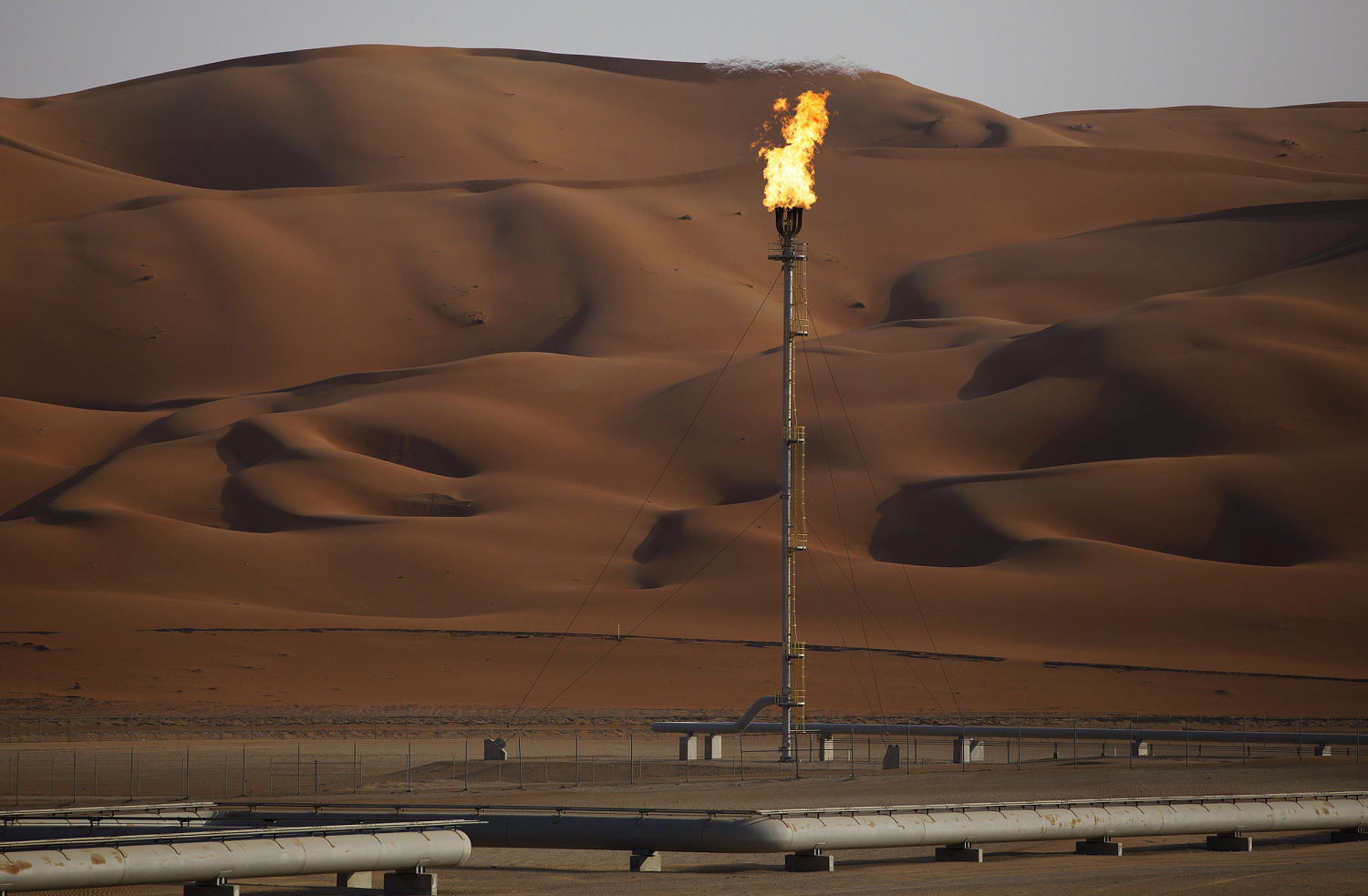
Three thousand miles away, in the searing expanse of the Saudi desert, a steel artery had just been bitten.
We forget how fragile our modern existence actually is. We build our lives atop invisible foundations—cables buried in oceanic trenches, algorithms ticking in windowless servers, and slender ribbons of carbon steel carrying the black blood that keeps civilization warm. We treat these systems like eternal laws of nature, as reliable as gravity or sunrise. They are not laws. They are fragile agreements, written in sweat and secured by thin layers of paint and vigilance, vulnerable to a single, well-placed spark.
When the state television broadcast the confirmation that critical energy infrastructure had taken a direct hit, the financial markets did what financial markets always do when confronted with mortality: they panicked in an orderly, algorithmic fashion. Futures contracts spiked. Tanker rates doubled by sunset. But behind the tickers and the flashing red screens lay a deeper, more visceral reality that no econometric model could capture.
Consider a hypothetical freight hauler named Elena, sitting in her sleeper cab outside a truck stop in Ohio, watching her fuel gauge hover dangerously near the red line. For Elena, oil isn't a geopolitical abstraction traded by men in bespoke suits. It is the literal cost of motion. Every tick upward on the London or New York exchanges translates directly into the price of diesel at the pump, eroding her margins, turning a grueling cross-country haul from a modest living into a slow-motion financial hemorrhage. Multiply Elena by three million, and you begin to understand the human architecture of global energy.
The attack on the Saudi facility wasn't just an assault on a processing plant; it was a violent reminder of our collective vulnerability. For decades, the global economy has optimized for efficiency over resilience. We built complex, hyper-connected supply chains that function brilliantly under normal conditions, like a fine Swiss watch operating in a vacuum. But the world is not a vacuum. It is loud, messy, and increasingly volatile.
History whispers warnings we refuse to hear. Every major energy shock—from the embargo of nineteen-seventy-three to the sudden disruptions of recent years—follows the exact same psychological arc. First comes disbelief, a brief window where we convince ourselves that the disruption is localized, temporary, a glitch in the matrix. Then comes the scramble, the frantic recalculation of risk as CEOs and policymakers realize that the buffer stocks are thinner than advertised. Finally, there is the quiet reckoning, the realization that our insulation against chaos was always an illusion.
We have engineered a society that runs on absolute continuity. When crude approaches the psychological threshold of one hundred dollars a barrel, the shockwaves ripple outward with terrifying speed. It hits the plastic manufacturer in Michigan, the airline routing flights across the Atlantic, the municipal government trying to balance a budget strained by rising asphalt and transit costs. The energy market is the circulatory system of the global body politic. When a clot forms in the desert, the fingers and toes go numb.
Yet, there is a strange sort of clarity in the crisis. For too long, we have treated energy security as a background function, something handled by unseen technicians in remote corners of the globe while we streamed high-definition video and ordered same-day delivery. We outsourced our anxiety to the pipeline operators and the desert patrols.
Now, the curtain has been pulled back.
As Marcus watched the crude benchmark cross ninety-nine dollars, the phone on his desk rang—a frantic voice from regional logistics asking whether they should lock in next month's fuel contracts or wait for the intervention. He looked at the screen, then out the window at the morning commuter traffic streaming endlessly down the highway, burning fuel they assumed would always be cheap, always abundant, always there.
He didn't have an answer. None of us do. We are standing at the edge of a new era, watching the old certainties burn away in the desert sun, waiting to see what rises from the smoke.