The radiators in Olena’s apartment in Kharkiv make a sound like wet gravel when the municipal boiler struggles back to life after a substation strike.
She is a composite, of course—a hypothetical forty-two-year-old structural engineer standing in a kitchen in eastern Ukraine—yet her mornings are built from verified realities. Outside her window, the frost sits thick on blown-out brickwork patched with plywood and expanding foam. Inside, her phone buzzes with push alerts from thousands of miles away, where men in tailored wool suits speak a clean, bloodless dialect of diplomatic reassurance.
"Architecture de sécurité."
Security architecture.
Say those two words aloud in a quiet room, and they sound like steel girders, concrete footings, and blueprints pinned neatly to a drafting table. Say them in a dimly lit kitchen where the tap water runs brown after a missile barrage, and they sound entirely different. They sound like a promise made in pencil on wet paper.
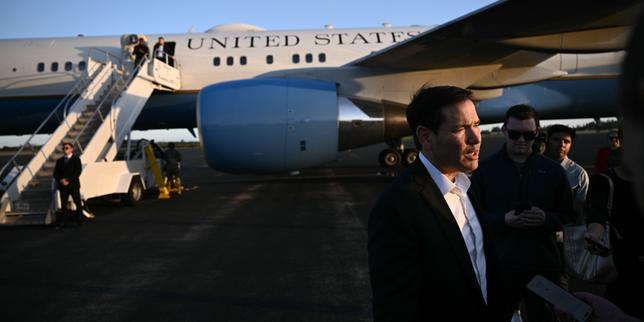
This week, U.S. Secretary of State Marco Rubio stepped before microphones and pointed to progress on that very blueprint—the post-war security architecture meant to hold Ukraine together once the artillery finally goes silent. The headlines ran fast and flat across European tickers, dutifully recording the diplomatic phrasing, the calibrated optimism, the careful sidestepping of hard timelines.
Standard journalism treats these announcements like weather reports from a distant capital. A press conference happens; a quote is extracted; the news cycle rolls forward.
But the real problem lies elsewhere. When diplomats talk about post-war security architecture, they are not discussing an abstract treaty. They are negotiating the exact thickness of the wall between Olena’s daughter and the next generation of Russian glide bombs.
The Illusion of the Inked Page
Diplomatic language has a talent for making survival sound like urban planning.
I have spent years watching how foreign policy translates from podiums in Washington and Brussels down to the dirt roads of Eastern Europe, and the disconnect never loses its sharp edge. In conference rooms lit by recessed LEDs, "security guarantees" are discussed through the lens of deterrence theory, burden-sharing ratios, and Article 5 equivalents. People sip lukewarm coffee from paper cups while debating whether a bilateral pact carries enough teeth to make Moscow hesitate before launching another offensive in five years.
Out on the ground, deterrence is not a theory. It is the difference between planting winter wheat or burying landmines.
Consider what happens when a war stops without a true security framework underneath the ceasefire. We do not have to guess; history already ran that experiment in 2014 and 2015. The Minsk agreements were hailed in their own time as diplomatic breakthroughs, painstakingly negotiated through sleepless nights in Belarus. They produced pages of ceasefire protocols, buffer zones, and monitoring mandates.
They also produced eight years of slow-bleed trench warfare that culminated in the full-scale invasion of February 2022.
Think of a ceasefire without enforceable security architecture like slapping a fresh coat of primer over rusted iron. From twenty paces, the beam looks restored, solid, ready to bear weight. Up close, the oxidation keeps eating straight through the metal until the entire structure buckles under the first real storm.
That is why Rubio’s remarks carry an invisible weight far heavier than a routine diplomatic update. When Washington signals movement on post-war security arrangements, it is acknowledging a brutal truth that kept Western capitals paralyzed for years: ending the fighting is the easy part. Keeping it ended is the engineering problem of the century.
Inside the Blueprint Nobody Can Agree On
Strip away the press-conference polish, and what does a post-war security architecture for Ukraine actually mean?
At its core, it is an attempt to solve a riddle that has haunted European diplomacy since the Cold War thawed: how do you protect a nation that sits directly on Russia’s border without triggering a direct nuclear confrontation between Washington and Moscow?
NATO membership was supposed to be the simple answer. Under Article 5 of the North Atlantic Treaty, an attack on one member is treated as an attack on all—a collective tripwire designed to make aggression mathematically suicidal. Yet full NATO accession for Ukraine remains snarled in political hesitation, alliance consensus rules, and the sheer terror in several Western capitals of inheriting an active frontier with a revisionist nuclear power.
So diplomats began building a substitute.
Imagine a house where the builders cannot agree on pouring a single reinforced concrete foundation, so instead they drive dozens of separate steel pilings into the mud, hoping that together they will carry the load. That is the emerging shape of Ukraine’s post-war security model. Rather than one unified umbrella, negotiators are assembling an interlocking web of bilateral security agreements, long-term weapons manufacturing partnerships, intelligence-sharing pipelines, and European troop deployment concepts.
Let us look closely at the moving parts inside those closed-door talks:
- The bilateral bilateralism: Over two dozen countries, including the United States, the United Kingdom, France, and Germany, have already signed ten-year bilateral security pacts with Kyiv. These documents commit signatories to sustained military aid, training, and rapid consultations if Russia attacks again. On paper, they look substantial. In practice, consultations are not cavalry charges.
- The European tripwire: Several European leaders have floated the idea of stationing peacekeeping or reassurance forces inside Ukraine once a truce holds—not to fight on the front lines, but to act as a physical presence that Moscow cannot strike without killing French, British, or Polish soldiers.
- The domestic fortress: The quietest, perhaps most decisive pillar is turning Ukraine itself into an industrial porcupine—flooding the country with air defense systems, long-range strike capabilities, and localized drone and artillery production so dense that any future invasion carries an unbearable price tag from hour one.
Rubio’s nod toward progress suggests the gears between Washington, Kyiv, and European allies are finally meshing around how these pieces fit together. After months of friction over aid packages, burden-sharing demands, and shifting political winds in Washington, simply getting the architects back around the same table marks a shift.
Yet progress in diplomacy is a slippery word.
The Invisible Stakes in the Room
To understand why these negotiations feel so precarious, you have to step inside the doubt that gnaws at every Ukrainian official reading the readouts from Washington.
I remember talking with a former Ukrainian defense planner in Kyiv during a blackout two winters ago, sitting beside a dying battery lamp while generators hummed like angry hornets down on the street. He pulled out a laminated map of Europe, tapped a thick finger on the eastern border of Poland, and asked a question that still refuses to leave my head.
"Tell me," he said quietly, "what is the actual difference in human value between a child sleeping ten kilometers west of this line and a child sleeping ten kilometers east of it?"
Politicians hate that question because there is no honest answer that fits inside a talking point.
West of that line sits NATO territory, backed by nuclear deterrence, integrated air defenses, and automatic collective response. East of it sits Ukraine, fighting for its existence while relying on the political durability of democracies whose attention spans reset every election cycle.
And here is the uncomfortable truth we rarely admit out loud: security guarantees are only as strong as the political will of the leaders sitting in office five or ten years after the ink dries.
A treaty signed in 2026 can be celebrated with handshakes and commemorative pens. What happens in 2031, when a new administration takes power in Washington, or a populist coalition wins in Berlin, or an economic recession makes voters across Western Europe weary of funding foreign defense budgets? Vladimir Putin does not measure time in four-year electoral cycles. He measures it in decades, waiting patiently for Western fatigue to erode the fine print of agreements made in moments of urgency.
If you are Olena standing in that cold kitchen in Kharkiv, you know this instinctively. You do not read diplomatic cables for tone; you read them for loopholes. You look for the words "shall defend" versus "shall consult." You look for whether air defense batteries stay permanently on Ukrainian soil or get packed onto cargo planes the moment a ceasefire holds for six months.
When Deterrence Meets Exhaustion
There is another layer to this story that polite diplomatic commentary tends to gloss over: the sheer, grinding exhaustion on every side of the table.
Ukraine’s military has held off a vastly larger neighbor for years at a cost measured in tens of thousands of lives, shattered cities, and an economy stripped of its industrial heartland. Every month the war drags on, the demographic wound deepens. Millions of refugees wait in apartments from Warsaw to Berlin, trying to decide whether going home means building a life or waiting for the next siren.
Meanwhile, Western stockpiles of artillery shells, interceptor missiles, and armored vehicles have been stretched thin, exposing decades of post-Cold War complacency across European defense industries. Washington, balancing commitments across the Indo-Pacific and the Middle East, wants Europe to shoulder far more of its own continental security.
Out of that exhaustion comes a dangerous temptation.
In moments of deep fatigue, diplomats begin to mistake the appearance of a deal for actual security. The pressure to announce a breakthrough—to freeze the front lines, declare peace, and turn the cameras toward domestic economies—becomes immense. Nobody in Washington or Paris wants to be the leader who stalled a ceasefire over technical language about air defense replenishment rates or verification mechanisms.
Yet history is merciless toward rushed compromises.
Think back to the Budapest Memorandum of 1994. Ukraine surrendered the third-largest nuclear arsenal in the world—warheads and missiles inherited from the collapse of the Soviet Union—in exchange for written assurances from the United States, the United Kingdom, and Russia that its sovereignty and borders would be respected. At the time, the deal was hailed as a triumph of non-proliferation diplomacy.
Thirty years later, those assurances turned out to be worth less than the fuel burned by the bombers flying over Kyiv.
Negotiators today know the shadow of Budapest hangs over every draft document. If Marco Rubio and his counterparts want this new security architecture to survive contact with reality, it cannot rely on Russian promises of restraint. Moscow has broken every bilateral and multilateral treaty constraining its actions in Ukraine since 2014.
The architecture has to work even if the Kremlin violates it on day two.
What Real Steel Looks Like
So what separates a real security architecture from a diplomatic mirage?
Strip away the jargon, and it comes down to three cold, mechanical realities that no amount of rhetoric can fake.
First, automaticity. Deterrence fails the moment an aggressor believes it can launch a limited strike and trap Western capitals in three weeks of emergency summits. If Russian drones cross a ceasefire line or missiles hit a Ukrainian power plant, the response cannot depend on a unanimous vote in Brussels or a congressional debate in Washington. Consequences must be pre-authorized, pre-positioned, and immediate.
Second, physical presence. Paper promises are easy to ignore; boots and radar arrays on the ground are not. Whether through European training missions, joint air defense command centers, or multinational engineering units rebuilding critical infrastructure, foreign personnel standing inside Ukraine create a reality that Moscow cannot easily miscalculate around.
Third, industrial permanence. Ukraine cannot survive on charity shipments approved batch by batch. True security architecture means embedding Western defense contractors directly inside Ukraine, co-producing air defense interceptors, artillery barrels, and autonomous systems under hardened roofs. When a country can manufacture its own shield, no foreign election can suddenly disarm it.
Listen closely to the subtle phrasing emerging from Washington and European capitals right now, and you can hear the tug-of-war over those three pillars. Everyone agrees Ukraine needs to be strong enough to deter future aggression. Fewer agree on who pays the bill, who commands the response, and how close Western forces get to the front line.
Rubio’s statement that progress is underway tells us the blueprint has moved past the blank-page stage. Lines are being drawn. Compromises are being tested. The rough geometry of a post-war order is taking shape behind closed doors.
The Silence After the Sirens
It is easy, sitting comfortably far from the roar of turbine engines and the thud of interceptor launches, to treat geopolitics like a chess match played by statesmen. We track statements, analyze shifts in rhetoric, and weigh strategic trade-offs as if the board were made of polished wood.
It is not made of wood.
Back in that apartment in Kharkiv, the radiator finally stops clanking and settles into a faint, steady hiss of warmth. Olena steps away from the window, sets her phone face down on the laminate counter, and checks the tape crisscrossing the glass panes—thin strips meant to keep shards from flying inward if a shockwave hits the block at three in the morning.
Millions of people across Ukraine have lived behind taped windows for years, waiting for the day they can peel the adhesive off the glass and wash the residue away with warm water and soap.
That simple act—scraping glue off a kitchen window without wondering if you will need to put it back up next winter—is the only real test of whatever security architecture Marco Rubio and his counterparts are building. Until those strips come down and stay down, every word spoken in Washington remains just a promise hanging in the cold air.