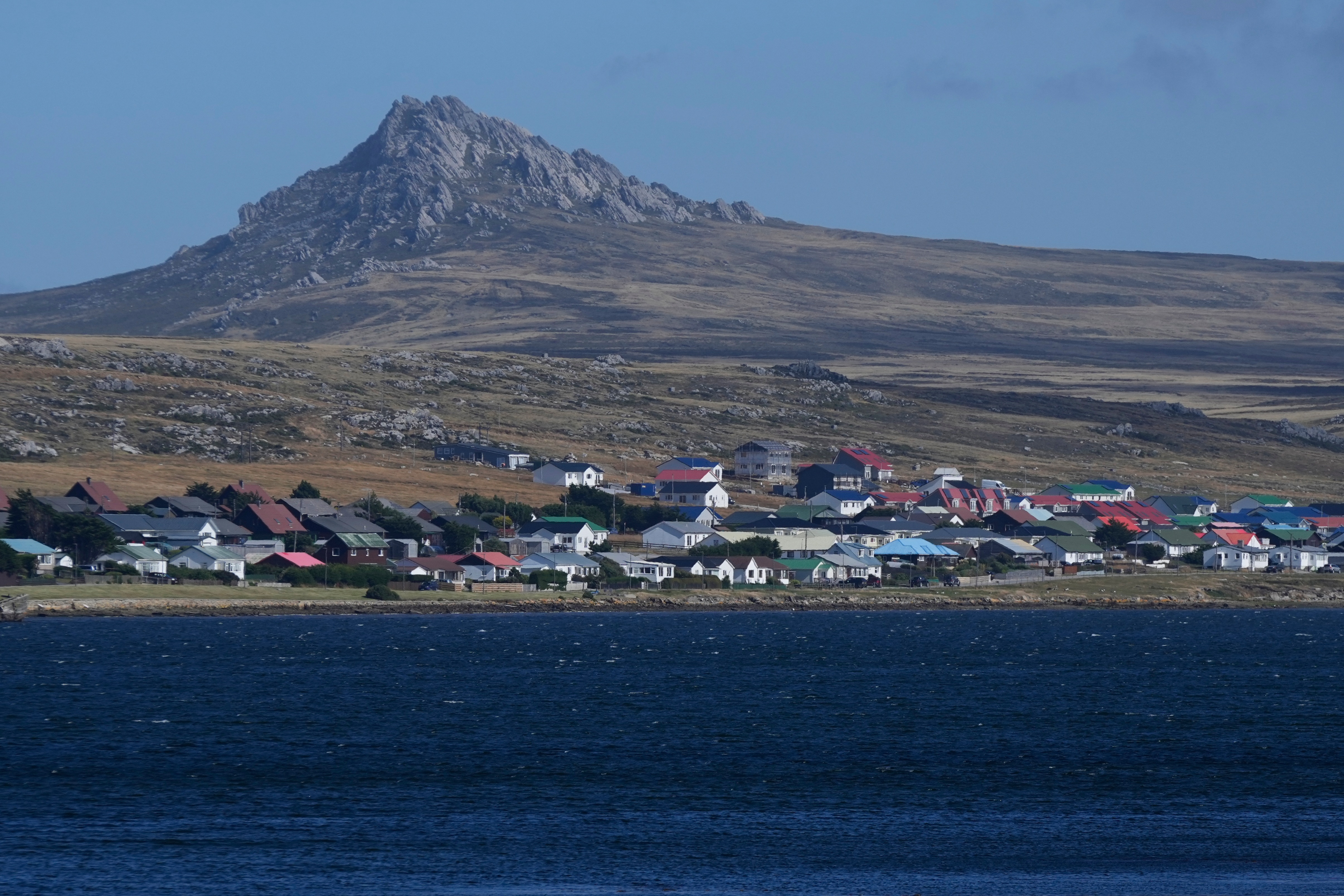
The wind does not care about sovereignty. It screams off the Antarctic shelf, raking across the corrugated iron roofs of Stanley, tearing the salt spray from the whitecaps, and battering against the limestone cliffs of a place the Argentinians call the Malvinas and the islanders call home. To stand on those blustery ridges is to feel entirely exposed, suspended between a vast, indifferent ocean and a sky the color of a wet slate.
Walk into the local pub on a Tuesday evening. The smell of burning peat and damp wool hangs thick in the air. The television in the corner hums softly, broadcasting a distant world that feels a million miles away, yet casts a long, chilling shadow over every pint poured.
Right now, that shadow is stretching further than it has in decades.
Javier Milei does not whisper when he talks about the islands. He leans into microphones with the evangelical fervor of a man who believes he is rewriting history in real-time, seizing on the shifting winds of global power with the calculated audacity of an outsider who crashed the gates of Buenos Aires. When Donald Trump returned to the White House stage, Milei heard opportunity in the rhetoric. He heard a transactional superpower ready to trade old alliances for new alignments. He heard a cue.
And so the rhetoric sharpened. The diplomatic notes grew heavier. The ghosts of 1982 stirred in the cold Atlantic mud.
To understand why a patch of windswept tundra four hundred miles off the coast of Patagonia still commands such ferocious passions, you have to look past the maps. Maps lie. They reduce human lives and ancestral grief to flat colors and neat borders.
Picture Mateo. He is a fictional dockworker in Comodoro Rivadavia, but his calloused hands and weary eyes belong to thousands. Every morning as the sun burns off the Patagonian dust, he stares out at the Atlantic horizon. For Mateo, the islands are not a geopolitical abstraction or a talking point for a presidential rally. They are an open wound on the national map, a physical reminder of a humiliation etched into the textbooks of his childhood. When politicians like Milei roar about reclaiming sovereignty, Mateo feels a familiar, complicated tug. It is pride, weaponized. It is the desperate hope that a broken economy might somehow be healed by a glorious, unifying distraction.
Yet, distraction pays no bills.
The Argentine treasury remains a patient on life support. Inflation bites at the heels of ordinary families. Factories hum below capacity. Every dollar spent rattling sabers at London is a dollar not spent fixing a crumbling hospital in Córdoba or paving a washed-out road in Salta. Milei knows this calculus. But he also knows the intoxicating power of a crusade. By tying his political survival to the eternal, burning ember of the Falklands dispute, he attempts to forge an unbreakable shield out of nationalism.
Now, layer oil onto the fire.
Deep beneath those freezing waters lie basins of crude, black gold sleeping in the dark. To London, these reserves are a vital asset for a self-governing overseas territory that pays its own way. To Buenos Aires, every barrel pumped from those seabeds is a theft of national patrimony, a literal draining of the homeland's wealth while the doors remain locked.
When international energy companies test the waters and drill deeper, the temperature in Buenos Aires spikes. Milei seizes on these oil tensions not merely as an environmental or economic grievance, but as a direct affront to territorial integrity. He paints the extraction as an act of pillage. The rhetoric escalates from diplomatic protest to fierce, unyielding condemnation. He warns the world that Argentina will not forget, will not forgive, and will not back down.
But what does London see when it looks south?
It sees three thousand people who want nothing to do with Buenos Aires. It sees a community of sheep farmers, fishermen, and teachers who trace their lineages on those islands back generations, speaking with a distinctive, clipped dialect that belongs to neither Britain nor Argentina entirely. They speak English with a cadence shaped by isolation. They drink tea. They elect their own local government.
Ask a teenager growing up in Stanley about their future, and they will not talk about geopolitics. They will talk about the cost of shipping, the erratic flights to the mainland, the fierce pride of their isolation. They are fiercely British by choice, not by military imposition. That distinction matters. It is the human core that diplomats in tailored suits often forget when they push wooden pieces across a global chessboard.
When Milei courts Washington, hoping for a sympathetic ear from a transactional American administration, he is playing a high-stakes game of poker. He wants to leverage American influence to pressure the United Kingdom into bilateral talks that London has refused to touch since the smoke cleared over Port Stanley in June of that fateful summer. He believes that the global order is fragmenting, that alliances are up for grabs, and that if you shout loud enough and align with the right strongmen, the rules of the game will bend in your favor.
Maybe they will. Maybe they won't.
Consider what happens next on the ground.
Escalation is rarely a neat staircase. It starts with words, sharpens into diplomatic expulsions, hardens into restricted airspace, and hardens further into military posturing. Patrol boats cast longer shadows. Radar screens blink with anxious frequency. The fishermen dodging the maritime boundaries hold their breath.
History is watching. The waters off the islands are haunted by the wrecks of the General Belgrano and the Sheffield, silent steel tombs resting on the ocean floor where hundreds of young men lost their lives in a war that lasted barely ten weeks. Every time a modern leader beats the drum of reclaiming the islands, those tombs stir. Families in Argentine villages remember the telegrams that arrived in the spring of eighty-two, bearing news from the end of the earth.
This is why the escalation is dangerous. It is not just about oil or maps or political leverage. It is about playing with fire in a dry forest.
Milei may believe his economic chainsaw can cut through decades of bureaucratic stagnation, but a foreign policy crisis is not a state-owned enterprise ready for liquidation. It is a volatile chemical reaction. One miscalculated naval intercept, one inflammatory speech too many, one domestic crisis desperate for a foreign distraction, and the rhetoric can curdle into reality.
Back in Stanley, the wind picks up. The lights in the small cottages flicker against the gathering dusk. The people there lock their doors, tend to their livestock, and look out over a dark, churning sea that separates them from a continent that claims them, yet does not know them.
The ocean remains deep, cold, and quiet, holding its breath beneath the southern stars, waiting to see what the next wave will bring.