Walk down the Malecón in Havana at dusk. The salt spray hits the crumbling stone walls, leaving a crust of white crystals that the locals scrape off with their thumbs. You can smell diesel fuel mixed with the sweet, heavy scent of fermenting guava. For decades, Washington pundits have looked at this coastline through a telescope, convinced they are seeing a mirror image of Caracas. They see two socialist regimes under the crushing weight of American sanctions. They see breadlines. They see authoritarian defiance. They assume that if you press hard enough on the leverage points, the Cuban machine will shatter exactly the same way the Venezuelan one did.
They are looking at the wrong map.
The assumption that Cuba is destined to follow Venezuela’s trajectory into hyperinflationary collapse and chaotic state failure is a comforting fiction for policymakers. It suggests a predictable blueprint. But politics, like geology, is defined by the faults you cannot see from the surface. Venezuela is a petro-state built on a volatile foundation of sudden wealth and sudden ruin. Cuba is an island forged from a sixty-year siege, where scarcity is not a crisis—it is the status quo.
To understand why the pressure from Washington yields a different result in Havana than it does in Caracas, you have to stop looking at spreadsheets and start looking at the anatomy of survival.
The Architecture of the Siege
Consider a hypothetical citizen named Alejandro. He is a forty-five-year-old biology teacher in Central Havana. Alejandro does not spend his evenings thinking about geopolitical alignment or the rhetoric coming out of Florida. He thinks about eggs. Specifically, he thinks about how the monthly ration book, the libreta, only covers a fraction of what his family needs to survive.
If Alejandro lived in Caracas during the height of the Venezuelan collapse, his world would have been defined by a dizzying, terrifying freefall. One day a kilo of cornmeal cost a handful of bolívares; the next week, it required a backpack full of cash. The Venezuelan economic collapse was fast, loud, and chaotic. It was the sudden evaporation of a consumer society that had grown used to importing everything from European sports cars to American processed foods. When the oil money dried up and the sanctions hit, the floor dropped out from under the population.
But Alejandro’s reality in Cuba is different. It is slow. It is quiet.
Cuba’s economy was never a high-flying petro-state. It was built as a heavily subsidized satellite of the Soviet Union, and when that empire dissolved in 1991, Cuba went through the "Special Period"—a time of near-total economic blackout. Alejandro remembers eating grapefruit peel steaks and riding a heavy Chinese bicycle because there was no gasoline. The Cuban state did not collapse; it adapted by institutionalizing scarcity.
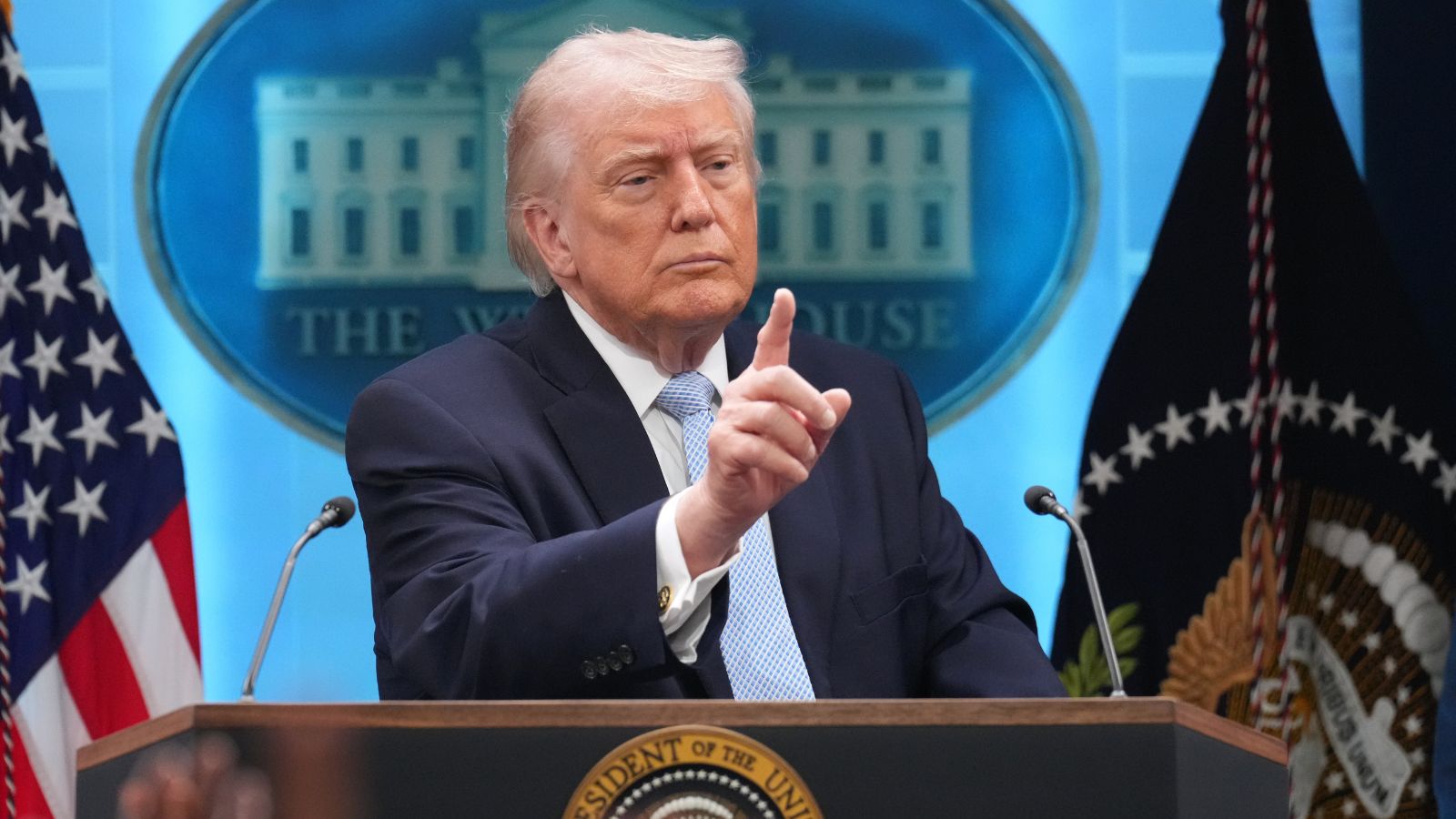
The Cuban government developed a highly centralized, militarized control over the distribution of basic goods. When the United States tightened sanctions under the Trump administration—restricting remittances, banning cruise ships, and activating Title III of the Helms-Burton Act to allow lawsuits over confiscated property—the pressure was immense. It hurt. It made the lines at the state grocery stores wrap around the block. But it did not trigger the structural panic that tore Venezuela apart.
The reason is simple: you cannot shock a system that has been living in a state of permanent shock for three generations.
The Oil Mirage
The comparison between the two nations often hinges on their historic marriage. Under Hugo Chávez, Venezuela became Cuba’s economic lifeline, sending tens of thousands of barrels of oil per day in exchange for Cuban doctors, intelligence officers, and teachers. When Venezuela’s own production plummeted from nearly three million barrels a day down to a fraction of that, observers predicted that Cuba would starve within months.
The predictions missed the fundamental difference in how these two societies hold power.
Venezuela’s state structure is relatively young and remarkably fragile. It was built around the charismatic authority of a single man and sustained by the direct distribution of oil rents. When the oil wealth vanished, the patronage networks that held the military and regional governors in place began to fracture. The state had to rely on increasingly violent and erratic measures to maintain control, facing massive, spontaneous street protests from a population that remembered better days.
Cuba, by contrast, is governed by one of the most sophisticated institutional apparatuses in the Western Hemisphere. The Revolutionary Armed Forces (FAR) and the Ministry of the Interior do not just manage security; they manage the economy. Through state-run conglomerates like GAESA, the Cuban military controls the tourism industry, the retail stores, and the port facilities.
This is not a fragile coalition of corrupt officials looking for a quick exit strategy. This is a deeply entrenched, highly disciplined bureaucracy that views survival as a historical mission.
When Venezuelan oil shipments dropped, Havana didn’t collapse into anarchy. The state tightened its belt, adjusted the electrical grid to implement scheduled blackouts (apagones), and turned to new patrons. They negotiated with Russia, courted Chinese investment in telecommunications, and squeezed every dollar possible out of European tourists.
The Safety Valve of the Sea
But the most profound difference between the two nations lies in how discontent is expressed—and where it goes.
When a society reaches a breaking point, the energy has to go somewhere. In Venezuela, that energy initially turned inward. It manifested as massive, violent street clashes, general strikes, and a parallel government led by the opposition. The conflict was horizontal, pitting neighbor against neighbor, militia against citizen, in a brutal struggle for control of the streets. Millions eventually fled, but they did so across land borders, creating a rolling humanitarian crisis across South America.
Cuba has an ocean.
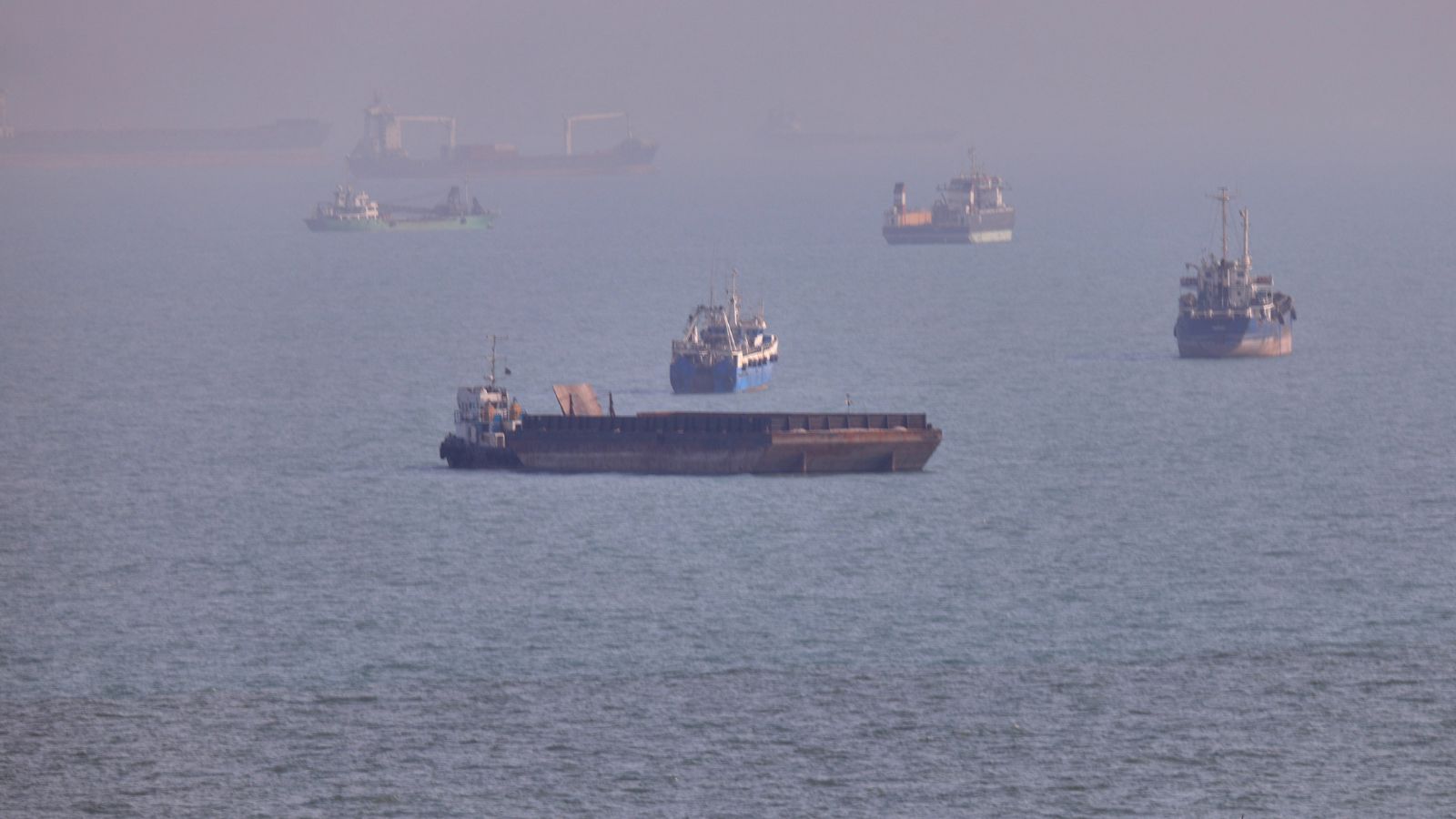
For sixty years, the Florida Straits have served as Washington’s political headache and Havana’s ultimate safety valve. Whenever internal pressure in Cuba builds to a dangerous level, the regime does not just crack down; it opens the valve. We saw it during the Camarioca boatlift in 1965, the Mariel boatlift in 1980, and the rafter crisis of 1994.
When spontaneous protests broke out across Cuba on July 11, 2021—driven by frustration over power outages and medicine shortages—the world thought the tipping point had arrived. The government responded with swift detentions, but it also used its classic lever. It loosened travel restrictions, and in the months that followed, hundreds of thousands of Cubans left the island, making their way through Central America or across the sea to the United States.
Consider what this migration does to the internal mechanics of dissent. The people most likely to lead a revolution—the young, the disaffected, the entrepreneurial, the desperate—are precisely the ones who get on the boats. The regime loses its critics, and the island loses its energy, but the state survives.
More importantly, those who leave become an economic pillar for those who stay. Alejandro’s sister lives in New Jersey. Every month, she sends money back to Havana via informal networks. That money doesn’t fund a counter-revolution; it buys pork, repairs a leaking roof, and keeps Alejandro’s family afloat. The very people who fled the system end up subsidizing its stability.
The Psychology of the Long Game
It is easy to look at Cuba’s current hardships—the return of fuel rationing, the collapse of the sugar harvest, the desperation of the youth—and conclude that the end is near. The metrics look disastrous. The currency is weak, and the state stores are empty.
But metrics ignore the psychology of the long game.
In Venezuela, the opposition always felt the government was an aberration, a temporary hijacking of a rich democracy that could be reversed with enough pressure or a successful coup. There was a constant expectation of a sudden, dramatic finale.
In Cuba, there is no memory of a different world. The average Cuban has spent their entire life navigating a labyrinth of dual currencies, black market transactions, and state surveillance. They have developed a cultural trait known as resolver—a verb that means to solve a problem through ingenuity, rule-bending, and sheer willpower. If there is no gasoline, you fix a 1950s Chevy to run on a boat engine. If there is no flour, you make bread out of sweet potato paste.
This is not a population waiting for a political savior. It is a population practiced in the art of endurance.
The maximum-pressure campaign designed in Washington was based on a simple Newtonian principle: force equals acceleration. If you apply enough economic pain, the people will rise up and overthrow their leaders. But human societies do not always behave like physics experiments. Sometimes, when you apply immense pressure to an island that has been isolated for decades, the material does not break. It hardens.
The lights will continue to flicker in Havana. Alejandro will still spend his Saturday mornings looking for milk. The state will continue to blame the embargo for its own systemic incompetence, and Washington will continue to issue statements predicting an imminent democratic awakening.
But beneath the rhetoric, the Cuban machine keeps ticking, fueled by a strange, resilient inertia that the architects of foreign policy have never quite managed to understand.