Germany is converting commercial passenger railcars into mobile trauma wards because the war in Ukraine proved that helicopters and ambulances cannot survive modern drone-saturated battlefields. Driven by lessons from Ukraine, the Bundeswehr and Deutsche Bahn are resurrecting Cold War-era medical rail logistics to move hundreds of wounded soldiers simultaneously from NATO's eastern flank to German hospitals. This shift exposes a brutal reality of peer-to-peer industrial warfare: air superiority is no longer guaranteed, and road networks buckle under mass casualty events.
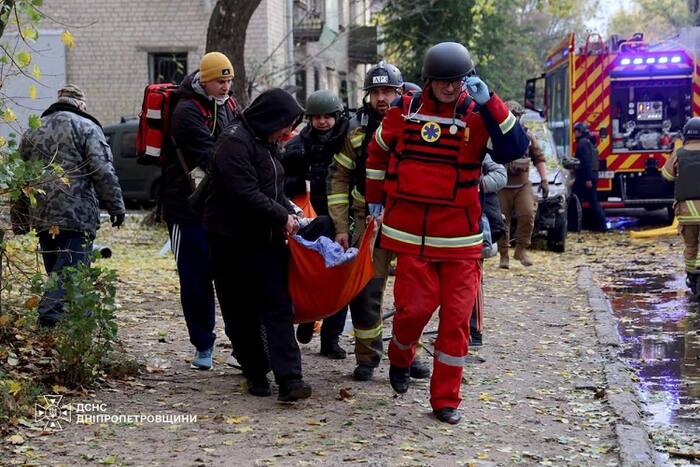
For two decades, Western military medicine relied on the "Golden Hour"—the doctrine that a wounded soldier evacuated by helicopter within sixty minutes has a vastly higher chance of survival. That doctrine worked in Afghanistan and Iraq, where insurgents lacked radar-guided surface-to-air missiles and swarms of cheap, first-person-view (FPV) kamikaze drones. Ukraine shattered that assumption. Along the front lines in Donbas and Zaporizhzhia, airspace is contested from treetop level to forty thousand feet. Medical evacuation helicopters are prime targets, forcing Ukrainian medics to haul casualties out of the mud in armored personnel carriers or battered pickup trucks, often waiting hours or days for darkness or bad weather to move them.
Once those wounded soldiers reach stabilization points behind the front, a second bottleneck emerges. How do you move five hundred mangled bodies across a country the size of Texas when highways are clogged with ammunition convoys and targeted by long-range ballistic missiles? Ukraine turned to its state railway, Ukrzaliznytsia, converting standard rolling stock into rolling intensive care units. Berlin was watching.
The Brutal Arithmetic of Peer Warfare
Military planners in Europe spent thirty years optimizing their armed forces for expeditionary counterinsurgency, quietly dismantling the heavy logistics required for a continental land war. Germany was no exception. At the height of the Cold War, the Bundeswehr maintained dedicated medical train units—Krankentransportzüge—designed to haul thousands of NATO casualties back from the Fulda Gap. By the early 2000s, those trains were scrapped, sold off, or left to rust in sidings.
The numbers coming out of Eastern Europe forced an immediate recalculation. In a high-intensity conflict against a peer adversary like Russia, casualty rates do not trickle in by the dozen; they arrive in waves of hundreds or thousands per day. Under NATO's Article 5 collective defense framework, Germany serves as the alliance's primary logistics hub—the turntable through which troops and armor flow east, and through which the broken bodies of allied soldiers must flow west.
A single Airbus A400M military transport aircraft configured for medical evacuation can carry roughly six intensive care patients alongside a couple dozen walking wounded. Even if the Luftwaffe had complete control of the skies—a dangerous assumption given modern integrated air defense systems—airlifting thousands of casualties across central Europe would exhaust airframe hours and runway capacity within days. Road ambulances face an equally grim math problem. Moving three hundred stretcher cases by road requires at least seventy-five specialized vehicles, hundreds of drivers, massive fuel reserves, and clear highways. A single damaged bridge or a localized fuel shortage brings the entire convoy to a halt.
A single converted train changes that equation entirely. One multi-car medical train can transport over a hundred critical and intermediate patients in a single run, staffed by a fraction of the medical personnel required for dispersed road convoys. More importantly, rail moves heavy tonnage efficiently over long distances, keeping the road network clear for the tanks, artillery shells, and fuel trucks heading in the opposite direction.
Inside the Rolling Trauma Ward
Converting a standard passenger coach or regional train into a rolling hospital requires far more than ripping out seats and bolting down stretchers. In Ukraine, engineers had to improvise under fire, retrofitting old Soviet-era carriages with generators, oxygen concentrators, and basic surgical suites. Germany is taking a more systematic, industrial approach, working directly with Deutsche Bahn and defense contractors to design modular conversion kits.
The engineering challenges are severe. Standard commercial railcars are built for smooth tracks and reliable overhead power lines, both of which become prime targets in wartime. A military hospital train must operate completely off-grid if the electrical catenary is severed by cruise missiles. That means integrating heavy-duty diesel generators directly into dedicated power cars, complete with redundant battery banks to ensure ventilators, infusion pumps, and surgical lights never flicker during a power transfer.
Vibration and shock absorption present another major hurdle. Performing delicate vascular surgery or maintaining an epidural line while hurtling down steel tracks at eighty miles per hour requires specialized suspension modifications and shock-dampening stretcher mounts. Medics must also contend with narrow corridors. Moving a paralyzed, intubated patient on a rigid NATO standard litter through the tight turns of a standard European rail vestibule is physically impossible without structural modifications. Engineers must widen exterior doors, reinforce floors to handle heavy diagnostic equipment like portable X-ray machines and blood gas analyzers, and install specialized plumbing capable of handling biohazardous waste without contaminating the track bed.
To understand how this functions in practice, consider a hypothetical scenario involving a major mechanized clash along NATO's eastern border in Poland or the Baltic states. Casualties stabilized at forward field hospitals near the front are loaded onto armored ambulances and driven to a hardened railhead thirty miles to the rear. Under the cover of electronic warfare jammers and short-range air defenses, the wounded are transferred directly onto a waiting German medical train. Within minutes, the train pulls out, heading west toward Berlin, Hanover, or Munich. For the next twelve hours, trauma surgeons and critical care nurses work continuously inside the climate-controlled carriages, stabilizing patients so they arrive at civilian university hospitals in western Germany ready for reconstructive surgery rather than emergency resuscitation.
The Infrastructure Bottleneck Nobody Wants to Fund
While the concept is sound, Germany's ambitious rail-medical plan collides head-on with a deeply inconvenient domestic reality: Deutsche Bahn is in the middle of a historic infrastructure crisis.
For decades, successive German governments underinvested in rail maintenance while prioritizing balanced budgets. Today, the network suffers from chronic delays, aging switches, corroded bridges, and congested corridors where high-speed Intercity Express (ICE) passenger trains share tracks with heavy freight. Inserting priority military hospital trains into this fragile ecosystem will cause massive disruptions to civilian commerce—a trade-off German politicians have rarely had to explain to voters in peacetime.
There is also the problem of rolling stock availability. Germany does not have hundreds of spare, modern passenger carriages sitting idle in warehouses waiting to be converted. Pulling carriages out of active commercial service to build a dedicated wartime medical fleet means reducing capacity on commuter and intercity lines today, or spending hundreds of millions of euros to manufacture new hulls from scratch.
Even if the trains are built, the track gauge changes at the former Soviet border. Poland and Germany use the European standard gauge of 1,435 millimeters. Ukraine and the Baltic states (until the long-delayed Rail Baltica project is fully completed) largely rely on the wider 1,520-millimeter Russian gauge. A German hospital train cannot simply roll across the border into Ukraine or Estonia to pick up wounded soldiers. Casualties must still be unloaded at border transfer hubs—massive, stationary bottlenecks that represent lucrative targets for long-range enemy reconnaissance and strike complexes.
The Human Deficit in White Coats
Steel, diesel, and medical hardware are ultimately useless without the people trained to operate them, and this is where Germany's plan faces its quietest, most dangerous vulnerability.
The Bundeswehr's medical service, the Zentraler Sanitätsdienst, is notoriously overstretched. Like most Western militaries, Germany struggles to recruit and retain trauma surgeons, anesthesiologists, and intensive care nurses who can easily earn far more money in the private sector without deploying to war zones. At the same time, Germany's civilian healthcare system is grappling with severe staffing shortages, an aging population, and hospital closures.
Operating a fleet of military hospital trains requires a deep bench of specialized personnel who understand both critical care medicine and the unique constraints of working inside a moving metal tube. You cannot simply draft a civilian dermatologist or an outpatient clinic nurse and expect them to manage septic shock on a swaying train during an air raid alert.
Military planners are increasingly looking toward reserve structures and civilian-military partnerships to fill the gap, effectively earmarking civilian doctors and Deutsche Bahn engineers for mobilization during a national emergency. Yet legal frameworks, union agreements, and basic peacetime training budgets lag far behind the strategic rhetoric coming out of the Ministry of Defense in Berlin.
The Myth of the Invulnerable Train
There is one final, uncomfortable truth buried beneath the enthusiasm for military hospital trains: rail lines are fixed, predictable, and impossible to hide.
A train cannot veer off-road into a forest to evade a loitering munition. Its route is dictated by steel tracks mapped decades ago and visible to every commercial and military satellite in orbit. While the Geneva Conventions explicitly protect clearly marked medical transports—including hospital trains bearing the Red Cross—the war in Ukraine has demonstrated that international humanitarian law offers zero physical protection against an adversary willing to ignore it. Ukrainian medical facilities and evacuation vehicles have been struck repeatedly by Russian artillery and drones.
Recognizing this, German planners face a doctrinal dilemma. Painting massive red crosses on the roofs of white railcars adheres to international law, yet in a conflict against an enemy that treats medical infrastructure as a target to break civilian morale, those markings act as bullseyes. Conversely, camouflaging the trains and running them covertly strips away their legal protections under the laws of war, turning them into legitimate military targets in the eyes of the adversary.
Furthermore, a single precision strike on a critical railway bridge over the Vistula or the Oder river can trap a hospital train on the wrong side of a waterway, turning a mobile trauma ward into a stationary, besieged bunker. Rail is an indispensable tool for moving mass casualties across a continent, but it is a brittle system that relies entirely on unbroken infrastructure and layered air defense along hundreds of miles of track.
Germany's decision to resurrect the military hospital train is a sobering admission that the era of clean, limited warfare is over. The Bundeswehr is finally preparing for the grim realities of industrial attrition, trading the comforting illusion of the helicopter Golden Hour for the cold efficiency of heavy rail. Yet until Berlin fixes its crumbling domestic tracks, solves the cross-border gauge divide, and finds the doctors willing to staff those carriages, the rolling hospitals will remain only a partial answer to a looming continental crisis.