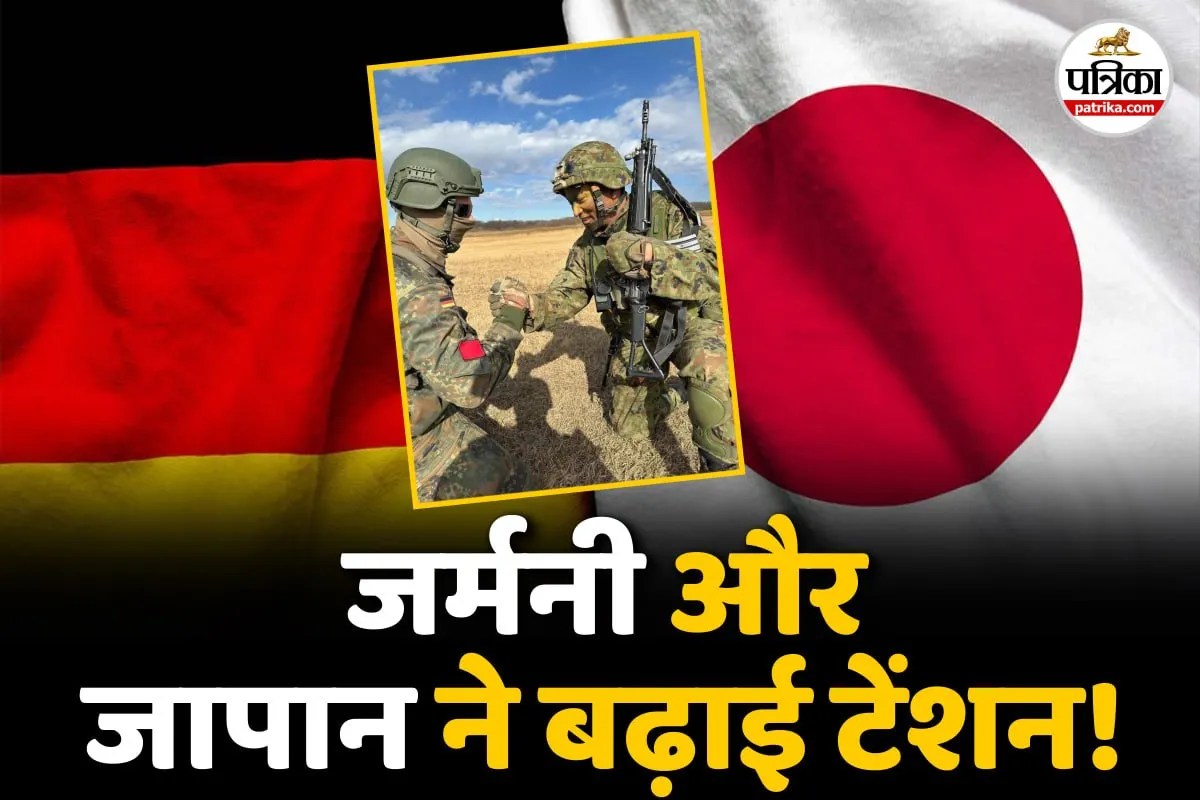
The ghosts of 1945 are finally being laid to rest, but not in the way most people expected. For nearly nine decades, Germany and Japan lived under the weight of their history. They were the world’s pacifist powers, focusing on cars, electronics, and economic growth while letting the United States handle the heavy lifting of global security. That era is dead. Today, Berlin and Tokyo are embarking on a massive military buildup that would have been unthinkable even five years ago.
You've probably noticed the headlines. People are nervous. There’s a visceral reaction when you hear about German tanks heading east or Japanese destroyers patrolling far from home. But if you think this is a return to the dark days of the 1930s, you’re missing the bigger picture. This isn't about conquest. It’s about survival in a world where the old rules don't apply anymore.
The End of the Post War Guilt Trip
For years, German politicians wouldn't even use the word "war." They preferred terms like "stabilization missions." Japan was even more restricted by its Article 9, a constitutional clause that technically forbids it from having an army. Of course, they had the "Self-Defense Forces," but the branding mattered. It was a promise to the world: we’ll never be a threat again.
Vladimir Putin changed everything for Germany on February 24, 2022. Chancellor Olaf Scholz called it a Zeitenwende—a turning point. He didn't just announce a few tweaks; he pledged 100 billion euros to modernize the Bundeswehr. That’s a staggering amount of money for a country that used to let its fighter jets sit grounded for lack of spare parts.
Japan's shift is equally dramatic but driven by a different fear. While Germany looks at Russia, Japan looks at China’s naval expansion and North Korea’s missile tests. They've decided to double their defense spending to 2% of GDP by 2027. This moves Japan from a passive observer to potentially the third-largest defense spender in the world. It’s a massive departure from their post-war identity.
Why the World is Shaking
It’s easy to see why neighbors are twitchy. History has a long memory. In Seoul and Beijing, Japanese rearmament isn't seen as "modernization"—it’s seen as a threat. In parts of Europe, a dominant German military brings back memories that families haven't forgotten. But the reality on the ground is that the United States can’t be everywhere at once.
Washington has been begging its allies to "share the burden" for decades. Now that it’s actually happening, the geopolitical weight is shifting. We’re moving toward a multipolar world. In this new setup, Germany becomes the central pillar of European defense, and Japan becomes the primary check on Chinese influence in the Pacific.
The tension isn't just about the weapons. It’s about the loss of predictability. When the two biggest "pacifist" nations decide it's time to buy F-35s and long-range missiles, it tells you the current international order is failing. They don't trust the old systems to protect them. Honestly, can you blame them?
More Than Just Buying Hardware
If you think this is just about writing checks to defense contractors, you’re only seeing the surface. This is a psychological shift. Germany is finally realizing that soft power—diplomacy and trade—doesn't work against a dictator who only understands hard power. They tried to "change Russia through trade" (Wandel durch Handel). It failed miserably.
Japan is doing something even more radical. They’re developing "counterstrike capabilities." This means they can hit targets in another country if they feel an attack is imminent. For a nation that spent 80 years promising never to strike first, this is a massive legal and moral leap. They’re buying hundreds of American Tomahawk missiles to make sure everyone knows they can bite back.
The NATO Connection and the Pacific
These two countries aren't acting in a vacuum. They’re syncing up. We’re seeing more Japanese officials at NATO summits and more German warships in the South China Sea. They realize that security in Europe and security in Asia are now linked. If Russia succeeds in Ukraine, it emboldens China. If China moves on Taiwan, it distracts the U.S. from Europe.
- Germany is leading a multinational brigade in Lithuania.
- Japan is signing "reciprocal access" deals with Australia and the UK.
- Both are investing heavily in cyber warfare and space defense.
The Risks No One Wants to Talk About
Is there a risk of accidental escalation? Absolutely. When you have more "metal" in the water and more jets in the air, the margin for error shrinks. A mid-air collision or a misunderstood naval maneuver could spark a crisis that neither side wants.
There's also the domestic side. Not every German or Japanese citizen is happy about this. In Germany, the far-right and far-left both complain about spending money on weapons instead of schools. In Japan, the older generation still clings to the pacifist constitution as a point of pride. The governments are dragging their populations into a new reality that many aren't ready to face.
What This Means for You
You should expect more volatility. The era of cheap security is over. For investors, this means the defense sector is no longer a niche market; it’s a core part of national industrial policy in Europe and Asia. For everyone else, it means the "peace dividend" we enjoyed since the 1990s has been spent.
The world isn't going back to 1939, but it isn't staying in 2010 either. Germany and Japan are becoming "normal" powers again. They’re realizing that to keep the peace, you have to be capable of winning a war. It’s a bitter pill to swallow, especially given their history, but they’ve decided they’d rather be armed than vulnerable.
Keep an eye on the upcoming budget cycles in Berlin and Tokyo. If the spending holds steady despite economic pressure, you’ll know this shift is permanent. The transition from economic giants to military players is the biggest story of the decade. Don't let the headlines distract you from the long-term trend: the regional powers are taking over their own neighborhoods.
Stay informed by tracking the deployment of the German Navy in the Indo-Pacific and Japan's integration of its new missile defense systems. These are the real indicators of how fast this transformation is moving. The world is getting louder, and these two former pacifists are leading the chorus.