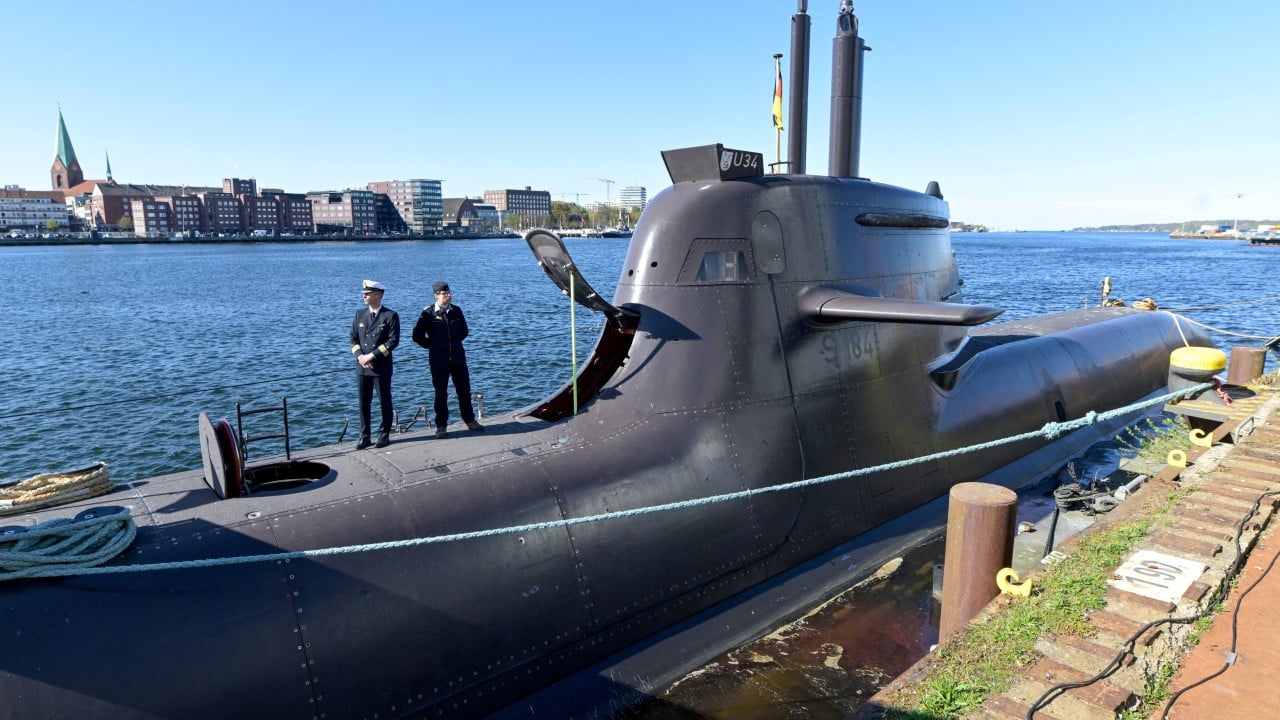
The lazy consensus running through defense commentary is that India’s multibillion-dollar conventional submarine procurement with Germany's Thyssenkrupp Marine Systems (TKMS) is a fragile stress test for domestic manufacturing goals. Commentators love to wring their hands over past procurement delays, cite historical friction from the 1980s Shishumar class, and frame the arrangement as an awkward gamble where New Delhi risks being shortchanged on technology transfer.
That narrative is entirely backwards. Meanwhile, you can find related developments here: Litigation Risk and Capital Erosion: The Economics of the High Court Privacy Failure.
The Project 75-India program is not a test of domestic ambitions; it is the ultimate validation of a cold, pragmatic industrial strategy that weaponizes foreign engineering to build local sovereignty. When Mazagon Dock Shipbuilders and TKMS locked down their commercial negotiations for six advanced, enlarged Type 214-class boats featuring fuel-cell air-independent propulsion, they did not create a vulnerability. They engineered a masterclass in technology absorption.
The Myth of the Fragile Transfer
Critics love to argue that buying foreign designs undermines indigenous capability. This logic assumes that building a modern combat submarine from scratch in a vacuum is an efficient use of decades and billions of dollars. It is not. To see the complete picture, we recommend the excellent article by Bloomberg.
A conventional submarine is arguably the most complex integrated system engineered by humanity. Displacing upwards of 3,400 tons submerged, the customized Indian variant requires scaling up hydrogen fuel-cell modules, heavy-duty propulsion batteries, and advanced tactical combat management systems into a tight hull. Expecting domestic shipyards to invent every single metallurgy specification and sensor integration milestone natively without a baseline reference design is a recipe for a 30-year capability void.
By partnering with TKMS to build these hulls locally in Mumbai, India bypasses a generation of trial-and-error R&D. Imagine a scenario where a software company tries to write an operating system by ignoring every existing architecture; they fail while competitors capture the market. India is avoiding that trap. The transfer of design know-how for a heavily modified, ultra-quiet hull acts as an industrial cheat code, compressing a forty-year learning curve into a single production run.
Weaponizing the Strategic Partnership Model
The friction points in defense contracts usually stem from mismatched incentives. Foreign original equipment manufacturers want to sell finished kits with zero IP leakage, while buyers want complete independence on day one. Both extremes fail.
The structural brilliance of the current arrangement lies in its mandatory local execution framework. TKMS does not just hand over blueprints; they are binding themselves to a joint production reality inside Mazagon Dock yards. The financial magnitude of the deal—hovering around the 8 to 9 billion dollar mark—forces the German firm to establish a permanent supply chain ecosystem locally to manage lifecycle maintenance, weapon integration, and future refits.
This creates an inescapable gravitational pull for domestic micro, small, and medium enterprises. Once local vendors are certified to build parts for an elite platform like the Type 214NG lineage, their manufacturing baseline permanently shifts upward. They stop being local fabricators and become globally qualified defense suppliers.
The Regional Undersea Reality Check
Why does this matter right now? Because the strategic clock is ticking loudly across the Indo-Pacific.
Critics who advocate for waiting out foreign dependencies ignore the shifting maritime balance. With neighboring fleets accelerating the induction of air-independent propulsion attack submarines, the Indian Navy cannot afford another decade of design committees debating theoretical domestic hulls while facing a glaring capability gap in the western and eastern seaboards.
The German deal provides an immediate, proven operational answer to sea-denial requirements while laying down the exact industrial scaffolding needed for subsequent indigenous classes like the planned Project 76.
Stop treating industrial partnership as a sign of weakness. True sovereignty is not about building every nut and bolt in isolation; it is about having the economic leverage to force the world's best engineers to build their masterpieces in your shipyards, on your terms, so your workforce can master the craft.

_1617603374686.jpg)