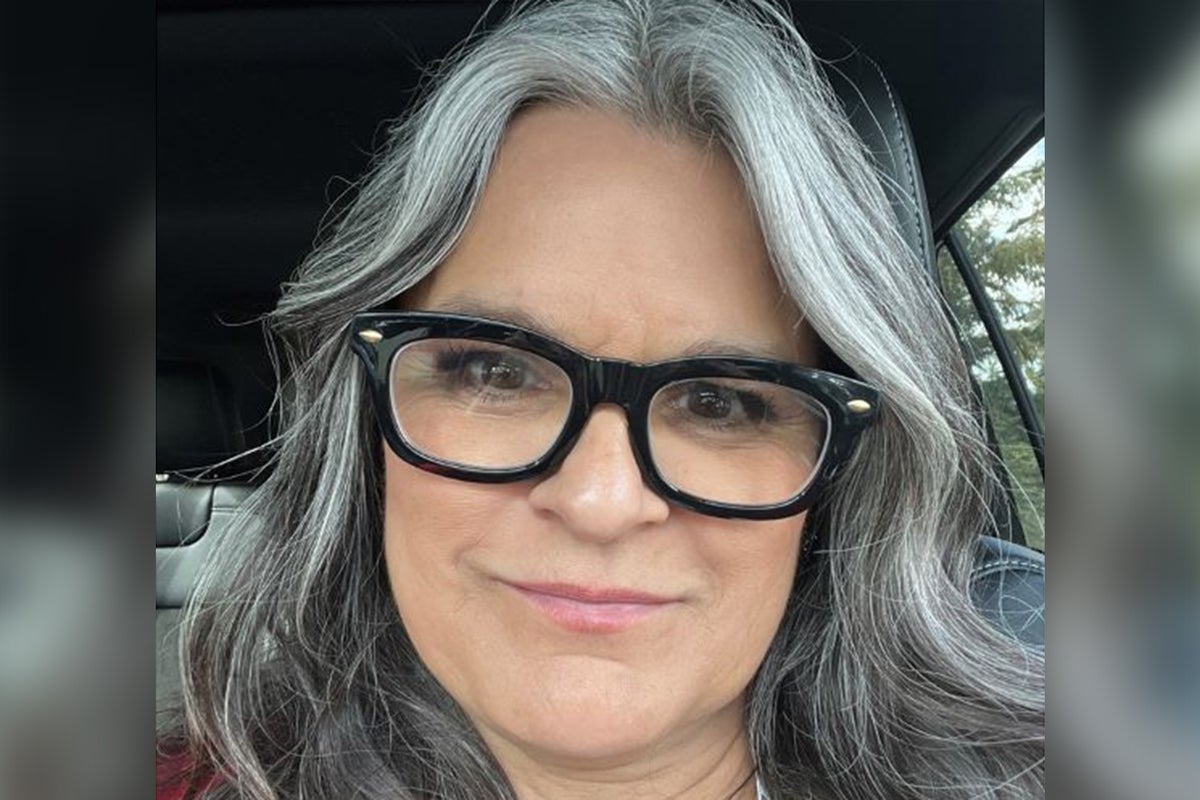
The death of actor and filmmaker Georgina Lightning at age 63 is not merely a tragic headline about a freak accident at an Alberta rodeo ground. It is a stark indicator of how precarious safety protocols remain within production environments where live action intersects with unpredictable elements. Lightning, a celebrated member of Canada's Samson Cree Nation and a fierce advocate for Indigenous storytelling, was struck by a runaway horse while standing in a designated media area at the Enoch Park Race Track. She was there doing what she loved best: documenting her culture, gathering material for an upcoming project, and anchoring a community that depended on her voice.
When a horse veers off a track and penetrates a zone explicitly cordoned off for media personnel, the conversation must immediately pivot away from abstract tragedy and toward institutional accountability.
Behind the Safety Tape
Accidents involving heavy livestock and high-speed sports are rarely spontaneous anomalies. They are usually the cumulative result of systemic complacency. In professional film and media production, designated press boxes or media enclosures are constructed under the strict assumption of safety. They are supposed to be physical buffers against chaos.
When that buffer fails, the mechanisms governing site risk assessment must be pulled apart. According to initial reports from the Royal Canadian Mounted Police and the subsequent intervention of Alberta Occupational Health and Safety, Lightning was positioned precisely where she was supposed to be when the animal broke its course during an Indian relay event.
How a multi-hundred-pound animal running at maximum velocity breaches a designated perimeter exposes an uncomfortable truth about rural and localized arena management. Production crews, documentary teams, and independent journalists routinely step into spaces where safety margins are narrow, improvised, or entirely dependent on historical precedent rather than modern engineering controls. We rely on handlers yelling warnings instead of physical barricades designed to withstand kinetic impacts.
A Legacy Carved Out of Resistance
To view Lightning solely through the lens of her final moments is to fundamentally misunderstand her magnitude. Her footprint across the entertainment industry spanned decades. International audiences recognized her from her work in the hit British comedy-drama Auf Wiedersehen, Pet, where she portrayed Lainie Proudfoot in 2002. North American viewers knew her from appearances in Walker, Texas Ranger, Three Pines, and Blackstone.
Yet her most enduring contributions happened behind the camera. Lightning was tired of seeing her people flattened into one-dimensional Hollywood tropes. Alongside her peers, she founded Tribal Alliance Productions, an infrastructure built entirely to wrest control of Indigenous narratives away from outside exploiters and return them to the rightful lineage holders.
Her 2008 feature film, Older Than America, was an unflinching excavation of the generational trauma caused by the Canadian residential school system. It was intensely personal; the film served as a monument to her father, who suffered under that systemic cruelty. Lightning did not tell stories for comfort. She told stories to provoke systemic awakening.
The Industry Reckoning That Never Comes
Tributes from co-stars like Tim Healy and fellow creatives such as Lily Gladstone have flooded public channels, highlighting a woman who was fiercely protective of her family, including her actor daughter Crystle Lightning, and endlessly generous to younger artists. But public grief cannot replace structural reform.
Every time a crew member, journalist, or documentarian steps onto a live event perimeter without absolute spatial guarantees, they gamble with their lives. The standard operating procedure across independent media often normalizes hazard exposure under the banner of capturing authentic momentum. If you want the shot, you have to stand near the danger. That unwritten rule is a professional hazard that insurance underwriters and safety boards have historically turned a blind eye to.
As Alberta Occupational Health and Safety investigators piece together the timeline at Enoch Cree Nation, the inquiry must look beyond individual handler error. It must interrogate the physical architecture of rural media zones. Until event organizers treat press perimeters with the same rigorous hazard modeling applied to stunt coordination on major studio lots, tragedies like this will remain an accepted, horrifying cost of doing business.
Georgina Lightning spent her life tearing down walls that kept Indigenous voices silenced. Her sudden loss leaves a massive, jagged void in the artistic community. The industry she fought to change must now decide whether her final lesson will be ignored or turned into a permanent standard for human protection