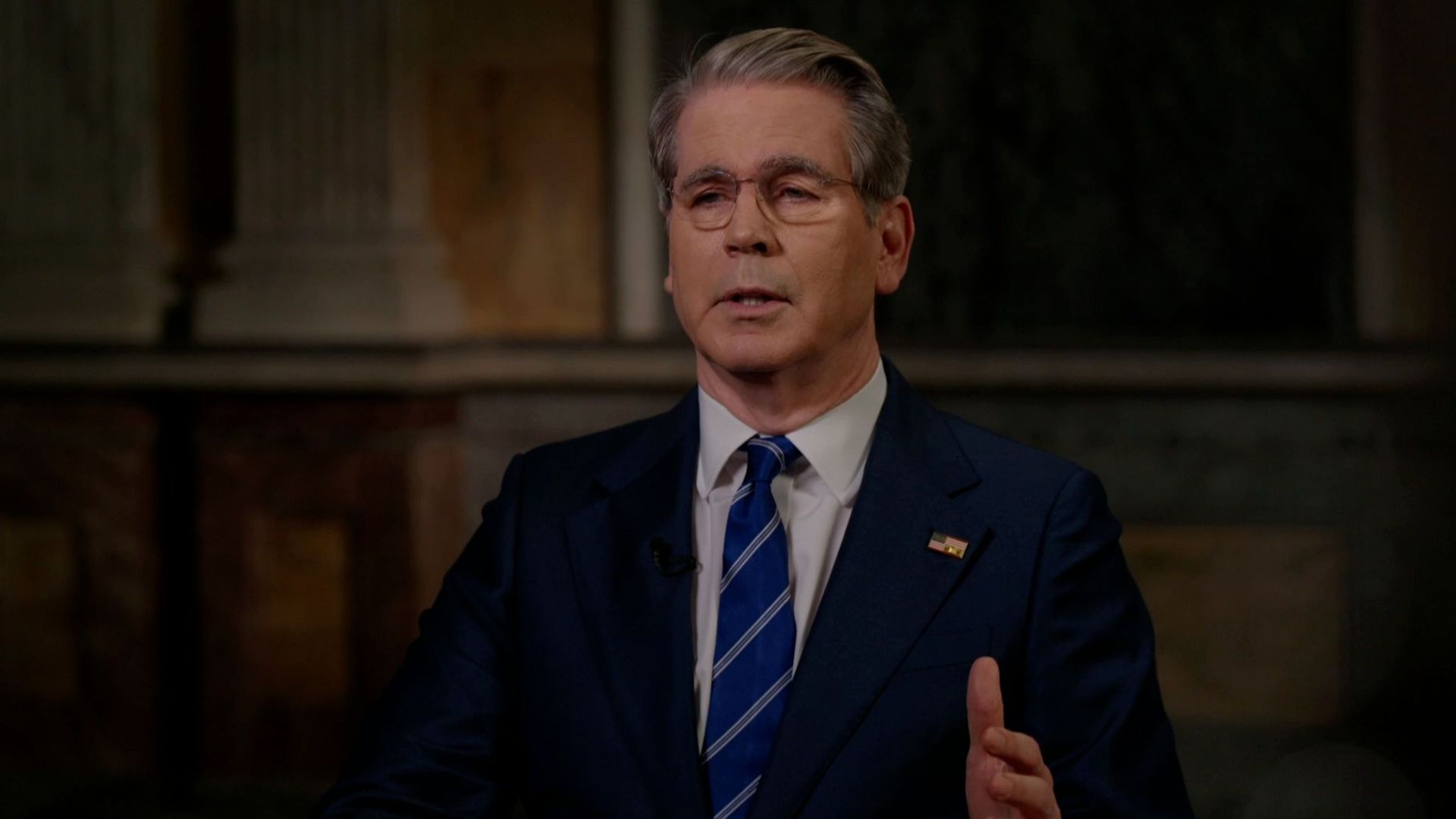
The deployment of naval escorts for oil tankers in the Strait of Hormuz is not merely a military response to localized aggression; it is a critical intervention in the global energy supply chain designed to decoupled physical security risk from commodity pricing volatility. When a sovereign entity—in this case, the U.S. Treasury—signals a shift toward active maritime protection, it is addressing a specific market failure where the private cost of insurance and security can no longer be absorbed by the shipping industry without triggering a systemic inflationary spike in global energy markets.
The Strait of Hormuz functions as the world's most important oil transit chokepoint. Approximately 20% of the world's total liquid petroleum consumption passes through this 21-mile-wide waterway daily. The strategic logic of naval escorts rests on three distinct pillars: the deterrence of asymmetric kinetic threats, the stabilization of Protection and Indemnity (P&I) insurance premiums, and the maintenance of "freedom of navigation" as a global public good. For another view, see: this related article.
The Calculus of Asymmetric Maritime Threats
To understand why escorts are necessary, one must categorize the threats facing commercial shipping. These are rarely conventional naval engagements. Instead, they take the form of "grey zone" tactics designed to create maximum economic disruption with minimum political accountability.
- Waterborne Improvised Explosive Devices (WBIEDs) and Limpet Mines: These are low-cost, high-impact tools used to disable vessels without sinking them. The goal is to render a ship unseaworthy, blocking transit lanes and forcing expensive salvage operations.
- Unmanned Aerial Vehicles (UAVs): Modern loitering munitions allow state or non-state actors to strike bridge wings or engine rooms from significant distances, bypassing traditional radar signatures by utilizing low-altitude flight paths.
- State-Sponsored Seizures: The detention of vessels under the guise of "regulatory infractions" serves as a hostage-taking mechanic in diplomatic negotiations.
A naval escort changes the risk-reward ratio for these tactics. By providing a "sensor-to-shooter" umbrella, an escort vessel extends the defensive perimeter of a tanker. This is measured by the Reaction Window: the time between detecting an incoming threat and the deployment of a countermeasure. For an unescorted tanker, the reaction window against a fast-attack craft might be seconds; for an escorted vessel, the destroyer’s radar and electronic warfare suites can push that window out to several miles, allowing for non-kinetic or kinetic interception long before the tanker is in danger. Further analysis on the subject has been shared by MarketWatch.
The Insurance Feedback Loop and Synthetic Risk
The primary economic driver for government-led escorts is the volatility of "War Risk" premiums. Most commercial shipping insurance is divided into Hull & Machinery (H&M) and P&I cover. However, when a region is designated a "listed area" by the Joint War Committee (JWC) in London, shipowners must pay an additional premium for every transit.
This premium is essentially a tax on geopolitical instability. When tankers are attacked, these rates do not just rise; they can become "subject to quote," meaning they fluctuate hourly. In extreme scenarios, the cost of insuring a single voyage through the Strait of Hormuz can exceed the profit margin of the cargo itself.
By providing naval escorts, a government is effectively "underwriting" the risk with its military budget. If the presence of a destroyer reduces the statistical probability of a successful attack, insurance underwriters are forced by competitive pressure to lower premiums. This intervention prevents the Contagion Effect, where high shipping costs in the Persian Gulf lead to higher pump prices in Europe and Asia, potentially cooling global GDP growth.
Strategic Depth and Resource Allocation
Deploying naval assets for escort duty is an exercise in high-stakes resource optimization. A navy cannot protect every vessel; it must choose between Area Defense and Point Defense.
- Area Defense: Patrolling a wide corridor to deter any hostile presence. This is resource-intensive and leaves "blind spots" that can be exploited by fast-moving assets.
- Point Defense (The Escort Model): Directly shadowing a high-value asset or a "convoy" of assets. This is more effective at stopping specific attacks but signals a defensive posture that can be viewed as reactive rather than proactive.
The effectiveness of this strategy depends on the Force Composition Ratio. A single guided-missile destroyer can theoretically protect a group of 3-5 Very Large Crude Carriers (VLCCs) if they are organized into a tight formation. However, this creates a secondary bottleneck: synchronization. Forcing tankers to wait for an escort creates a "queueing delay," which has its own associated costs in terms of charter rates and delivery schedules.
The Limitation of Kinetic Deterrence
Military escorts are not a panacea. There are three primary failure points in this strategy that analysts often overlook:
- The Saturation Problem: If a hostile actor launches a swarm of twenty low-cost drones at a convoy, the escort's defensive systems (such as the Aegis Combat System) may face "leaky" saturation where the volume of targets exceeds the number of available interceptors.
- Legal Ambiguity of Force: Navies operate under Rules of Engagement (ROE). A hostile boat approaching a tanker is a threat, but at what precise distance does it become a target? Hostile actors exploit this ambiguity, "buzzing" tankers to trigger a response and then filming the interaction for propaganda purposes, claiming "unprovoked aggression."
- The Displacement of Risk: Securing the Strait of Hormuz may simply push the threat further out into the Gulf of Oman or the Arabian Sea, where the search area is vast and the density of naval assets is lower.
Operational Execution: The Escort Protocol
A masterclass in maritime strategy requires looking at the actual operational steps required to secure a chokepoint. The process follows a structured sequence:
- Intelligence Integration: Merging satellite imagery, signals intelligence (SIGINT), and human intelligence (HUMINT) to identify "launch signatures" from coastal batteries or hidden fast-boat bases.
- Communication Synchronization: Commercial tankers use different communication protocols than military vessels. Establishing a "Common Operational Picture" (COP) requires the installation of secure transponders or the presence of military liaison teams on board the civilian tankers.
- Active Countermeasures: This includes the use of Electronic Countermeasures (ECM) to jam drone GPS signals and the deployment of "dazzlers" (non-lethal lasers) to blind the pilots of approaching craft.
The Strategic Play: Transitioning to Multi-Lateral Security
The current reliance on a single nation's treasury or navy to secure the Strait is a fragile equilibrium. The most logical progression for global energy security is the formalization of an international maritime security construct where the costs and asset requirements are shared proportionally by the nations that consume the oil.
For a strategy to be truly "high-authority," it must move beyond reacting to the news of the day and look at the structural mechanics of power. The escort announcement is a short-term stabilize-and-hold tactic. The long-term play for energy independence and maritime safety involves diversifying transit routes—such as the East-West Pipeline in Saudi Arabia—and increasing the "Cost of Aggression" for the hostile actor.
Increasing the cost of aggression requires more than just shooting down drones; it requires a coordinated financial and diplomatic "Sanctions Shield" that triggers automatically upon any verified kinetic interference with commercial shipping. Until the "Price of Disruption" for the aggressor exceeds the "Value of Deterrence" for the protector, the Strait of Hormuz will remain a theater of managed volatility.
The immediate tactical requirement is the deployment of modular, embarked security teams. Rather than using a $2 billion destroyer to shadow every ship, navies should prioritize placing small, highly-trained "vessel protection detachments" directly onto the decks of commercial tankers. This decentralizes the defense, provides immediate point-of-impact response, and allows the larger naval vessels to focus on high-level area surveillance and long-range interception. This shift from "escorting" to "onboard hardening" represents the most efficient use of military capital in a high-threat, high-traffic environment.


