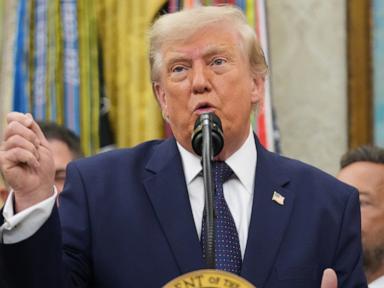
The intersection of sovereign executive power and transnational sports governance reached an unprecedented equilibrium during the 2026 FIFA World Cup, forcing a structural re-evaluation of institutional autonomy. The public acknowledgement by United States President Donald Trump regarding his direct communication with FIFA President Gianni Infantino—concerning the automatic one-match suspension of American forward Folarin Balogun—highlights a vulnerabilities matrix within global regulatory bodies. While framed by executive actors as a routine petition for procedural equity, the intervention exposes how concentrated political leverage can alter the operational mechanics of supposedly independent judicial organs. Understanding this friction requires a precise deconstruction of FIFA’s disciplinary framework, the cognitive biases inherent in video review systems, and the systemic precedent established by selective regulatory relief.
The Frictionless Intervention: Executive Leverage vs. Transnational Regulatory Autonomy
The structural integrity of global sports organizations relies on the principle of strict separation from state interference. FIFA statutes historically dictate that member associations must manage their affairs independently, free from third-party influence. The intervention by a host nation’s chief executive introduces an asymmetric power dynamic that challenges this foundational tenet.
The mechanism of this influence is not transactional in a classical sense; rather, it operates as a form of diplomatic suasion. By initiating direct contact with the leadership of a transnational body, an executive actor bypasses established appellate protocols. The structural vulnerability exists because host nations yield immense logistical, economic, and security control over global tournaments. When a head of state characterizes a judicial decision as an injustice, the regulatory body faces a binary choice: preserve total procedural isolation at the risk of political friction, or offer administrative concessions to maintain diplomatic alignment.
The strategic execution of this outreach relied on a calculated narrative of procedural normalization. By asserting that the communication merely requested a "review" rather than a mandated outcome, the executive branch attempted to respect the nominal independence of the FIFA Disciplinary Committee. This distinction is superficial. In highly bureaucratic institutions, an extraordinary inquiry from the highest tier of geopolitical power functions as an implicit directive, shifting the burden of proof onto the judicial body to justify maintaining its original sanction.
The Mechanism of Disciplinary Distortion: Slow-Motion Bias in Video Review Systems
A central argument advanced against the original red card issued to Balogun by Brazilian referee Raphael Claus centers on the mechanics of the Video Assistant Referee (VAR) apparatus. The incident, which occurred during a match against Bosnia and Herzegovina, involved a challenge where the attacker's cleat made contact with the opponent's ankle. While field officials initially observed the play at full speed without issuing an immediate dismissal, a subsequent slow-motion review resulted in a straight red card.
The critique of this process uncovers a documented cognitive distortion known as the slow-motion bias. Empirical research in forensic psychology and decision-making demonstrates that reviewing an action in slow motion alters the observer's perception of intent and malice.
- Temporal Distortion: Slowing down footage extends the perceived window of time an athlete has to make a decision, making an involuntary or kinetic collision appear premeditated and deliberate.
- Decontextualization of Force: Slower playback frequencies isolate the point of impact from the velocity of the approach, exaggerating the severity of physical contact while minimizing the role of momentum.
- Intent Attribution: Observers viewing decelerated clips are statistically more likely to conclude that an action was malicious rather than accidental, as the natural mechanics of athletic entanglements are stripped of their physical immediacy.
The administrative consensus within the host country's executive task force focused heavily on this technical limitation. The argument holds that using slow-motion replays to evaluate subjective infractions creates an artificial threshold for misconduct. By evaluating the physics of a high-speed collision through an elongated temporal lens, judicial systems risk penalizing unavoidable athletic impact rather than clear breach of safety regulations.
The Precedent of Selective Suspension: Legal Arbitrage in FIFA's Disciplinary Code
The administrative mechanism utilized to clear Balogun for the knockout stage match against Belgium relies on a highly obscure provision of the FIFA Disciplinary Code. Under standard operational procedures, a direct red card triggers an automatic, non-appealable one-game suspension. This rule ensures predictability and prevents the tournament schedule from being disrupted by endless litigation.
To bypass this barrier, the judicial body invoked specific clauses allowing for the full or partial suspension of disciplinary measures. This maneuver represents a form of administrative arbitrage, where the letter of the law is utilized to subvert its established intent.
[Standard Disciplinary Protocol] -> Direct Red Card -> Mandatory 1-Game Suspension (Non-Appealable)
                                                                 |
[Executive Intervention Path]   -> Presidential Review Request --+--> Judicial Body Invokes Disciplinary Code Exception -> Suspension Lifted
The application of this exception is exceedingly rare, particularly during active tournament play. The decision to grant relief creates an immediate structural imbalance within the competition. The asymmetry is highlighted by three distinct variables:
- Inequity of Access: Elite national teams backed by significant geopolitical capital possess the resources and direct communication channels necessary to trigger extraordinary reviews, an advantage unavailable to less influential member nations.
- Erosion of Rules Certainty: When non-appealable sanctions are rendered malleable under external scrutiny, the predictability of tournament regulations dissolves, undermining the legal certainty required for fair competition.
- Appellate Expansion: By accommodating an ad-hoc review of an on-field officiating decision, the governing body inadvertently establishes a precedent where any controversial disciplinary action becomes subject to political or administrative negotiation.
The immediate pushback from international football bodies, including European football's governing organization and the Belgian soccer federation, reflects the systemic alarm triggered by this ruling. The core objection is not merely about the presence of a specific athlete on the pitch, but the abandonment of uniform regulatory enforcement.
Institutional Spillover and Strategic Alternatives
The immediate competitive outcome—the subsequent 4-1 elimination of the United States by Belgium—does not nullify the institutional structural shift caused by this event. The precedent now exists within the framework of global sports diplomacy. When a transnational sports body yields to executive pressure from a host state, it alters the perceived risk calculation for future tournament organizers.
To mitigate this systemic vulnerability, global sports governance must transition toward rigid, automated insulation frameworks. Relying on the self-restraint of political leaders or the internal fortitude of sports executives is insufficient.
A permanent solution demands a structural decoupling of the judicial and executive arms of sports organizations. The disciplinary apparatus must operate on a closed-loop system where automated review parameters are hardcoded into the tournament regulations before the commencement of play. For example, if video review data is to be utilized, it must be audited by an independent, third-party technocratic panel operating entirely outside the administrative hierarchy of the governing body's president. This removes the point of vulnerability by ensuring that even if a political figure initiates contact with an executive leader, that leader lacks the structural authority to influence the judicial outcome.
Furthermore, the integration of video review technology requires clear calibration standards to counteract the slow-motion bias. Regulations should mandate that full-speed playback must be the primary metric for assessing intent, reserving slowed footage strictly for objective determinations such as point of contact or boundary lines. Without these clear technical safeguards, the intersection of subjective video analysis and external political influence will continue to threaten the operational stability of transnational competitions.