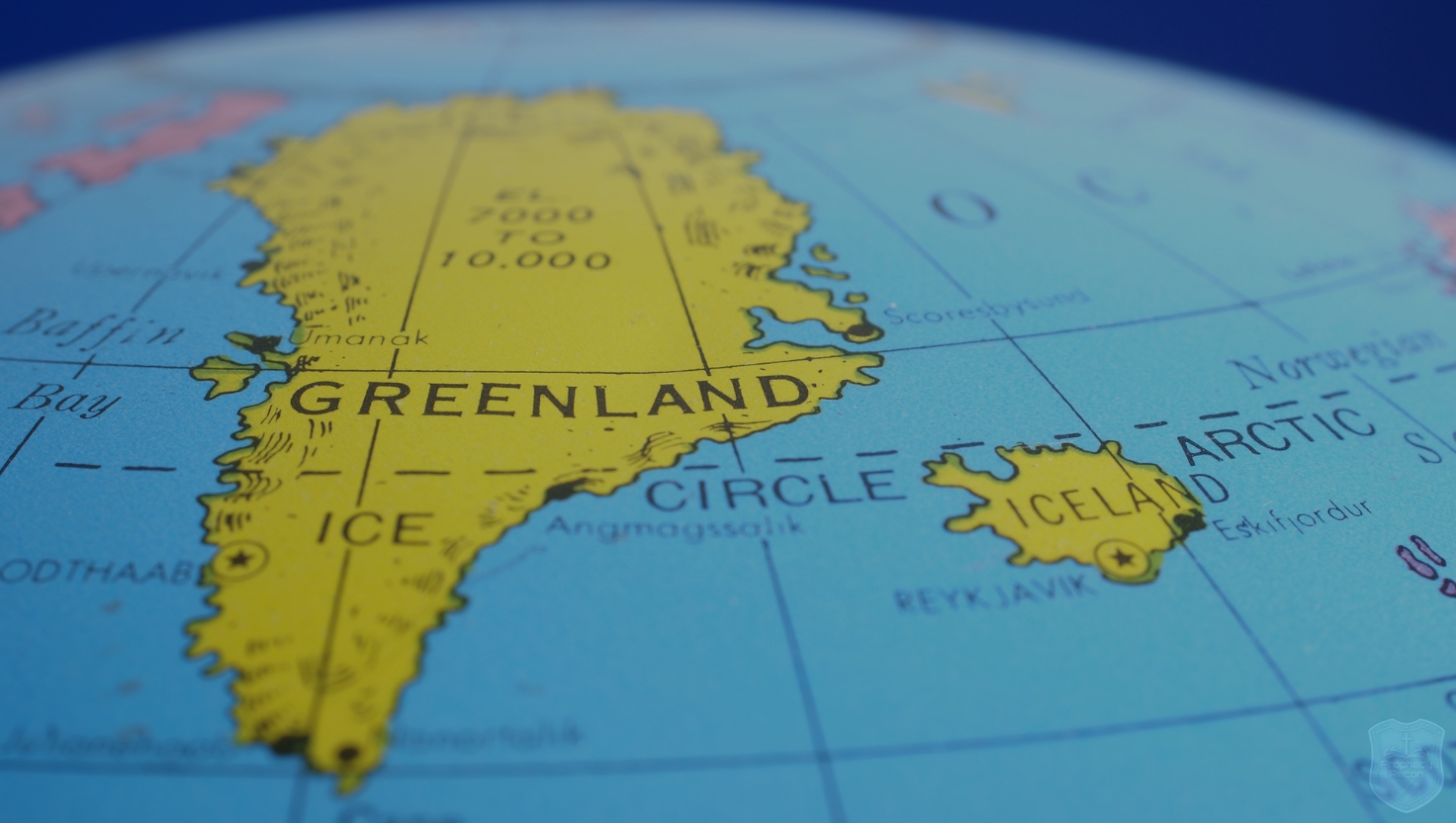
Greenland represents the most significant non-sovereign strategic asset in the Arctic Circle, possessing a value proposition that renders traditional real estate acquisition models obsolete. The friction between the United States’ sporadic interest in purchase and Denmark’s refusal to sell stems from a fundamental misalignment in valuation frameworks. While a real estate lens views Greenland through land mass and resource potential, a strategic analyst views it through the Arctic Sovereignty Triad: 1) Permanent presence and early warning systems, 2) The extraction of critical minerals for the energy transition, and 3) The control of emerging trans-polar shipping lanes.
The Physicality of Influence: Greenland as a Continental Anchor
The dismissal of Greenland as "a piece of ice" ignores the physics of global logistics and defense. Geographically, Greenland provides the United States with a permanent forward operating base via Pituffik Space Base (formerly Thule Air Base). This installation is not merely a landing strip; it is a critical node in the global satellite tracking and ballistic missile early warning system.
The utility of this landmass is defined by its proximity to the North Pole. In a sphere-based geopolitical model, Greenland sits at the apex of the North Atlantic, controlling the GIUK Gap (Greenland, Iceland, and the United Kingdom). This maritime bottleneck is the primary transit point for any naval forces moving from the Arctic or the Russian Northern Fleet into the Atlantic Ocean. To treat this as a real estate transaction is to misunderstand the difference between owning property and controlling a theater of operations.
The Critical Mineral Paradox
The melting of the Greenland Ice Sheet, while a climate catastrophe, creates a technical opening for the extraction of rare earth elements (REEs). Greenland holds some of the world's largest untapped deposits of neodymium, praseodymium, dysprosium, and terbium. These are not luxury goods; they are the fundamental inputs for high-strength permanent magnets used in electric vehicle motors and wind turbines.
The Economic Value Chain of Greenlandic Minerals breaks down into three distinct tiers:
- Exploration and Titling: The current phase where international firms (largely Australian and Canadian) secure rights.
- Infrastructure Scaling: The massive capital expenditure required to build deep-water ports and processing plants in an environment with zero existing rail or road networks.
- Refining Monopoly: The bottleneck where China currently processes 85% of global REEs. Greenland represents one of the few viable western alternatives to break this vertical integration.
Denmark’s refusal to sell is rooted in the long-term sovereign wealth potential of these minerals. The Kvanefjeld project alone has the capacity to shift the global supply curve. However, the mechanism of extraction faces a domestic political veto. Greenlandic voters have historically prioritized environmental preservation and traditional fishing rights over the short-term cash influx of mining. This creates a "Frozen Asset" scenario where the theoretical value is immense, but the operational liquidity is near zero.
The Logic of Rejection: Sovereignty as an Inelastic Good
When Danish and Greenlandic officials respond to purchase offers with "Greenland is not for sale," they are defending a concept of Non-Transactional Sovereignty. In modern international law, the transfer of territory is no longer a matter of bilateral payment between colonial powers. The 19th-century model—exemplified by the 1867 Alaska Purchase or the 1803 Louisiana Purchase—has been replaced by the principle of self-determination.
The 2009 Act on Greenland Self-Government established a clear legal path toward independence. Under this framework:
- Greenland has ownership of its mineral resources.
- The Greenlandic people are recognized as a people under international law.
- Greenland can declare independence if its citizens vote for it, at which point Danish subsidies (the block grant) would cease.
A purchase offer from a third party like the United States bypasses the Greenlandic government, treating the island as a commodity held by Denmark. This is a category error. Denmark views its relationship with Greenland as a partnership based on historical responsibility and shared defense, not as a landlord-tenant relationship. The $600 million annual subsidy Denmark provides to Greenland is not a "cost" to be offloaded, but a geopolitical premium paid to maintain a seat at the Arctic Council table.
The Arctic Pivot and Shipping Lane Disruption
As the Arctic ice pack thins, the Northern Sea Route (NSR) and the Northwest Passage (NWP) become viable for longer periods each year. Traditional routes through the Suez Canal or Panama Canal face increasing costs due to congestion, tolls, and political instability. The trans-polar route, passing directly through or near Greenlandic waters, could reduce shipping times between East Asia and Europe by up to 40%.
[Image comparing Suez Canal route vs. Trans-polar route]
Greenland’s value in this context is as a refueling and maintenance hub. The construction of deep-water ports in Nuuk or Sisimiut would allow Greenland to capture the "middle-man" rents of global trade. If the United States were to acquire Greenland, it would effectively own the toll booth for the 21st century's most efficient trade route. Denmark and the EU recognize this strategic leverage, making the island’s "price" essentially infinite because its value is tied to the future of global trade flows.
Operational Realities vs. Rhetorical Posturing
The friction between Washington and Copenhagen is often framed as a personality clash, but it is actually a conflict of Time Horizons.
- The U.S. Horizon: Short-term and transactional. An attempt to secure resources and defense perimeters against Chinese and Russian encroachment before the 2030s.
- The Danish/Greenlandic Horizon: Generational. A slow transition toward independence that balances social welfare, cultural identity, and environmental stability.
The United States has attempted to bypass the "purchase" problem by increasing its diplomatic presence, opening a consulate in Nuuk, and providing targeted economic aid. This is a Soft-Power Integration Strategy. It seeks the benefits of ownership (influence, resource access, defense positioning) without the diplomatic and financial cost of a formal territorial transfer.
The Strategic Play: Infrastructure as Influence
The most effective way to engage with Greenland is not through the pursuit of a deed, but through the financing of Dual-Use Infrastructure. Greenland requires massive investment in telecommunications (subsea fiber-optic cables), energy (hydroelectric potential), and transportation.
By funding these projects, a foreign power gains:
- Standardization Influence: Ensuring that Greenlandic systems are compatible with Western (NATO) technology rather than Chinese-provided 5G or port infrastructure.
- Debt-to-Influence Conversion: Creating long-term economic dependencies that provide "soft" veto power over which third-party nations are allowed to operate on the island.
- Data Dominance: Controlling the nodes through which Arctic sensor data and commercial communications flow.
The future of Greenlandic-American-Danish relations will be determined by who builds the ports and lays the cables. Denmark's recent intervention to block Chinese financing for Greenlandic airports—replacing it with Danish government loans—proves that the "real estate" battle is already being fought through the balance sheet of infrastructure.
The move is to stop asking to buy the land and start offering to build the future. This requires a shift from a "Real Estate" mindset to a "Venture Capital" mindset: high-risk, long-term, and focused on the equity of influence rather than the title of the land.