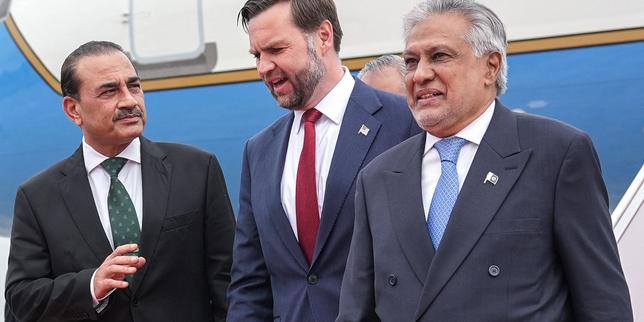
The electoral setback suffered by Donald Trump in the November 2026 US midterm elections forces an immediate structural recalibration of Pakistan’s foreign policy and military-diplomatic posture. For Rawalpindi, where Army Chief Asim Munir has consolidated executive authority and anchored bilateral outreach on transactional, leader-to-leader alignment with the Trump White House, a divided or opposition-controlled US Congress introduces severe institutional friction. The core vulnerability for Pakistan’s establishment is over-indexing on executive branch goodwill while neglecting legislative oversight mechanisms that control military aid, financial bailouts, and sanctions waivers.
The Structural Vulnerability of Personalized Diplomacy
International relations theory distinguishes between institutionalized alliances and transactional alignments. When a state anchors its security and economic survival on the personal rapport between two leaders—in this case, Field Marshal Asim Munir and Donald Trump—it creates a single-point-of-failure architecture. Recently making headlines recently: Why Ling Xiaohan Stays With Us After a 26-Day Fight.
In Washington, power is intentionally fragmented across the executive and legislative branches. While the White House directs day-to-day diplomatic signaling and executive waivers, Congress holds the statutory power of the purse, oversight of Foreign Military Sales (FMS), and confirmation authority over key State Department and Pentagon appointments. A midterm reversal strips the executive branch of legislative insulation, exposing bilateral arrangements to hostile committee hearings, statutory holds, and conditional appropriations.
For Islamabad, this shift manifests across three distinct operational bottlenecks: Additional details into this topic are covered by USA Today.
- Appropriations and Security Assistance: Congressional committees—specifically the Senate Foreign Relations Committee and the House Foreign Affairs Committee—can freeze or condition defense articles, spare parts, and counterterrorism reimbursements regardless of White House preferences.
- Multilateral Financial Leverage: The United States exercises de facto veto power and agenda-setting influence at the International Monetary Fund (IMF) and the World Bank. While the Treasury Department executes US votes on the IMF Executive Board, intense congressional scrutiny raises the political cost for the administration to intervene quietly on Pakistan’s behalf during tranche reviews.
- Human Rights and Democratic Governance Mandates: Opposition lawmakers historically utilize human rights frameworks and democratic backsliding resolutions as asymmetric political tools against a rival administration's foreign partners. Pakistan’s domestic political environment—characterized by the detention of opposition figures, media restrictions, and military-dominated governance—provides ample ammunition for legislative censure.
Deconstructing the Rawalpindi-Washington Transaction
To understand why the 2026 midterm results trigger acute anxiety in Islamabad, one must map the specific variables of the Munir-Trump alignment. Following Trump’s return to the presidency, Rawalpindi operated under the assumption that a transactional White House would prioritize immediate counterterrorism cooperation, regional containment, and intelligence sharing over governance metrics.
This hypothesis rested on three pillars:
- Counterterrorism Utility: Offering intelligence and logistical access to monitor threats emanating from Afghanistan, specifically Islamic State Khorasan Province (ISIS-K), in exchange for diplomatic rehabilitation.
- Regional Balancing: Positioning Pakistan as a hedge against both Iranian instability and unchecked Chinese infrastructure dominance, without requiring Islamabad to sever its economic lifeline to Beijing via the China-Pakistan Economic Corridor (CPEC).
- Executive Insulation: Relying on the White House to neutralize diaspora-led lobbying efforts in Washington that advocate for the release of former Prime Minister Imran Khan and the restoration of civilian supremacy.
The midterm electoral shift breaks the third pillar entirely and weakens the first two. Without a compliant congressional majority, the White House cannot shield Rawalpindi from legislative inquiries into domestic political repression or nuclear proliferation concerns. When an administration loses legislative capital, its bandwidth to expend political favors on peripheral partners contracts sharply. The White House will naturally prioritize domestic legislative survival and top-tier geopolitical theaters—such as Eastern Europe, the Indo-Pacific, and the Middle East—leaving Pakistan exposed to bureaucratic and congressional headwinds.
The Mechanics of Congressional Friction
Unlike executive diplomacy, which operates behind closed doors and responds to immediate crisis management, congressional oversight is slow, public, and driven by domestic constituency pressures. In the US electoral ecosystem, Pakistani-American advocacy groups have demonstrated high organizational capacity, particularly in swing districts and key urban centers.
Following a midterm wave that empowers the opposition, these advocacy networks gain direct access to committee chairs and ranking members. The resulting friction does not necessarily take the form of sweeping, headline-grabbing sanctions. Instead, it operates through bureaucratic attrition:
- Informal Holds on Notifications: Senior members of the foreign affairs committees can place indefinite holds on routine arms notifications or maintenance contracts for Pakistan’s aging fleet of F-16 fighter jets, degrading operational readiness over time without passing a single new law.
- Mandatory Reporting Requirements: Lawmakers routinely insert language into the annual National Defense Authorization Act (NDAA) requiring the Secretary of State and the Director of National Intelligence to submit unclassified reports on human rights compliance, press freedom, and military interference in civilian politics. These reports create permanent public records that constrain future executive flexibility.
- Treasury Watchdog Pressure: Congressional letters directed at the US Executive Director to the IMF force the Treasury Department to justify why multilateral funds are being disbursed to an economy with unresolved structural subsidies and high military expenditure. Even if a tranche is not blocked, the resulting delays spike borrowing costs and destabilize Pakistan’s fragile foreign exchange reserves.
Economic Exposure and the IMF Tightrope
Pakistan’s macroeconomic stability remains tethered to continuous engagement with international financial institutions and bilateral creditors. The country’s debt servicing obligations require rolling over billions of dollars annually while maintaining a narrow current account balance. In this environment, geopolitical perception directly dictates sovereign credit risk.
Investors and rating agencies price Pakistani sovereign debt based on the assumption of implicit US backing at the IMF. That backing is rarely formalized; it exists as a quiet diplomatic signal from Washington to European and Asian executive directors on the IMF board. When the US political system enters a period of divided government, that signal becomes ambiguous.
The mechanism is straightforward. If congressional committees signal hostility toward Rawalpindi, the White House becomes reluctant to expend diplomatic capital instructing the Treasury Department to smooth over Pakistan’s missed fiscal targets or delayed structural reforms. Consequently, the IMF technical staff reverts to strict, technocratic enforcement of program conditions—demanding aggressive energy tariff hikes, broader taxation on retail and agriculture, and tighter monetary policy. For Pakistan’s military-backed hybrid regime, implementing these measures risks triggering severe domestic civil unrest, creating a feedback loop where economic austerity fuels political instability, which in turn invites further scrutiny from Washington.
The China Variable and Strategic Hedging Limits
A common assumption among analysts in Islamabad is that any cooling in Washington can be offset by deepening reliance on Beijing. This logic misunderstands the current risk tolerance of Chinese state-owned enterprises and financial institutions.
While China remains Pakistan’s primary defense supplier and largest bilateral infrastructure investor, Beijing’s appetite for unconditional bailouts has diminished significantly. Chinese capital deployment in Pakistan faces two major constraints: persistent security threats to Chinese nationals working on CPEC projects, and unresolved sovereign debt arrears owed to Chinese independent power producers (IPPs).
Beijing views US-Pakistan stability as a net positive because Washington’s backing at the IMF ensures Pakistan maintains the dollar liquidity required to service its Chinese debt obligations. If a post-midterm political shift in Washington threatens Pakistan’s multilateral financing pipeline, Beijing will not automatically step in to replace Western capital. Instead, Chinese lenders are more likely to demand sovereign guarantees, escrow accounts, and heightened security protocols before releasing new funds. Rawalpindi cannot play the "China card" to extract concessions from a divided Washington when Beijing itself is demanding fiscal discipline and security stabilization.
Operational Limitations of Lobbying and Diaspora Outreach
In response to adverse shifts in Washington, Islamabad traditionally turns to K Street lobbying firms and retired diplomats to rehabilitate its image on Capitol Hill. This approach suffers from diminishing returns when the underlying structural issue is domestic political legitimacy.
Public relations campaigns cannot override hard intelligence assessments or constituent mobilization. When members of Congress receive coordinated communications from constituents regarding political prisoners or electoral irregularities in Pakistan, a glossy white paper from a hired consultant carries zero weight. Furthermore, the personal prominence of Field Marshal Asim Munir—while projecting centralized control domestically—serves as a liability in Washington’s institutional culture, which reflexively distrusts overt military rule unless justified by an acute, shared security emergency comparable to the post-9/11 environment.
Strategic Imperatives for Islamabad
To insulate its economic and security interests from the fallout of the 2026 US midterms, Pakistan’s leadership must immediately transition from personalized executive outreach to institutional risk management. Relying on a weakened White House to override congressional opposition is a losing strategy.
Rawalpindi and the civilian cabinet must execute a three-part recalibration over the next two quarters:
- Decouple Economic Diplomacy from Security Posturing: Shift the primary interface with Washington from the military establishment to technocratic economic ministries. Finance and commerce officials must engage directly with the US Treasury Department, the Commerce Department, and congressional appropriations staff using purely macroeconomic metrics—focusing on trade liberalization, critical minerals, and IT services—rather than transactional security bargains.
- De-escalate Domestic Political Friction: Recognize that domestic political repression is the primary trigger for congressional intervention. Lowering the political temperature through selective legal relief for opposition figures and easing restrictions on digital media will deprive hostile lawmakers on Capitol Hill of the moral framing needed to attach punitive riders to defense and financial bills.
- Institutionalize Bipartisan Congressional Engagement: Abandon the practice of relying solely on White House intermediaries. Pakistani diplomatic missions in the United States must build direct, working-level relationships with the professional staff members of the House Foreign Affairs and Senate Foreign Relations committees across both parties, providing transparent data on counterterrorism operations and economic reforms before legislative narratives harden into statutory restrictions.