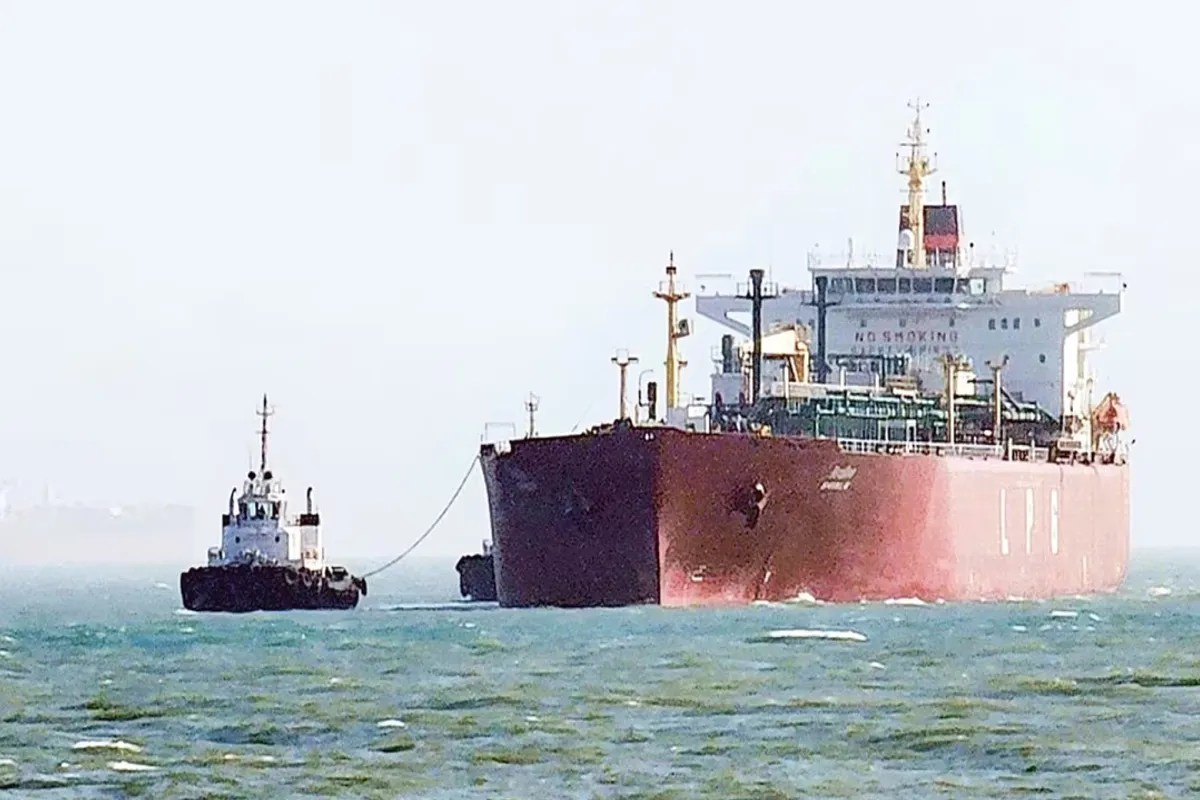
Iran's proposed implementation of a transit fee on maritime vessels navigating the Strait of Hormuz represents a structural shift from conventional military deterrence to aggressive economic rent-seeking. By attempting to monetize access to one of the world's most critical maritime chokepoints, Tehran is seeking to operationalize its geographic position into a dual-purpose mechanism: generating non-oil sovereign revenue and establishing a highly selective diplomatic cudgel. This strategic maneuver exploits vulnerabilities in international maritime law, alters the cost structures of global energy logistics, and establishes a dangerous precedent for global trade chokepoints.
Understanding the implications of this policy requires stripping away rhetorical posturing and analyzing the underlying legal frameworks, economic cost functions, and enforcement dynamics that govern the Persian Gulf.
The Legal Architecture of Friction
The primary justification advanced for the imposition of transit fees rests on a contested interpretation of maritime sovereignty. The legal status of the Strait of Hormuz is governed by a delicate balance between the United Nations Convention on the Law of the Sea (UNCLOS) and customary international law. Under UNCLOS, straits used for international navigation enjoy the right of transit passage, which cannot be suspended, hampered, or taxed by coastal states.
Iran's legal maneuver capitalizes on a specific ratification loophole. Although Iran signed UNCLOS in 1982, its parliament never ratified the treaty. Tehran maintains that it is bound only by customary international law and the 1958 Geneva Convention on the Territorial Sea and the Contiguous Zone. Under the 1958 convention, the regime governing international straits is "innocent passage" rather than "transit passage."
This distinction creates the legal friction Iran requires:
- Innocent Passage Limits: Coastal states can suspend innocent passage if a vessel's conduct is deemed prejudicial to the peace, good order, or security of the coastal state.
- Regulatory Overreach: Under this framework, Iran claims the authority to impose environmental taxes, security fees, and administrative charges on the grounds of maintaining the safety of navigation and mitigating ecological degradation within its territorial waters.
The coastal geography of the strait exacerbates this vulnerability. The inbound shipping lane of the Traffic Separation Scheme (TSS) lies entirely within Omani territorial waters, while the outbound lane passes through Iranian territorial waters near the islands of Lesser Tunb and Forur. Because vessels must navigate both lanes during a round trip, escaping Iranian jurisdiction during transit is mathematically and geographically impossible for commercial shipping serving the upper Persian Gulf.
The Cost Function of Maritime Compliance
Imposing a sovereign transit fee alters the microeconomics of maritime transport, introducing a cascade of direct and indirect costs that shippers must absorb or pass along to end consumers. The total financial impact per voyage under this proposed system is defined by three distinct variables.
Direct Sovereign Levies
The baseline cost involves the explicit tariff levied by Iranian authorities. If modeled after the Suez Canal or Panama Canal pricing structures, these fees would likely be calculated based on a vessel's Net Tonnage (NT) or twenty-foot equivalent unit (TEU) capacity. For a Very Large Crude Carrier (VLCC) carrying two million barrels of crude, even a nominal fee of a few cents per barrel translates into hundreds of thousands of dollars per transit.
Surcharges and War Risk Insurance
The introduction of an unratified, enforced fee immediately elevates the risk profile of the transit zone. Marine underwriters react to unilateral regulatory shifts by expanding the boundaries of Listed Areas subject to Hull War, Piracy, Terrorism, and Related Perils surcharges. Shippers face a binary choice: comply with the Iranian fee or risk non-compliance, which could lead to vessel detention by the Islamic Revolutionary Guard Corps Navy (IRGCN). A single boarding action or detention triggers off-hire clauses, spiking operational expenditures (OPEX) by tens of thousands of dollars per day and invalidating standard protection and indemnity (P&I) coverage.
Operational Inefficiencies
The administrative burden of processing payments to an entity under extensive international sanctions introduces profound compliance bottlenecks. International banks operating under compliance frameworks cannot facilitate direct wire transfers to Iranian government accounts without triggering secondary sanctions. The resulting payment architecture requires complex, third-party clearing mechanisms, expanding transaction times and increasing the demurrage risks for charterers.
The Architecture of Selective Exemption
The strategic utility of the transit fee is maximized not through its uniform enforcement, but through its asymmetric application. By explicitly offering exemptions to a curated list of nations, Iran constructs a bifurcated compliance system designed to fracture international coalitions and secure bilateral concessions.
[Global Shipping Fleet]
       │
       ├─► Category A: Exempt Nations (China, Russia, Strategic Partners)
       │   └─► Outcome: Zero Tariff, Maintained Margins, High Supply Security
       │
       └─► Category B: Non-Exempt Nations (Western Bloc, Allied Asian Economies)
           └─► Outcome: High Tariffs, Insurance Surcharges, Higher Demurrage Risks
This structural bifurcation targets three distinct geopolitical outcomes.
The first outcome is the formalization of preferential trade corridors. Granting explicit exemptions to major net importers of energy, such as China, reinforces an asymmetric interdependence. Compliant nations receive a structural cost advantage in their energy procurement, effectively subsidizing their manufacturing and refining sectors relative to non-exempt competitors.
The second outcome is the penalization of geopolitical adversaries. Nations aligned with Western security architectures face the full economic weight of the transit fee and associated insurance spikes. This raises the landed cost of Persian Gulf crude and LNG in these economies, driving localized inflation and complicating monetary policy.
The third outcome is the creation of a diplomatic transactional asset. The exemption itself becomes a commodity that Tehran can trade during bilateral negotiations. Non-exempt states seeking to protect their shipping industries are forced to engage in direct or indirect diplomatic choreography with Tehran, offering sanctions relief, technology transfers, or political neutrality in exchange for tariff waivers.
Supply Chain Chokepoint Dynamics
The Strait of Hormuz accommodates the transit of approximately 20 to 30 percent of global liquefied natural gas and total petroleum liquids consumption. The structural rigidity of this supply chain means that even minor frictional costs introduced at the source yield disproportionate price volatility at the point of consumption.
The global energy market lacks the immediate elasticity to bypass this chokepoint. While overland pipelines exist within the region, their collective spare capacity is insufficient to absorb the volume moving through the strait. The Abu Dhabi Crude Oil Pipeline (Habshan–Fujairah) and Saudi Arabia’s East-West Pipeline can divert a portion of crude flows directly to the Gulf of Oman and the Red Sea, respectively. However, these assets cannot accommodate liquefied natural gas, leaving Asian and European LNG buyers entirely dependent on unhindered transit through the strait.
The structural vulnerability of non-exempt shipping blocks alters the competitive dynamics of international refining. Refiners in nations subject to the full transit levy must recalculate their gross refining margins (GRMs). If the cost of importing sour crude from Iraq, Kuwait, or Saudi Arabia escalates due to the Iranian tariff, these refiners will seek alternative grades from the Atlantic Basin or West Africa. This shifts the global supply equilibrium, driving structural premiums on non-Gulf crude grades and distorting the historical price spreads between West Texas Intermediate (WTI), Brent, and Dubai benchmarks.
Operational Responses for Maritime Consortia
Commercial operators and sovereign states cannot rely on rapid diplomatic interventions to neutralize this regulatory challenge. Mitigating the financial and legal risks of an Iranian transit fee requires the deployment of a multi-tiered operational framework.
First, shipping consortia must establish insulated payment clearings. To avoid triggering secondary sanctions, operators must utilize non-Western financial intermediaries capable of processing local-currency settlements or sovereign-backed escrow accounts. This mechanism isolates the primary corporate balance sheet from regulatory exposure while ensuring compliance with the local coastal state requirements to prevent asset seizure.
Second, charterers must structurally revise standard charterparty agreements. Traditional Bimco clauses governing war risks and ice/canal transits must be updated to include explicit "Chokepoint Tariff Allocation" provisions. These clauses must define the exact point at which the liability for unilateral transit fees shifts from the shipowner to the charterer, preventing prolonged legal arbitrations over demurrage and deviation costs.
Third, state actors must evaluate the deployment of sovereign-backed insurance guarantees. If commercial P&I clubs refuse to underwrite transits due to non-compliance with the Iranian fee or the risk of secondary sanctions, state governments may be forced to act as underwriters of last resort. This approach mirrors historical precedent where sovereign states provided hull and cargo indemnification to domestic fleets during periods of heightened maritime interdiction, stabilizing the supply chain at the cost of public fiscal exposure.