Washington is eyeing Iranian frozen assets to fund reconstruction for Gulf allies under the guise of stabilizing a strained ceasefire. It sounds like poetic justice. It sounds like a elegant geopolitical masterstroke.
It is actually a dangerous delusion.
The mainstream media swallowed this narrative whole, framing it as a bold move to hold Tehran accountable while relieving Western taxpayers of reconstruction costs. They are missing the entire chessboard. Forcing Iran to pay for its rivals' rebuilding efforts is not a solution. It is a guaranteed recipe for prolonged, asymmetric warfare that will permanently destabilize the global financial order.
I have spent years tracking international sanctions and sovereign asset disputes. I can tell you that using frozen central bank capital as a geopolitical slush fund always creates worse problems than it solves. This isn't just about regional diplomacy; it's about the weaponization of the global financial architecture. When you strip away the idealistic rhetoric, you find a mechanism that is legally radioactive and strategically bankrupt.
The Legal Fiction of Asset Reallocation
The current consensus rests on a flawed premise: that frozen assets are a pool of free money waiting to be redistributed by the righteous. They are not. Sovereign immunity is not a luxury; it is the bedrock of international finance.
Under the Foreign Sovereign Immunities Act (FSIA) and long-standing international law, the assets of a foreign central bank are fiercely protected. The moments where these protections were stripped—such as the allocation of Iraqi funds after the 1990 invasion of Kuwait—occurred under explicit United Nations Security Council mandates. Good luck getting Russia or China to sign off on a UN resolution to liquidate Iranian funds for US allies.
Without that mandate, any unilateral seizure by the US or its partners is an act of financial expropriation. Imagine a scenario where a foreign court decides to seize American Federal Reserve holdings because they disagree with Washington’s foreign policy. The moment the West normalizes the outright theft of sovereign assets to fund third-party reconstruction, the rules-based order is dead.
The Costs of Violating Financial Immunity
- Capital Flight: Non-Western states will not wait around to see if they are next on the block. They will pull their reserves out of Western clearing houses.
- De-dollarization Acceleration: Weaponizing the financial system forces mid-tier powers to build alternative, un-sanctionable payment networks.
- Reciprocity Risks: Western corporate assets abroad instantly become fair game for retaliatory nationalization.
Why Gulf Allies Do Not Want This Money
The media likes to paint Gulf nations as passive beneficiaries waiting for a US-backed payday. This misreads the entire region. The major Gulf economies—Saudi Arabia and the UAE—are currently executing massive economic transformations. They are trying to transition away from oil reliance toward tech, logistics, and tourism.
The absolute last thing Riyadh or Abu Dhabi wants is to fund their domestic or regional reconstruction with stolen Iranian cash.
Why? Because they have to live next to Iran. The US can sail its carrier strike groups away when the political wind changes. The Gulf states cannot move their geography. Accepting confiscated Iranian assets destroys any chance of a durable, regional security architecture. It forces Iran into a corner where its only rational response is to sabotage the very infrastructure being rebuilt.
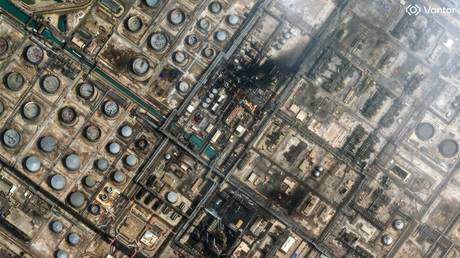
If a refinery in the Gulf is rebuilt using seized Iranian oil revenues, that refinery becomes an instant target for the Islamic Revolutionary Guard Corps (IRGC) or their proxy networks. The asymmetric math is brutal. It costs a few thousand dollars for a drone to knock out a billion-dollar desalination plant. Gulf leadership knows this. They would much rather fund reconstruction out of their own sovereign wealth funds than paint a giant target on their new infrastructure.
Dismantling the "People Also Ask" Consensus
The public discourse surrounding this issue is filled with lazy assumptions. Let's tackle the questions people are actually asking, without the diplomatic spin.
Can’t the US just use executive action to reallocate these funds?
No. The International Court of Justice (ICJ) has already ruled against the US in previous cases involving the freezing of Iranian assets, specifically noting that allowing domestic courts to attach Iranian central bank property violates international obligations. Executive orders cannot simply overwrite international treaty obligations without destroying Washington's legal credibility.
Doesn’t this deter Iran from breaking the ceasefire?
It does the exact opposite. Sanctions and asset freezes are only effective as leverage if there is a realistic path to getting the money back. If Tehran realizes that its assets are being permanently liquidated and given to its geopolitical rivals, they lose all incentive to comply with ceasefire terms. You have removed their reason to negotiate. A cornered regime with nothing left to lose financially will inevitably export more chaos, not less.
Who actually pays for reconstruction if we don't use Iranian assets?
The hard truth nobody wants to admit is that reconstruction is funded by the countries that need the stability. The Gulf states have the capital. They do not need American financial gymnastics. For broader regional stabilization, the funding must come from transparent, negotiated international funds or domestic capital markets—not through state-sanctioned financial piracy.
The Asymmetric Retaliation No One is Budgeting For
Let's look at the mechanics of Iranian deterrence. Iran has perfected the art of gray-zone warfare. They do not need to match the US Navy ship-for-ship, nor do they need to match the Gulf states dollar-for-dollar.
When you freeze and reallocate their capital, they do not file a lawsuit. They squeeze the Bab-el-Mandeb strait. They deploy cyber warfare against Western financial institutions. They increase the enrichment levels of their centrifuges.
[Seizure of Iranian Assets]
       │
       ▼
[Loss of Diplomatic Leverage]
       │
       ▼
[Escalation of Asymmetric Warfare]
       ├─► Shipping Disruptions (Strait of Hormuz)
       ├─► Cyber Attacks on Western Banks
       └─► Proxy Attacks on Gulf Infrastructure
The economic fallout from a single successful cyber attack on the SWIFT banking network or a sustained disruption to shipping lanes in the Strait of Hormuz will dwarf the value of the Iranian assets under discussion. We are talking about risking trillions of dollars in global trade to move a few billion dollars of frozen cash into a reconstruction fund. The risk-reward ratio is utterly absurd.
The Real Agenda Behind the Asset Seizure Push
If this policy is so legally fraught and strategically dangerous, why is it being pushed? Because it is political theater designed for domestic consumption.
Politicians in Washington want to look tough on Tehran without asking their constituents to fund foreign policy objectives. It is far easier to pass a bill demanding the seizure of foreign assets than it is to explain to voters why regional stability in the Middle East matters to the global economy.
This is short-term electoral maneuvering masquerading as grand strategy. It treats the global financial system as a political piggy bank. The long-term cost of this opportunism is the erosion of trust in Western financial institutions.
If the West establishes that sovereign reserves are merely conditional loans that can be confiscated whenever a state violates the prevailing geopolitical consensus, the rest of the world will build a new system. They will build it around non-Western currencies, alternative clearing mechanisms, and fragmented financial markets.
Stop trying to fund regional peace with financial warfare weapons. You cannot build a stable architecture on a foundation of expropriated capital.
Leave the Iranian assets on ice as a bargaining chip for a real, verifiable diplomatic settlement. Force the regional powers to fund their own infrastructure, ensuring they have genuine skin in the game to protect it. If you proceed with this asset seizure scheme, you aren't funding reconstruction. You are simply financing the next war.