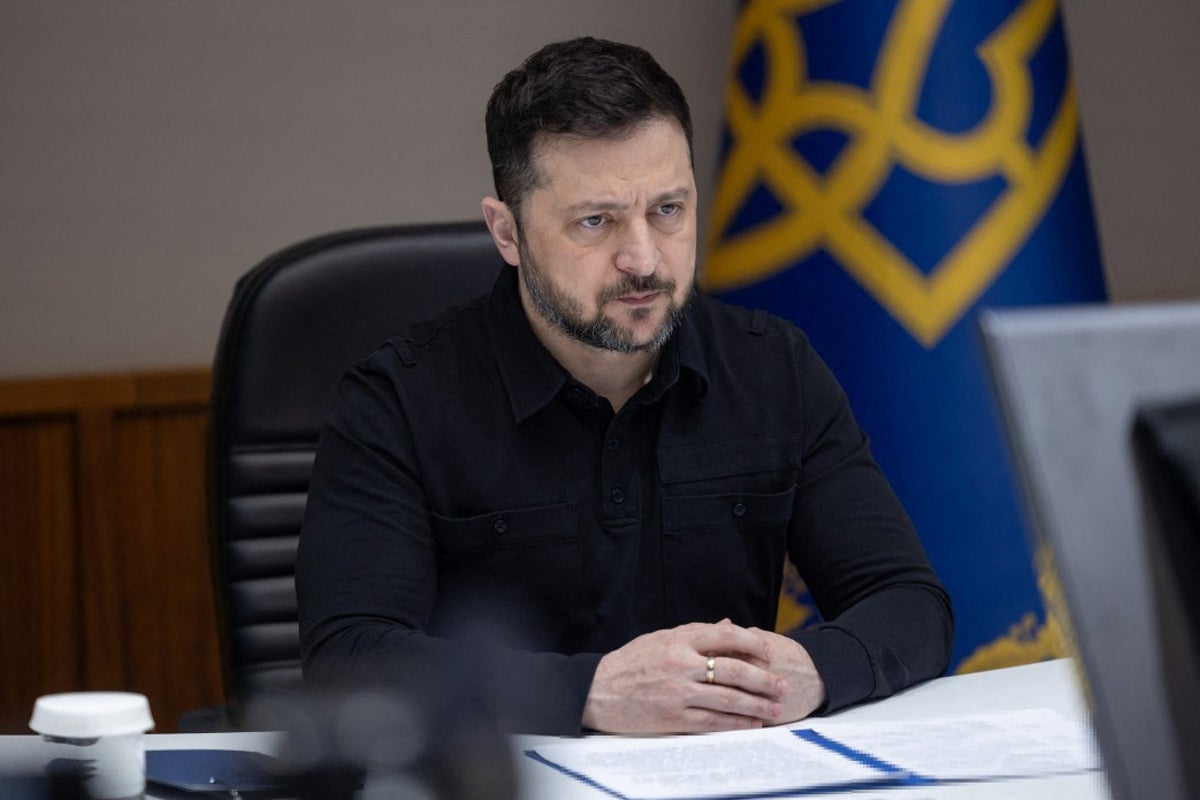
The stability of the North Atlantic security architecture rests on the asymmetric distribution of high-fidelity military intelligence. When Ukrainian President Volodymyr Zelensky alleges that Russia is "blackmailing" the United States regarding military intelligence, he is describing a disruption in the Intelligence Value Chain. This conflict is no longer merely a kinetic war of attrition; it has evolved into a sophisticated struggle over the Information Dominance Threshold. To understand the mechanics of this blackmail, one must deconstruct the specific vectors of leverage Russia employs to influence Washington’s risk calculus and the subsequent constraints placed on Ukrainian operational freedom.
The Triad of Russian Intelligence Leverage
Russia’s purported blackmail does not rely on simple threats of violence but on the manipulation of three distinct strategic pillars. Each pillar represents a different "cost function" for the United States, forcing a trade-off between supporting an ally and maintaining global stability.
1. The Proliferation of Controlled Instability
Russia utilizes its intelligence assets to signal a capacity for horizontal escalation. By sharing sensitive Western technical signatures or tactical doctrines with adversarial actors in the Middle East or Indo-Pacific, Moscow creates a "diversionary cost." For the United States, the risk is that providing Ukraine with the intelligence required for deep strikes within Russian territory will be met with the transfer of Russian counter-stealth or missile technology to Iran or North Korea. This creates a Negative Sum Incentive: the more effective the intelligence provided to Ukraine, the higher the operational risk for U.S. forces globally.
2. The Weaponization of Escalation Verticals
The core of the "blackmail" resides in the ambiguity of Russia’s nuclear doctrine. Moscow intentionally blurs the line between conventional defeat and existential threat. By claiming that Western intelligence-led strikes on Russian soil constitute "direct participation" by NATO, Russia forces U.S. policymakers into a Defensive Crouch. This isn't just rhetoric; it is a calculated effort to increase the "Escalation Premium" that Washington must pay for every increment of support given to Kyiv.
3. Intelligence Mirroring and Signal Interception
Russia’s intelligence agencies (SVR and GRU) engage in a process of "Reflexive Control." They feed specific narratives into the global information stream to exploit the internal political divisions within the U.S. domestic landscape. By threatening to "leak" or "expose" the extent of U.S. involvement in specific operations, they aim to trigger a legislative backlash in Washington, effectively using the U.S. democratic process as a throttle on military aid.
The Mechanics of Intelligence Throttling
When Zelensky speaks of blackmail, he is specifically referencing the Latency and Granularity Gap. The U.S. possesses the world’s most advanced Geospatial Intelligence (GEOINT) and Signals Intelligence (SIGINT) capabilities, yet the "usable" data passed to Ukraine is often filtered or delayed.
- Temporal Latency: Intelligence has a half-life. Data regarding the position of a Russian mobile missile launcher is high-value if delivered in minutes, but near-zero value if delivered in hours. Russia’s blackmail aims to convince the U.S. to maintain a high latency, ensuring Ukraine can defend but cannot preemptively neutralize threats.
- Targeting Constraints: The U.S. provides the "what" and "where" but often restricts the "how." This creates a Strategic Bottleneck. If Ukraine identifies a high-value target inside Russia using U.S. satellite data, but is barred from using U.S. munitions to strike it, the intelligence becomes a source of frustration rather than a force multiplier.
The logic of the Kremlin is to make the cost of providing high-fidelity, real-time intelligence higher than the perceived benefit of a Ukrainian breakthrough.
The Economic Logic of Asymmetric Information
In intelligence circles, information is a currency with fluctuating exchange rates. Russia is attempting to devalue the "Intelligence Dollar." By threatening to expose the vulnerabilities of Western hardware (such as Patriot batteries or HIMARS systems) through captured data, Russia increases the Long-Term Asset Risk for the U.S. military-industrial complex.
If a Russian strike, guided by intelligence gathered through "blackmail-derived" sources, successfully destroys a significant Western platform, the reputational and financial damage to U.S. defense exports is massive. This creates a secondary layer of blackmail: "Stop providing the eyes for Ukraine, or we will blind your systems and devalue your technology on the global market."
Decoding the Ukrainian Response
Zelensky’s public accusation is a calculated attempt to break the Oversight Loop. By making the blackmail public, he is attempting to "shame" the U.S. administration into a posture of transparency. He is moving the conversation from the classified realm of "risk management" to the public realm of "moral obligation."
Ukraine’s strategy involves three counter-moves:
- Indigenous Tech Development: Investing in domestic drone and satellite capabilities to reduce reliance on the U.S. intelligence "tap."
- Multilateral Intelligence Sharing: Forging deeper ties with the UK, France, and Baltic states to create a "distributed intelligence network" that is harder for Russia to blackmail through a single point of failure (Washington).
- The Transparency Offensive: Systematically documenting the impact of "intelligence delays" on civilian casualties to raise the political cost of U.S. hesitation.
The Intelligence Dilemma and the Threshold of Intervention
The fundamental problem is the Detection-Action Parity. In modern warfare, if you can see a target, you can usually kill it. If the U.S. provides the "eyes" (Detection) but Russia threatens a global catastrophe if Ukraine provides the "hand" (Action), the system enters a state of Strategic Paralysis.
This paralysis is exactly what Moscow seeks. By maintaining a credible threat of "asymmetric retaliation"—whether through cyber-attacks on U.S. infrastructure or the provision of weapons to anti-Western proxies—Russia forces the U.S. to act as its own censor. The intelligence isn't being blocked by Russian jamming; it is being filtered by American caution.
The Friction of Proxy Dynamics
The relationship between a superpower provider and a regional proxy is defined by Principal-Agent Friction. The Principal (USA) wants to contain the conflict; the Agent (Ukraine) wants to win it. Russia’s blackmail identifies this friction and applies heat.
When Russia signals that it "knows" exactly what the U.S. is sharing, it creates a sense of vulnerability within the Pentagon. The fear of an intelligence leak—or a "mole"—within the sharing apparatus can lead to a shutdown of the very channels Ukraine relies upon. This is a form of Psychological Sabotage designed to erode the trust necessary for high-stakes military coordination.
Structural Limitations of the Blackmail Strategy
Despite its effectiveness, Russia’s blackmail has a "Diminishing Return Profile." As the war progresses, several factors erode Moscow's leverage:
- The Normalization of Escalation: Actions that would have been considered "red lines" in 2022 (e.g., providing F-16s or long-range missiles) are now routine. Russia’s threats lose potency through repetition without execution.
- Technological Attrition: As Russia exhausts its own high-tech reserves, its ability to offer meaningful technical transfers to other adversaries decreases, weakening one of its primary blackmail levers.
- The Intelligence Sunk Cost: Having invested billions in Ukrainian defense, the U.S. reaches a point where "allowing a defeat" due to intelligence withholding is more politically and strategically expensive than "risking escalation" by providing it.
The Strategic Path Forward
To neutralize the Russian blackmail mechanism, the Western intelligence apparatus must transition from a Reactive Risk-Aversion Model to a Proactive Deterrence Framework. This involves a shift in how intelligence is categorized and disseminated.
Instead of debating whether to provide "Deep Strike Intelligence," the U.S. should establish "Automated Response Triggers." For every Russian "blackmail" attempt or horizontal escalation, a pre-defined package of intelligence granularity should be unlocked for the Ukrainian General Staff. This removes the "negotiation" phase that Moscow exploits and creates a predictable, escalating cost for Russian threats.
The current friction is not a result of Russian strength, but of Western procedural hesitation. Moving toward a decentralized intelligence model—where tactical GEOINT is processed and shared by a coalition of European partners rather than a single U.S. agency—would effectively render the "Washington Blackmail" strategy obsolete. The goal is to create an intelligence environment that is too wide to be throttled and too transparent to be manipulated by clandestine threats.