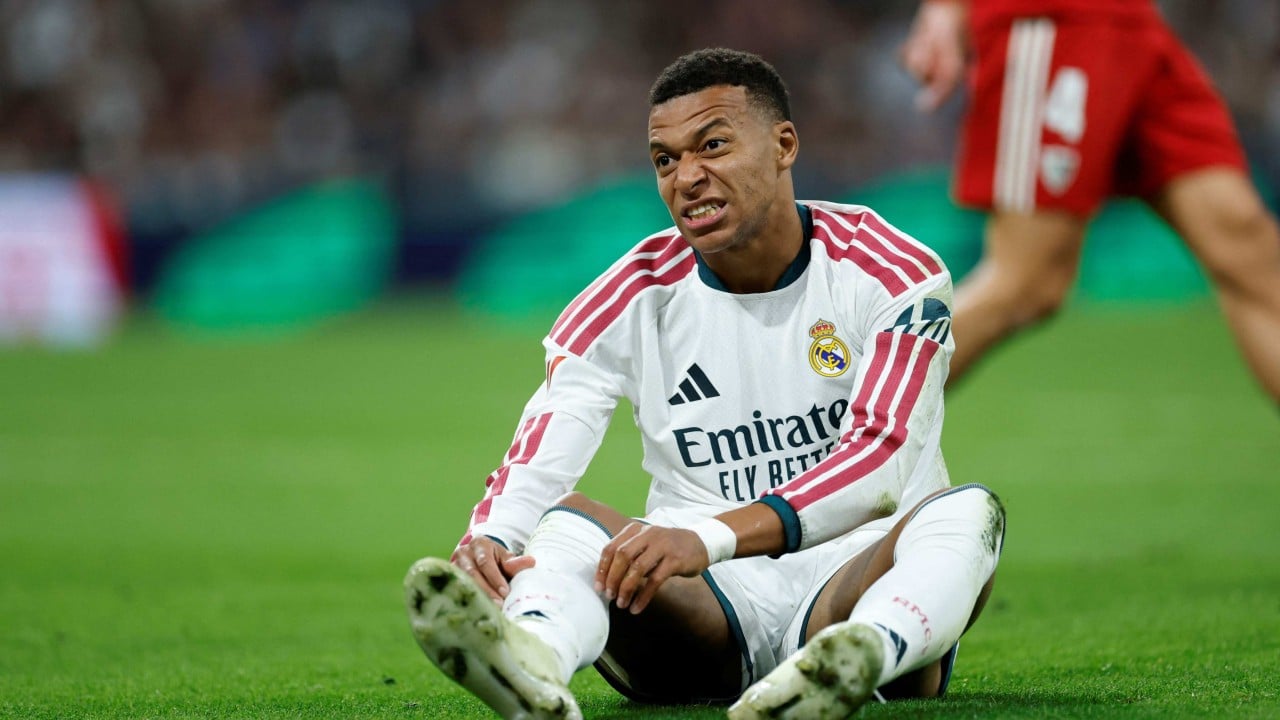
When an elite European football club issues an immediate institutional apology to a foreign market over an athlete's historical reference, the event is not a public relations misstep—it is a predictable outcome of asymmetric commercial dependency. Real Madrid’s formal response to China following Kylian Mbappé’s reported remarks regarding Mao Zedong demonstrates how global sports franchises operate as multinational enterprises subject to sovereign political risk.
To understand the mechanics of this incident, one must strip away the tabloid framing of celebrity gossip and examine the structural realities of modern sports economics. European superclubs rely heavily on international broadcasting rights, regional sponsorships, and overseas merchandising to sustain wage bills that routinely exceed hundreds of millions of euros. China represents one of the largest single-country addressable markets for sports intellectual property, yet access to that market is strictly mediated by state-aligned media ecosystems and regulatory gatekeepers. When an asset of the club—in this case, a marquee player—introduces a politically sensitive variable into that ecosystem, the club faces an immediate binary choice between defending unrestricted athlete expression and preserving commercial market access.
The Structural Vulnerability of Global Sports Franchises
Modern football clubs are no longer localized community institutions; they are transnational media brands. Their revenue models depend on converting global attention into recurring cash flows through three primary channels: centralized broadcast distributions, global and regional corporate partnerships, and direct-to-consumer retail.
The vulnerability emerges from a fundamental mismatch between where content is produced and where it is monetized. Players, coaches, and club executives operate within a Western European regulatory and cultural environment where historical commentary, political irony, or casual references to 20th-century figures are treated as routine speech. However, the commercial monetization of that content occurs in jurisdictions with entirely different boundaries regarding historical orthodoxy and national sensitivity.
This creates a structural exposure that risk analysts categorize as sovereign reputational risk. Unlike standard corporate scandals involving product defects or financial misstatements, sovereign reputational risk is triggered by symbolic friction. A single phrase, gesture, or cultural reference can instantaneously alter a brand's standing with millions of consumers and, more critically, with the state-affiliated broadcasters and commercial partners that distribute the club's product.
The Three Pillars of Market Access Risk
In the specific context of European football's relationship with the Chinese market, commercial continuity rests on three operational pillars:
- Broadcast Distribution Rights: Television and digital streaming platforms pay substantial licensing fees to air matches. These platforms are subject to strict domestic content regulations. If a club or its star player becomes associated with a political controversy, broadcasters face regulatory pressure to suspend coverage, blur branding, or omit highlights, immediately degrading the value of the rights package.
- Regional Sponsorships and Licensing: Clubs maintain tiered sponsorship models, selling regional exclusivity to banks, telecommunications firms, and consumer goods companies within Asia. These corporate partners invest in football associations to acquire prestige and consumer goodwill. Association with a politically controversial entity transforms the sponsorship from an asset into a domestic liability, triggering morals clauses and contract terminations.
- Touring and Matchday Monetization: Pre-season tours in East Asia generate significant direct appearance fees and merchandise sales. Regulatory approval for foreign teams to play exhibition matches requires seamless alignment with local authorities. Any unresolved diplomatic or cultural friction effectively closes the border to lucrative off-season revenue generation.
Cause and Effect in Athlete-Driven Diplomatic Friction
The sequence of events surrounding Real Madrid and Kylian Mbappé follows a repeatable operational pattern observed across global sports, entertainment, and luxury retail. Understanding the causal chain reveals why corporate communications teams react with speed rather than deliberation.
Step 1: The Trigger Event and Information Asymmetry
An athlete makes a remark—whether in an interview, on social media, or captured in behind-the-scenes footage—that references a sensitive political or historical figure. In this instance, the reference involved Mao Zedong, the founding figure of the People's Republic of China, whose legacy remains a foundational element of modern Chinese state legitimacy and public sensitivity.
Crucially, there is an immediate information asymmetry. The athlete and their immediate entourage often lack the cultural literacy to recognize the severity of the trigger in real time. Meanwhile, digital monitoring networks and bilingual social media users translate, contextualize, and amplify the remark within minutes. By the time the club's communications department in Madrid is briefed, the narrative has already solidified on platforms like Weibo and Douyin.
Step 2: Algorithmic Amplification and Sentiment Cascade
Once a clip or quote enters the Chinese digital ecosystem, algorithmic engagement metrics accelerate the crisis. Outrage and nationalist sentiment drive high comment volume and rapid sharing, pushing the topic onto trending lists. At this stage, the issue transitions from an isolated quote by an individual athlete into a perceived slight by the entire institution.
For the club, the cost of inaction compounds exponentially by the hour. Silence is interpreted not as neutrality, but as institutional endorsement or arrogance. The longer the delay between the trigger event and an official response, the higher the threshold required to pacify domestic sentiment. A delay of twenty-four hours might have required a joint press conference or charitable gesture; a delay of seventy-two hours could result in permanent blacklisting from state media broadcasts.
Step 3: Institutional Decoupling and Rapid Apology
To arrest the sentiment cascade, the club executes a containment protocol centered on institutional decoupling. The objective is to separate the enduring brand (Real Madrid) from the transient error of the individual employee (Mbappé) while simultaneously validating the offended audience's perspective.
Issuing an official statement directly on Chinese social media channels—rather than through European press releases—is a deliberate tactical choice. It localizes the apology, ensuring that the corrective message reaches the exact demographic exposed to the initial trigger without necessarily dominating headlines in the club's domestic Spanish market, where appeasing foreign political sensitivities might draw criticism from local pundits.
The Cost Function of Corporate Appeasement
Every crisis response carries an opportunity cost. When a sports organization apologizes to preserve access to a foreign market, it enters a complex trade-off calculation involving immediate financial preservation versus long-term brand autonomy.
| Strategic Dimension | Immediate Apology (Containment) | No Apology (Autonomy Defense) |
|---|---|---|
| Short-Term Revenue | Preserves existing broadcast and regional sponsorship contracts. | High probability of immediate contract suspension and broadcast blackouts. |
| Western Brand Perception | Risks criticism from Western media and human rights advocates over self-censorship. | Reinforces commitment to free expression and institutional independence. |
| Athlete Relations | May create friction between management and star players over speech restrictions. | Protects the player publicly, strengthening internal locker-room loyalty. |
| Precedent Setting | Establishes a lower threshold for future external pressure and mandated apologies. | Signals high tolerance for market loss, deterring minor future pressure campaigns. |
The economics of elite football heavily skew this cost function toward containment. A club competing at the highest level of the UEFA Champions League operates with razor-thin operating margins despite massive top-line revenues. Player amortization and wages consume the vast majority of annual income. Consequently, losing even five to ten percent of global commercial revenue due to a regional boycott creates an immediate budgetary shortfall that cannot be easily replaced in mature, saturated European markets.
Furthermore, historical precedent in sports management dictates the playbook. Organizations that have previously resisted issuing apologies—most notably the National Basketball Association in 2019 following a team executive's tweet regarding Hong Kong—suffered hundreds of millions of dollars in lost broadcast revenue and sponsorship cancellations over multiple years. Real Madrid’s executive leadership operates with full awareness of those financial losses, treating rapid diplomatic de-escalation as a standard fiduciary duty to the club's financial stability.
Operational Limitations of Reactive Crisis Management
While issuing a rapid, localized apology successfully mitigates immediate commercial fallout, relying on reactive crisis management exposes severe operational limitations. No communication strategy can fully insulate a global brand from the unpredictability of unscripted human behavior.
First, reactive apologies do not build structural resilience. They reset the immediate crisis to zero, but they leave the underlying vulnerability intact. Because athletes are hired for their physical talent rather than their diplomatic training, the probability of another unscripted remark occurring across a squad of twenty-five international players remains perpetually high.
Second, geopolitical fragmentation creates contradictory compliance demands. Actions taken to satisfy regulators and consumers in one jurisdiction frequently alienate stakeholders in another. As global geopolitics grows more polarized, multinational sports brands find themselves caught in a zero-sum regulatory environment where neutrality is increasingly impossible to maintain. An apology crafted for Beijing can easily become a reputational liability in Brussels, London, or Washington.
Third, over-reliance on institutional apologies degrades brand authority. When a storied institution repeatedly bends to external social media pressure, it signals vulnerability to organized online campaigns. Competitors, rival fanbases, and political actors learn that coordinated amplification of minor infractions can force major corporate concessions, lowering the barrier to future reputational attacks.
Strategic Mandate for Global Sports Enterprises
To transition from fragile, reactive damage control to durable geopolitical risk management, sports organizations must overhaul how they prepare their talent and structure their commercial agreements. Relying on post-crisis press releases is no longer a viable operating model for billion-dollar franchises.
- Implement Pre-Deployment Geopolitical Onboarding: Every marquee signing must undergo mandatory, region-specific cultural and political risk training prior to their public unveiling. This training should not consist of vague corporate platitudes; it must provide concrete lists of historical figures, territorial disputes, and symbolic taboos across the club's top ten revenue-generating markets.
- Establish Contractual Speech Guardrails: Player image-rights agreements and standard employment contracts must explicitly define the financial liabilities associated with unapproved political or historical commentary. Aligning the athlete's financial incentives with the club's commercial protection ensures that players exercise discipline during off-pitch media appearances.
- Decentralize Regional Communications Infrastructure: Clubs must maintain autonomous, locally staffed communications teams in key markets like Shanghai, New York, and Dubai, empowered with pre-approved crisis response frameworks. Reducing the decision-making latency between a trigger event and a localized response from hours to minutes is the single most effective mechanism for preventing a sentiment cascade before it reaches state-level regulatory attention.