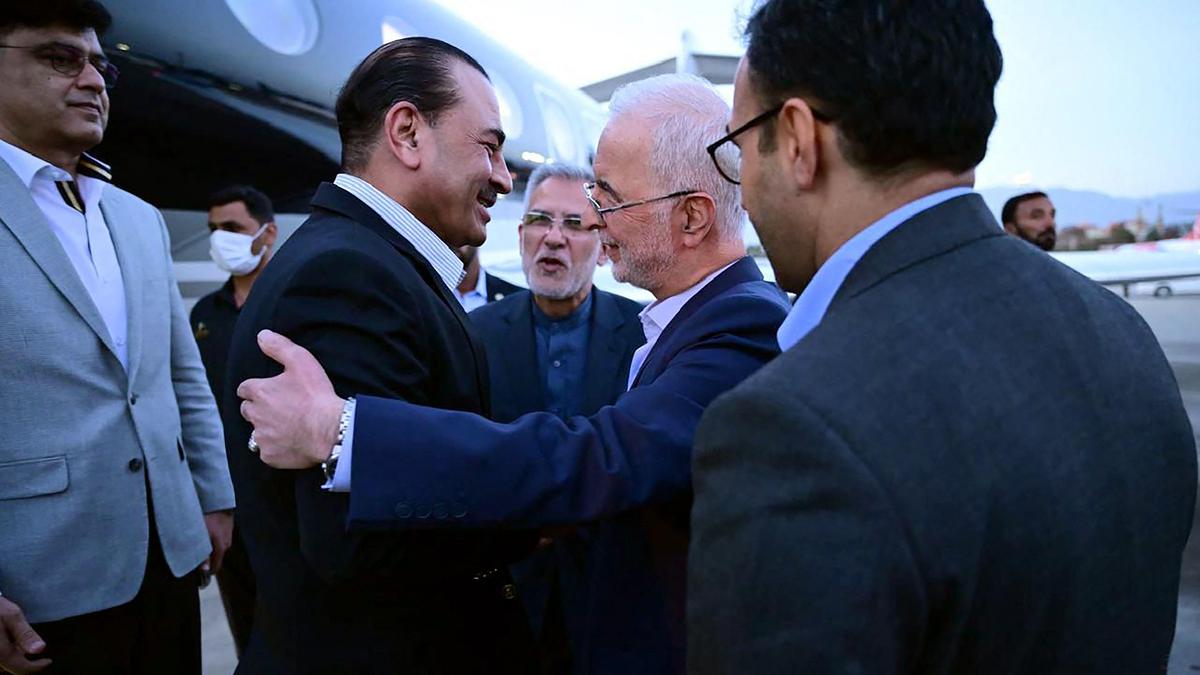
The arrival of Pakistani Army Chief Field Marshal Asim Munir in Tehran highlights a highly calculated, high-stakes diplomatic intervention designed to prevent the collapse of a fragile ceasefire and avert a resumption of full-scale war. The conflict, initiated on February 28 when American and Israeli forces launched synchronized military strikes against Iran, reached a temporary pause through a Pakistani-brokered ceasefire on April 8. However, the subsequent structural deadlock in direct negotiations hosted in Islamabad has brought the regional security architecture to a critical juncture. Rather than a simple exercise in regional goodwill, Islamabad’s intense diplomatic mobilization is a defensive maneuver to optimize its own regional security and a strategic attempt to manage a complex, multi-variable cost function that threatens to destabilize South and West Asia.
The fundamental core of the current diplomatic crisis involves an asymmetric game-theoretic standoff between Washington and Tehran. Both states operate under the belief that they possess the strategic upper hand, creating a negotiation bottleneck. Navigating this impasse requires deconstructing the core transactional friction points, assessing Pakistan's operational mechanisms as a mediator, and quantifying the economic and strategic dependencies governing the current ceasefire framework.
The Strategic Triad: Core Transactional Friction Points
The current diplomatic deadlock is sustained by three distinct, interconnected issues. Each variable features opposing state mandates that standard diplomatic rhetoric has failed to reconcile.
+-------------------------------------------------------------------------+
|                        CORE TRANSACTIONAL FRICTION                      |
+-------------------------------------------------------------------------+
                                     |
         +---------------------------+---------------------------+
         |                           |                           |
         v                           v                           v
+-----------------+         +-----------------+         +-----------------+
|   The Nuclear   |         | The Maritime Chokepoint | |   The Border    |
| Inventory Asset |         |    Pricing Mechanism    | |   Asymmetry     |
+-----------------+         +-----------------+         +-----------------+
1. The Nuclear Inventory Asset
The primary structural dispute centers on Iran's highly enriched uranium stockpile, which currently stands at 60% purity. The United States and Israel view this inventory as an unacceptable national security risk, demanding the absolute physical removal of the material from Iranian territory as a baseline condition for a permanent peace treaty.
Conversely, Iran views this stockpile as its primary strategic deterrent and bargaining chip. Supported by a directive from the Supreme Leader, Tehran’s negotiating framework explicitly treats the domestic retention of this material as a non-negotiable element of state sovereignty. This leaves zero room for traditional compromise, turning the material asset into a binary issue: it must either remain entirely inside Iran or be removed completely.
2. The Maritime Chokepoint Pricing Mechanism
The second friction point is economic and operational, focusing on the Strait of Hormuz. Following the initial joint US-Israeli strikes, Iran enforced a de facto closure of the strait, reducing daily maritime traffic from an average of 130 vessels down to approximately 26. This disruption pushed global energy prices to multi-year highs.
To formalize this control, Tehran established the Persian Gulf Strait Authority (PGSA), demanding that all commercial shipping obtain explicit authorization and pay transit fees to pass through the chokepoint. The US negotiating framework completely rejects any arrangement that yields operational or legal control of an international shipping lane to Tehran. This sets up a direct clash between Iran's push for maritime sovereignty and the Western mandate for unhindered freedom of navigation.
3. The Border Asymmetry
The third variable involves the geographical scope of the conflict. Iran demands a comprehensive cessation of hostilities "on all fronts," a clause explicitly designed to halt Israeli military operations against Iranian aligned assets in Lebanon and the broader Levant.
The US and Israeli frameworks separate the theater of operations, seeking to isolate the Iranian mainland agreement from the broader network of regional proxy conflicts. This asymmetry prevents concurrent de-escalation, as one side views the conflict through a regional lens while the other treats it as a localized containment action.
The Pakistani Mediation Framework: Mechanics and Strategic Drivers
Pakistan’s role as the primary official mediator—even alongside parallel diplomatic tracks from regional actors like Qatar—relies on a distinct set of structural advantages. At the same time, this role faces clear geopolitical limitations.
The Security Cost Function
Islamabad’s diplomatic campaign is driven by an urgent need to protect its own borders. Pakistan shares a volatile 900-kilometer border with Iran, running through the Balochistan region. A resumption of full-scale war between the US-Israeli coalition and Iran introduces two major security risks for Pakistan:
- Kinetic Spillover: The high probability of cross-border tracking, errant missile strikes, or deliberate proxy maneuvers destabilizing Pakistan's western front.
- Mass Asymmetric Migration: An unmanageable influx of refugees into a Pakistani economic infrastructure that lacks the fiscal capacity to absorb them.
Managing a volatile western border while keeping a large military deployment along the Line of Control with India creates a severe structural strain on Pakistan's armed forces. Minimizing the probability of conflict along the Iranian border is a vital requirement for Pakistan's national security.
Strategic Capital and Leverage
While Oman historically served as the primary backchannel between Washington and Tehran, Pakistan leverages unique institutional access. Field Marshal Asim Munir's personal involvement provides a direct line to both the Iranian high command and senior US leadership. This unique position was highlighted during the April negotiations in Islamabad, where the Pakistani military leadership maintained open communication channels with high-level representatives from both sides.
Furthermore, Islamabad’s diplomatic efforts are quietly backed by Beijing. China relies heavily on Middle Eastern energy imports and stable maritime corridors for its Belt and Road Initiative, giving it a strong interest in preventing a wider war. This alignment provides Pakistan with diplomatic cover and financial backing from a major global power.
The Limits of Neutrality
The primary vulnerability in Pakistan's mediation framework stems from its external defense commitments. The long-standing defense pacts and financial ties between Islamabad and Riyadh create deep-seated suspicion within Tehran's security establishment.
While Iranian Foreign Ministry spokesperson Esmaeil Baghaei confirmed that Tehran is reviewing Washington’s proposals via Pakistani intermediaries, he explicitly emphasized a "deep suspicion" of Western intent and noted that Iran's armed forces remain on high alert. Iran's willingness to use Pakistan as a communication channel does not mean it trusts Islamabad to act as a completely neutral arbitrator.
Quantifying the Immediate De-escalation Path
As President Donald Trump signals that American patience is limited and that a return to active military strikes remains on the table, Pakistani negotiators are pushing a phased, time-bound framework designed to avoid a binary breakdown.
+-----------------------------------------------------------------------------+
|                     PHASED CONFIDENCE-BUILDING TIMELINE                     |
+-----------------------------------------------------------------------------+
|                                                                             |
|  [Day 01] -----------------------> [Day 15] ---------------------> [Day 30]  |
|     |                                 |                               |     |
|     v                                 v                               v     |
|  Reciprocal                      Partial Energy                    Formal   |
|  Hostility                       Sanction Relief                   Nuclear  |
|  Freeze                          & Assets Thawed                   Talks    |
|                                                                             |
+-----------------------------------------------------------------------------+
The current diplomatic push focuses on securing an immediate 30-day extension of the ceasefire based on a specific sequence of confidence-building measures:
- The Hostility Freeze (Days 1–10): A verified pause in all offensive kinetic operations by the US-Israeli coalition, matched by an explicit freeze on Iranian regional proxy operations and a commitment to halt further uranium enrichment beyond current levels.
- The Maritime and Fiscal Liquidity Exchange (Days 11–20): Iran expands daily commercial shipping transits through the Strait of Hormuz toward pre-war baselines without enforcing PGSA transit fees. In return, the US grants a temporary, 30-day suspension of specific oil sanctions, allowing the targeted release of frozen Iranian overseas assets to provide immediate liquidity to Tehran.
- The Structured Transition (Days 21–30): The establishment of formalized working groups in Islamabad to address the long-term, structural issues of uranium stockpile locations and permanent maritime transit rules.
Strategic Forecast
The probability of a near-term breakthrough remains low due to the deep structural differences between the two sides. The most likely scenario is a short-term, tactical extension of the current ceasefire. Both Washington and Tehran face significant downsides if the conflict escalates further: the US risks trigger-locking the global economy via a renewed energy crisis, while Iran faces severe structural damage from sustained conventional military strikes.
Field Marshal Munir’s current mission to Tehran will not produce a comprehensive peace treaty. Instead, success will be measured by whether it establishes a functional framework to extend the negotiation window for another 30 days. If Pakistan fails to secure this short-term extension, the regional security environment will likely shift quickly back toward active, high-intensity conflict.


