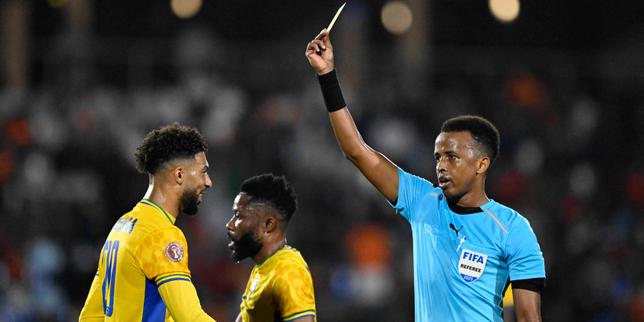
The operational execution of the 2026 FIFA World Cup faces an asymmetric risk framework where municipal border control overrides international sports governance. This vulnerability materialized when Omar Abdulkadir Artan, a Somali international referee selected for the tournament, was denied entry into the United States. While standard sports reporting treats this as an isolated administrative hurdle or a visa technicality, a structural analysis reveals a deeper friction point: the conflict between FIFA’s multilateral hosting model and the unilateral immigration policies of sovereign superpowers.
When a host nation's domestic security apparatus overrides the accreditation of a global governing body, it exposes a critical flaw in tournament planning. This dynamic threatens the operational integrity of the tournament and establishes a precedent for how visa-issuing states can quietly reshape the personnel composition of international events. In similar news, take a look at: The Economics of Tournament Concessions Pricing Strategy and Fan Sentiment Friction.
The Tripartite Framework of Tournament Border Risk
To understand how an elite match official is excluded from a tournament of this scale, one must analyze the intersection of three competing institutional forces: FIFA's selection protocols, host-country immigration statutory criteria, and the geopolitical risk profile of the participant's country of origin.
                  [FIFA Governing Body]
                 /                     \
    Tournament Accreditation       Host-Country Visa Policy
               /                         \
[Selected Match Official] ----------> [Sovereign Border Control]
                               (Denial of Entry)
1. The Statutory Sovereignty Mandate
International sports federations operate under the illusion of extraterritoriality during major tournaments. They extract guarantees from host governments regarding tax exemptions, intellectual property protection, and expedited entry for athletes and staff. However, these agreements contain an unyielding limitation: national security and immigration law remain non-negotiable sovereign powers. Yahoo Sports has provided coverage on this fascinating issue in extensive detail.
Under United States immigration law, specifically the Immigration and Nationality Act (INA), every applicant for a non-immigrant visa is legally presumed to be an intending immigrant until they prove otherwise. Match officials from developing economies or volatile regions face an uphill battle to demonstrate strong economic and social ties to their home country. The Department of State evaluates applications based on institutional risk metrics rather than the applicant's professional status within FIFA.
2. The Geopolitical Passport Hierarchy
The selection of match officials is designed to be a meritocracy based on technical performance, physical fitness, and psychological assessments. FIFA’s refereeing department attempts to diversify representation across all six continental confederations.
This meritocratic selection collides directly with the geopolitical hierarchy of passports. Somalia faces severe travel restrictions, heightened scrutiny under automated screening systems, and a lack of fully functional consular infrastructure. When a Somali national is vetted by US immigration services, the baseline risk assessment differs significantly from that of a referee holding an EU or Japanese passport. The system evaluates the country of origin's stability, document security, and bilateral diplomatic relations, rendering FIFA’s internal vetting irrelevant.
3. The Consular Disconnect and Operational Timelines
FIFA operates on tight logistical timelines. The final selection of match officials occurs months before the tournament, following years of tracking and preparatory seminars. Conversely, consular processing operates on independent timelines influenced by backlogs, security advisory opinions, and interagency background checks.
A breakdown occurs when FIFA's administrative department assumes that tournament accreditation acts as a skeleton key for border entry. In practice, a visa refusal cannot be overturned by an appeal to FIFA headquarters in Zurich. The governing body possesses zero legal standing to challenge a sovereign state's consular assessment.
The Operational Consequences of Referee Exclusion
The removal of a selected match official cascades through the tournament’s technical operations, altering referee pairings, workload distribution, and tactical consistency across matches.
Technical Depletion and Group Dynamics
Elite refereeing at the World Cup level is built on cohesive units. Referees train, travel, and officiate alongside specific assistant referees as a unified trio to optimize communication and decision-making speed. Removing a referee breaks this unit apart.
[Standard Operational Unit]
   Referee + Assistant 1 + Assistant 2  --> High Tactical Synergy

[Disrupted Operational Unit]
   Substitute Referee + Assistant 1 + Assistant 2  --> Communication Lag / Reduced Cohesion
The technical department must choose between two suboptimal solutions:
- Elevating a reserve referee who has not spent the pre-tournament cycle training directly with those specific assistants.
- Dissolving multiple trios to rebalance the experience level across remaining officiating teams.
This structural disruption introduces variables that increase the statistical probability of officiating errors during matches.
Workload Inefficiency and Fatigue Inflation
A tournament featuring 48 teams requires an unprecedented volume of matches. The officiating roster is calibrated to balance match volume with optimal recovery periods. Removing qualified personnel forces the remaining pool to absorb the surplus load.
Increased officiating frequency accelerates physical fatigue and cognitive strain. Data from sports science assessments indicates that elite referees experience a drop in positioning accuracy and a rise in delayed decision-making when recovery windows drop below optimal thresholds. The exclusion of an official from a marginalized confederation ultimately penalizes the entire refereeing cohort by compressing their recovery schedules.
Managing Extraterritorial Sports Governance
The structural friction observed in this case highlights a broader systemic issue that will persist as major sporting events expand across multiple countries and complex geopolitical regions.
| Governance Dimension | FIFA's Theoretical Model | Sovereign Reality | Operational Friction Point |
|---|---|---|---|
| Personnel Selection | Meritocratic, globally diversified representation. | Rigorous vetting based on nationality and security profiles. | Automatic exclusion of officials from high-risk geopolitical zones. |
| Legal Authority | Host agreements dictating smooth entry protocols. | Absolute domestic statutory supremacy over immigration. | FIFA guarantees are legally non-binding on consular officers. |
| Logistical Risk | Centralized scheduling with fixed tournament timelines. | Variable, unpredictable security processing windows. | Administrative delays that force late-stage roster alterations. |
This institutional conflict exposes a vulnerability in the decentralized, multi-nation hosting model. If a superpower can veto the participation of an official or athlete via visa denial, the competitive integrity of the tournament is compromised by geopolitical factors rather than athletic capability.
Strategic Contingency Protocols for Multi-Jurisdictional Tournaments
To prevent sovereign immigration policies from dictating the personnel rosters of international sporting events, global governing bodies must abandon passive reliance on host-country assurances. They need to transition toward an active risk-mitigation framework.
Pre-Cleared Consular Hubs
Governing bodies should negotiate the creation of centralized, dedicated consular processing units at least twelve months before a tournament. Instead of forcing participants to apply through their local embassies—where local geopolitical conditions slow processing—all selected personnel should be routed through a dedicated international sporting event visa stream. This stream must feature pre-clearance protocols managed in coordination with the host nation's federal security agencies.
Geopolitical Redundancy in Selection Rosters
The selection matrix for match officials must factor passport vulnerability into its risk assessment. If a primary referee is selected from a nation subject to strict visa controls or travel bans, FIFA must concurrently train and vet a shadow referee from the same confederation who holds a lower-risk passport. This ensures that if a visa is denied or delayed, the replacement unit can step in without degrading the technical cohesion or physical readiness of the officiating pool.
Relocation Agreements for Disrupted Personnel
When visa denials occur despite pre-clearance efforts, a clear protocol must dictate the immediate reallocation of that asset. For a tournament spread across the United States, Canada, and Mexico, a referee blocked from entering one jurisdiction should be repositioned to handle matches exclusively within the alternative host nations whose border agencies offer clearance. This preserves the official's participation and protects the tournament's overall resource capacity.