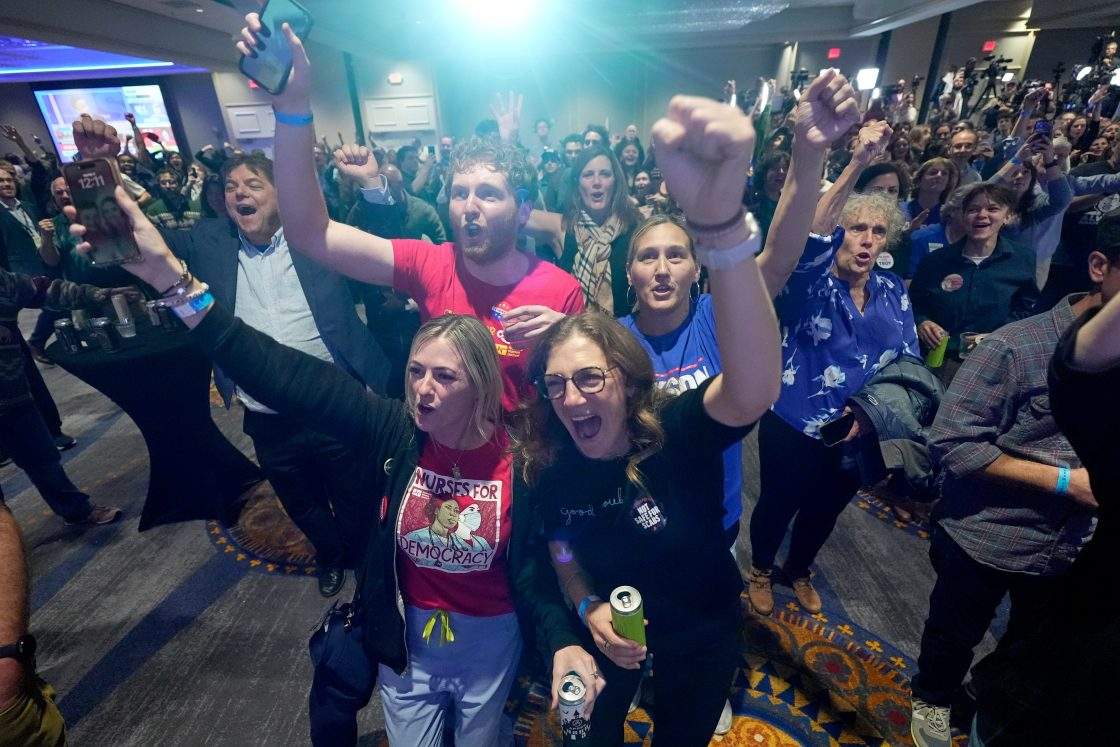
Young voters have been written off as unreliable for decades. Political pundits used to roll their eyes whenever campaign strategists talked about mobilizing college campuses or twenty-somethings, assuming those ballots would never actually materialize on Election Day. Then came the recent US midterm elections, and Gen Z proved those skeptics completely wrong.
They didn't just show up. They delivered Democrats their strongest demographic support across the entire electorate, effectively blunting what many expected to be a massive historical wave for the opposing party. For a more detailed analysis into this area, we suggest: this related article.
If you look closely at exit polling from organizations like the Center for Information & Research on Civic Learning and Engagement (CIRCLE) at Tufts University, the numbers tell a striking story. Voters aged 18 to 29 backed Democratic House candidates by roughly a 28-point margin in the 2022 midterms—a figure that dramatically outpaced every other age bracket. Even as older cohorts swung toward Republicans over inflation and gas prices, Gen Z held the line. Understanding why requires looking past lazy generational stereotypes and examining the specific policy pressures, cultural shifts, and organizing tactics that actually drive young Americans to the polls.
The Myth of the Apathetic Young Voter
Older generations love to complain that twenty-somethings are glued to their phones and disconnected from civic life. That narrative is dead wrong. For further background on this development, extensive coverage can be read at The Guardian.
In fact, Gen Z is voting at higher rates than Millennials, Gen X, or Baby Boomers did when they were the same age. According to CIRCLE estimates, roughly 27% of youth aged 18 to 29 cast a ballot in the 2022 midterm elections, making it the second-highest youth turnout in nearly three decades, trailing only the historic 2018 cycle. In key battleground states like Michigan, Pennsylvania, and Georgia, youth turnout climbed even higher, frequently exceeding 30%.
Why the surge? Friction has dropped, and stakes have skyrocketed.
Automatic voter registration, expanded mail-in voting, and same-day registration laws in several states removed the bureaucratic hurdles that used to trip up transient young adults who move apartments every twelve months. When you're 21 and juggling part-time jobs with classes, tracking down a printer to mail a registration form feels like an obstacle course. Modernized voting access fixed much of that.
More than convenience, though, Gen Z grew up in a state of perpetual crisis. The oldest members of this generation were born in 1997. Their formative memories include the 2008 financial crash, active shooter drills in elementary school, a global pandemic that disrupted their graduations, and record-breaking climate disasters. For them, politics isn't an abstract debate on Sunday morning talk shows. It's personal survival.
Core Issues Driving Gen Z Toward Democrats
If you ask a random 22-year-old why they voted blue, you won't hear glowing praise for party leadership or institutional loyalty. Gen Z is fiercely independent and often deeply critical of established Democratic politicians. Yet when forced to choose between two major parties in a midterm election, they break overwhelmingly for Democrats because of four non-negotiable issues.
Reproductive Freedom and Bodily Autonomy
The Supreme Court's 2022 Dobbs v. Jackson Women's Health Organization decision overturning Roe v. Wade fundamentally altered the political math for young voters. For young women—and a massive share of young men—losing federal abortion protections wasn't a theoretical policy shift. It was an immediate stripping away of rights they had taken for granted their entire lives.
Exit polls consistently showed that abortion ranked as the single most important issue for voters under 30, outranking even inflation. In states like Michigan and Kansas, where reproductive rights appeared directly on the ballot, young voters turned out in droves to protect access. Democrats didn't have to manufacture outrage here; the issue mobilized Gen Z organically.
Climate Change as an Immediate Threat
While older voters often view environmental regulation through the lens of energy costs or job markets, Gen Z sees climate change as an existential deadline. Pew Research Center data shows that roughly two-thirds of Gen Z adults believe the government should do more to solve environmental problems, and majorities favor phasing out fossil fuels entirely.
Republicans have largely struggled to offer a compelling counter-narrative on climate, often dismissing green initiatives or doubling down on oil and gas production. Meanwhile, the passage of the Inflation Reduction Act—the largest federal investment in clean energy in US history—gave Democrats tangible proof they were taking the crisis seriously, even if young activists argued it didn't go far enough.
Gun Violence and School Safety
Gen Z is the first American generation to grow up entirely in the post-Columbine era. Lockdown drills are as routine to them as fire drills were to their parents. That lived experience creates a visceral, uncompromising demand for stricter gun laws.
When mass shootings happen in schools, grocery stores, or concert venues, young voters watch Democratic lawmakers push for universal background checks and assault weapons bans while Republican lawmakers largely oppose new restrictions. On this issue, the contrast between the two parties couldn't be sharper, and Gen Z rewards the party willing to regulate firearms.
Student Debt and Economic Anxiety
Critics often claim young people will turn conservative once they start paying taxes and earning paychecks. That theory assumes young people are actually accumulating wealth at the same rate their parents did. They aren't.
Skyrocketing rent, stagnant entry-level wages, and crushing student loan balances have delayed traditional milestones like buying a home or starting a family. While Republicans fiercely opposed federal student loan forgiveness programs—and conservative legal challenges ultimately blocked broad cancellation—Democrats actively campaigned on debt relief, income-driven repayment reforms, and lowering healthcare costs. Even when policies hit roadblocks in court, young voters noticed who was fighting for their bank accounts and who was suing to stop the relief.
Why Republicans Struggle to Connect With Young Voters
It would be a mistake to assume Gen Z's Democratic lean is purely the result of brilliant Democratic messaging. A huge piece of the puzzle is how aggressively the modern Republican Party alienates young Americans on social and cultural issues.
Gen Z is the most racially and ethnically diverse generation in US history. Roughly half of Gen Z identifies as non-white, and a significantly higher percentage identifies as LGBTQ+ compared to older cohorts. When conservative politicians focus heavily on culture war battles—restricting gender-affirming care, banning books in public schools, or rolling back diversity initiatives—they directly target the friends, classmates, and identities of Gen Z voters.
You can't win over a generation while simultaneously legislating against their peer group.
Economically, the traditional GOP pitch of tax cuts and deregulation falls flat for twenty-somethings who don't own property or hold massive stock portfolios. Telling a barista burdened by $35,000 in student loans that corporate tax cuts will eventually trickle down to them simply doesn't land. Until conservative strategists offer concrete solutions for housing affordability, healthcare access, and climate resilience, they will continue facing a massive demographic wall.
The Role of Digital Organizing and Peer Networks
How campaigns reach Gen Z matters just as much as what they say. Traditional political ads on cable television are practically invisible to voters under 30. They don't watch linear TV, they ignore unsolicited phone calls, and they immediately swipe past polished, focus-grouped campaign videos.
Successful Democratic campaigns and progressive grassroots groups like Voters of Tomorrow and NextGen America figured out early that authenticity beats production value every single time.
- Peer-to-peer relational organizing proved far more effective than stranger outreach. A text message from a college roommate reminding you where your polling place is carries ten times the weight of a mailer from a political action committee.
- Short-form video creators on platforms like TikTok and Instagram Reels translated complex legislative bills and judicial rulings into plain English, reaching millions of young users without spending a dime on traditional media buys.
- Campus-level infrastructure put polling locations directly inside student unions and dorm complexes, turning voting into a social event rather than a solitary chore.
Don't Mistake Support for Blind Loyalty
Here is what Democratic strategists need to remember before taking a victory lap: Gen Z's support is conditional, transactional, and fragile.
Young voters do not feel warm and fuzzy about the Democratic establishment. Many view party leaders as too old, too cautious, and too beholden to corporate donors. In focus groups conducted across swing states, young Democrats frequently express frustration over the pace of change, foreign policy decisions, and broken campaign promises.
If Democrats treat Gen Z as a guaranteed voting bloc that will automatically show up every two years just because the alternative is worse, they are playing with fire. Enthusiasm drops fast when young voters feel ignored between election cycles.
To keep this coalition intact, campaigns and advocacy groups have to stop treating youth outreach as a last-minute October media blitz. Real engagement means funding year-round campus organizers, recruiting younger candidates who actually reflect the demographics of their districts, and delivering visible policy wins on housing, wages, and climate before the next ballot is ever printed. If you want Gen Z to keep showing up, give them something concrete to vote for, not just something to vote against.