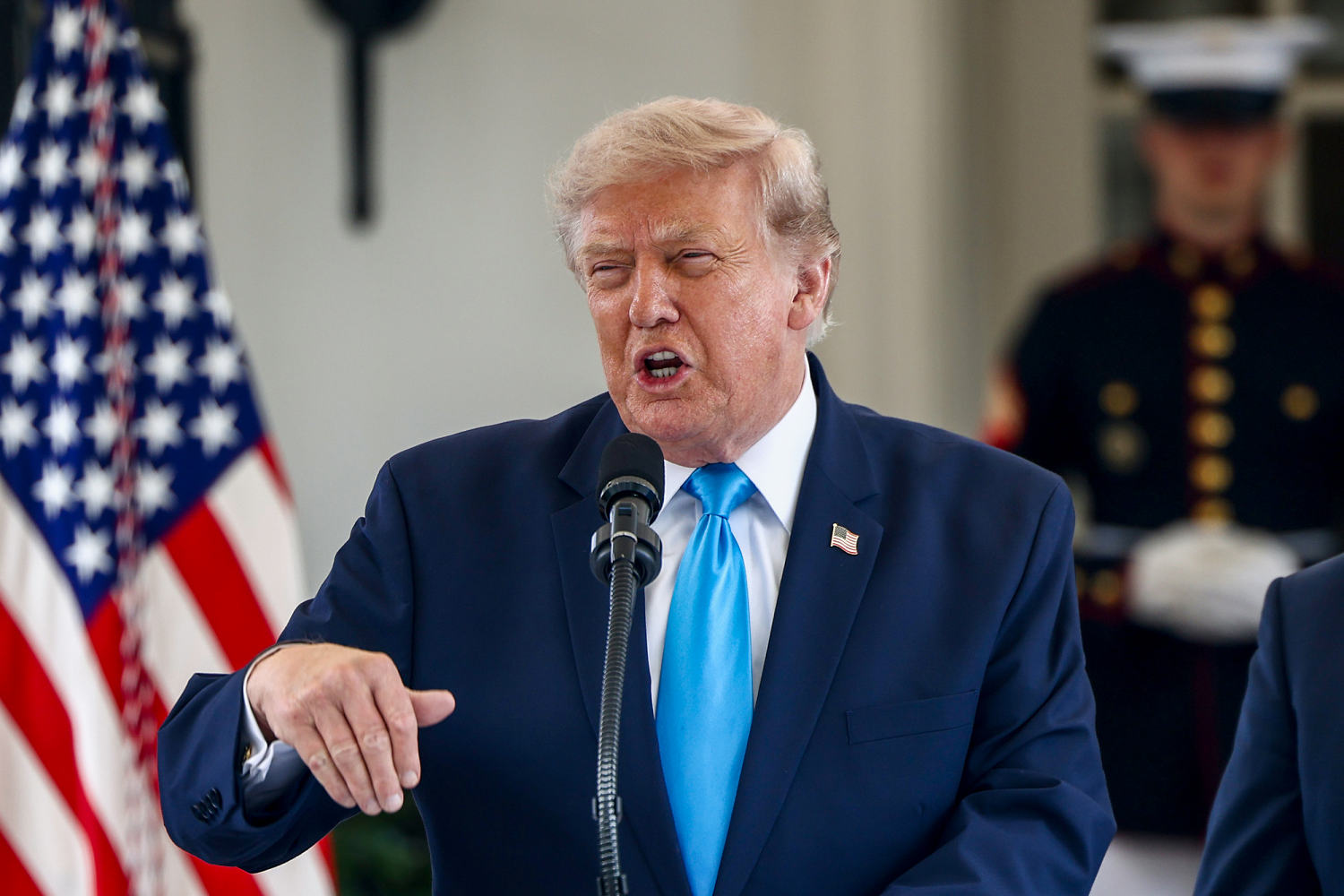
The proclamation issued from Washington carried all the familiar hallmarks of a manufactured diplomatic breakthrough. United States President Donald Trump announced that mediators in Cairo had forged a historic framework for the complete disarmament of Hamas, framing it as the foundational anchor of his multiphase Gaza peace initiative. Yet beneath the rhetorical gloss of structured phases, international stabilization forces, and a transitioning Palestinian administration, the structural reality on the ground tells a radically different story. Prime Minister Benjamin Netanyahu’s government remains deeply entrenched, skeptical of any sequencing that decouples Israeli military withdrawal from immediate, verifiable de-escalation and total militant decommissioning.
For months, the friction point has remained constant. Washington’s Board of Peace roadmap envisions a reciprocal, conditions-based timeline where heavy and light armaments are incrementally boxed, stored, or neutralized under a technocratic Palestinian authority while Israeli forces pull back in parallel. Hamas negotiators in Cairo have signaled flexibility regarding the physical custody of their stockpiles, suggesting that weaponry could be placed under local administrative supervision rather than handed directly to an occupying force. To Jerusalem, however, this distinction is an existential non-starter. Israeli defense planners demand total demilitarization as a rigid prerequisite before a single brigade relocates, pointing to ongoing tactical underground networks and unrecovered military infrastructure as proof that incrementalism is merely a rebranding of strategic vulnerability.
The mechanics of this proposed transition expose a fundamental architectural flaw. The international stabilization force meant to anchor the security vacuum—commanded by American leadership and bolstered by fragmented multinational pledges—lacks the robust mandate required to police a deeply traumatized, heavily armed territory. Previous commitments from contributing nations have repeatedly stalled over liability, operational risks, and the absence of a permanent political horizon. When prospective troop contributors evaluate the prospect of stepping into a pulverized urban landscape where low-intensity skirmishes and daily air strikes persist, the willingness to deploy evaporates.
Consequently, the diplomatic choreography currently playing out between Cairo, Washington, and Jerusalem functions more as an exercise in political survival than an executable blueprint for peace. Hamas attempts to salvage political relevance by trading conditional disarmament for long-term institutional survival, while Netanyahu faces intense domestic pressure to reject any framework that leaves a shadow militia intact across Israel’s southern perimeter. As long as Washington insists on marketing a conditions-based compromise that neither warring party trusts, the proclaimed disarmament roadmap remains an illusion suspended between an unyielding military campaign and an unfulfilled diplomatic promise

/GettyImages-157526585-93425538070d4422ad42d22af28c0758.jpg)