A massive federal raid just changed everything for GKN Aerospace in Garden Grove. On Wednesday morning, a convoy of unmarked vehicles and agents from the FBI and the Environmental Protection Agency swarmed the facility on Western Avenue. They weren't there for a routine inspection. Armed with a federal search warrant, investigators began seizing digital records, physical logs, and chemical samples.
This dramatic escalation comes just weeks after the facility nearly leveled a chunk of Orange County.
If you live anywhere near Anaheim, Stanton, or Garden Grove, you remember late May vividly. A failing chemical tank holding up to 7,000 gallons of highly volatile methyl methacrylate started self-heating. It was a ticking time bomb. The cooling systems failed, the backup plans were non-existent, and local officials panicked. They issued a massive evacuation order that displaced 50,000 residents over the Memorial Day holiday weekend.
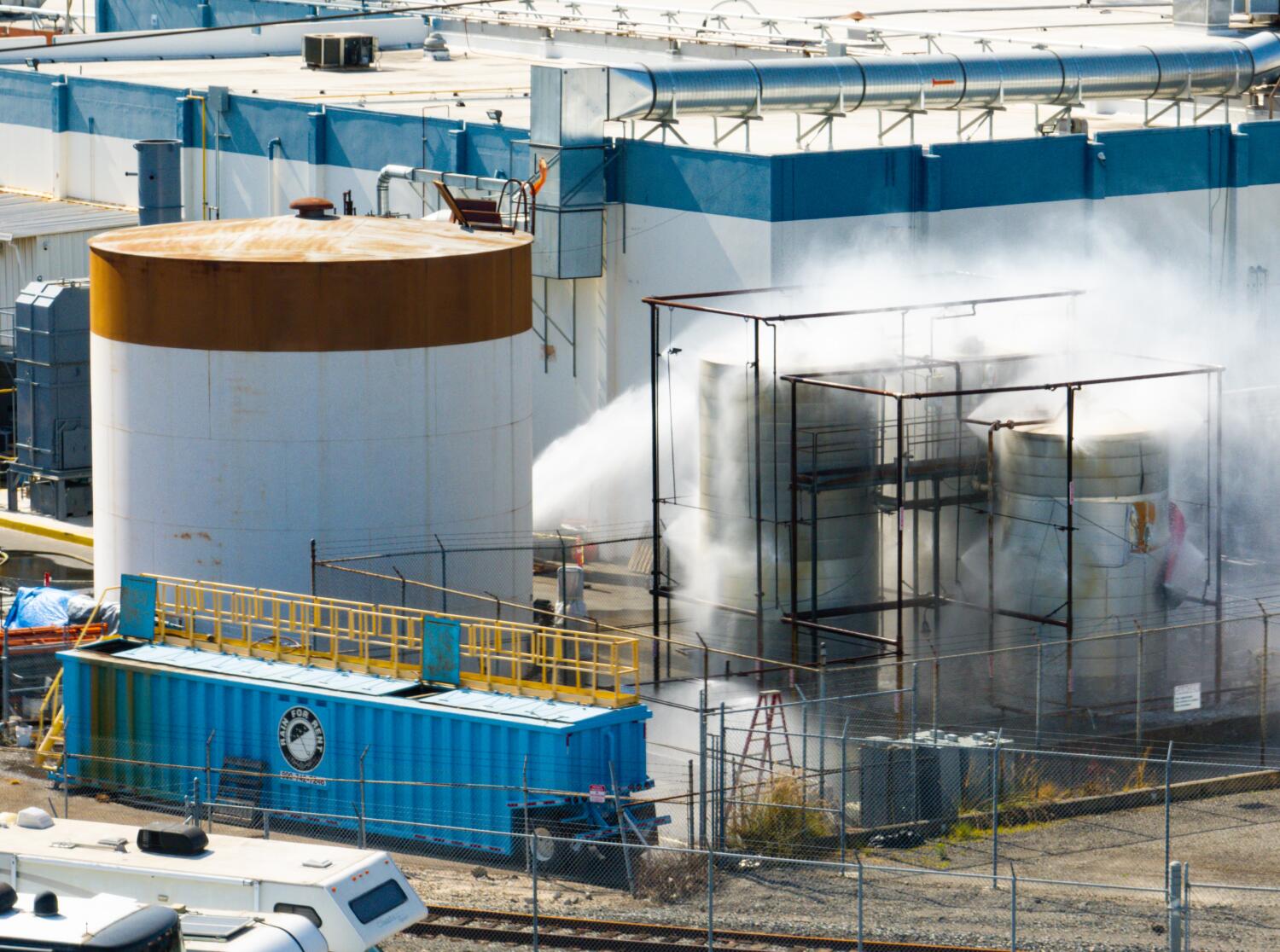
For five days, the community held its breath while firefighters blasted the tank with water cannons. The crisis only ended when a literal crack formed in the tank, relieving the pressure before the whole thing could detonate. Now, the feds are stepping in to find out exactly how close we came to a catastrophe and whether corporate negligence is to blame.
Inside the Raid and the Federal Warrant
The FBI isn't playing around here. The search warrant, signed by a federal judge a week prior to the raid, gives agents broad authority to dismantle GKN's operational history.
Agents are hunting for everything related to the storage, use, and disposal of methyl methacrylate. They're seizing records on the specific cooling equipment that failed, trying to figure out if the company knew the system was compromised before the emergency began.
But they aren't just taking paperwork. Federal agents are actively pulling physical samples from every tank, drum, tote, and vat on the property that has ever held hazardous substances. They want to know exactly what was inside that facility, down to the molecular level.
The Mystery of the Ginned-Up Valves
Why did a standard chemical tank become an uncontrollable hazard? Methyl methacrylate is a liquid chemical used to make plastics, Plexiglas, and dental prosthetics. In GKN’s case, it's used to manufacture high-tech cockpit windows and canopies for military aircraft.
When the tank's temperature started climbing past its "happy place" of 50 degrees Fahrenheit, it triggered an uncontrolled chemical reaction called polymerization. Basically, the liquid started turning into solid plastic inside the tank, generating its own intense heat.
Emergency responders actually tried to inject a neutralizing agent to stop the reaction. They couldn't. The chemical reaction inside the tank had already "gummed up" the very valves needed to deliver the fix. It was a terrifying engineering failure. The tank hit 100 degrees Fahrenheit, and officials openly admitted their only two realistic scenarios were a massive toxic rupture or a catastrophic explosion.
A History of Hidden Safety Gaps
This isn't a case of sudden bad luck. A look at regional regulatory history shows a pattern of friction between GKN and environmental officials.
Back in 2020, GKN self-reported issues that triggered a deep look by South Coast air regulators. That probe revealed the facility had been operating out of compliance since 2017. They were running new equipment without permits, missing critical emissions records, and utilizing hardware that didn't match their regulatory paperwork.
It took years to resolve, culminating in a late 2024 settlement where GKN paid over $900,000 without admitting liability. The state currently classifies the plant as a "major source" of emissions, requiring annual inspections. Yet, despite being within a mile of local neighborhoods and schools, the specific chemical that almost caused a mass casualty event wasn't even covered under California's strictest accidental-release prevention rules.
What Happens to the Neighborhood Next
The immediate crisis is over, but the fallout is just beginning. The Orange County District Attorney's office is running a parallel criminal investigation into potential criminal acts by the company. District Attorney Todd Spitzer hasn't held back, publicly slamming the company for a total lack of redundant cooling systems.
Local residents are furious. At a tense community meeting, locals confronted GKN executives, stating they can't sleep with a "monster under their beds." While GKN has apologized and poured $3 million into a community resilience fund, families are left holding the bag for sudden hotel bills, evacuated pets, and missed work.
Worse yet, the neutralized chemical is still sitting in that damaged tank. Local health agencies planned to pump the sludge into sealed trucks last week, but the cleanup delayed indefinitely due to a lack of specialized disposal resources.
If you are a local resident or a business owner affected by the evacuation, don't wait around for a corporate handout. Document every single expense from that weekend—hotel receipts, spoiled food, lost wages, and medical bills for respiratory irritation or headaches. A dozen lawsuits have already been filed, and as the FBI uncovers the internal records, the case for corporate accountability is only going to get stronger. Keep your records ready.