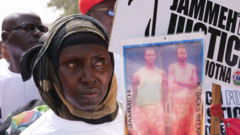
Gambia just took a massive step toward justice that many thought would never happen. The government appointed a heavy-hitting British barrister to lead the prosecution of crimes committed under former dictator Yahya Jammeh. This isn't just a routine legal hire. It's a signal to the world that the "Smiling Coast" is serious about closing one of the darkest chapters in West African history. For years, victims have waited. They’ve sat through the Truth, Reconciliation and Reparations Commission (TRRC) hearings, reliving horrors. Now, the talk is turning into actual courtroom action.
The appointment of Mbengeh Jallow, a dual Gambian and British national with a background in high-stakes criminal law, changes the math. She isn't just there to fill a seat. Her role as the Special Prosecutor is to build cases that stick. We’re talking about state-sponsored killings, torture, and disappearances that defined Jammeh’s 22-year rule. If you’ve followed this story, you know the stakes. This is about proving that no one, not even a man who once claimed he would rule for a billion years, is above the law.
Why a British Barrister Matters for Gambian Justice
You might wonder why the Gambian government reached out to someone with British legal credentials. It’s about more than just a resume. The Gambian legal system is built on English common law, so the procedural fit is perfect. But the real reason is credibility. By bringing in a prosecutor who has navigated the complexities of international law and high-level criminal litigation, the Ministry of Justice is insulating itself from claims of "victor’s justice" or local political bias.
Jallow brings a specific type of grit to the table. She has experience in the UK’s Crown Prosecution Service and has dealt with the kind of evidentiary hurdles that make or break a human rights case. In a country where the previous regime spent decades scrubbing its tracks, you need someone who knows how to find the needle in the haystack. The Gambian people don't want a show trial. They want convictions that stand up to international scrutiny.
The Gruesome Reality of the Jammeh Years
We can't talk about this appointment without acknowledging what she’s actually investigating. The TRRC report, released in late 2021, was a gut-punch. It detailed a systematic campaign of terror carried out by the "Junglers"—Jammeh’s hit squad. These weren't just rogue soldiers. They were a state-funded execution team.
The report documented 214 to 250 deaths directly linked to the state. It covered the 2005 massacre of over 50 West African migrants, an event that Jammeh’s government tried to bury for a decade. It detailed the "witch hunts" where innocent elderly people were forced to drink hallucinogenic potions. It laid bare the sexual violence against women who were forced into Jammeh's "protocol." When you read these accounts, the word "gruesome" starts to feel like an understatement. It was a factory of misery.
The Special Prosecutor’s office now has the job of turning these testimonies into indictments. It's a mountain of work. Every witness needs protection. Every piece of paper needs to be authenticated. In a small country where everyone knows everyone, the pressure is immense.
The Hybrid Court Dilemma
One of the biggest questions hanging over this process is where these trials will actually happen. The Gambian government and the Economic Community of West African States (ECOWAS) are working on a "hybrid court" model. Think of it as a partnership. It would be a Gambian-led court but backed by ECOWAS, likely based in Banjul but with the ability to sit elsewhere if security becomes an issue.
This matters because Yahya Jammeh is currently in exile in Equatorial Guinea. He’s protected by Teodoro Obiang Nguema Mbasogo, a man who isn't exactly a champion of human rights himself. A hybrid court carries more international weight. It makes it harder for Equatorial Guinea to keep shielding him. If a regional body like ECOWAS demands Jammeh's extradition to a court they co-manage, the political pressure becomes a lot harder to ignore.
What This Means for Global Human Rights
This isn't just a Gambian story. It’s a blueprint for how small nations can handle big tyrants. For a long time, the only way to get justice for these kinds of crimes was through the International Criminal Court (ICC) in The Hague. But many African leaders view the ICC with suspicion, calling it a tool of Western imperialism.
By building their own specialized prosecution team and pursuing a regional court, The Gambia is taking ownership. They're saying, "We can do this ourselves." It's a middle path. It avoids the perceived bias of a purely local trial while sidestepping the "foreign" feel of a European-based international tribunal.
The Challenges Facing Mbengeh Jallow
Let's be real. This isn't going to be easy. Jallow is stepping into a minefield. First, there’s the issue of funding. Running a special prosecutor’s office and a hybrid court costs millions. The Gambia is a small economy. They’re relying heavily on international donors like the EU and the UN. If that money dries up, justice stalls.
Then there’s the domestic political scene. Some of Jammeh’s former allies are still in the government or holding positions of power. President Adama Barrow’s political alliances have shifted over the years, leading to concerns that some prosecutions might be "deprioritized" for the sake of political stability. Jallow has to be fiercely independent. If she looks like she’s pulling punches to please the current administration, the whole project loses its soul.
Why You Should Care Even If You Aren't Gambian
If you care about the rule of law, you have to watch this. The Gambia is a test case. If they succeed, it proves that even after decades of oppression, a country can rebuild its institutions and hold its tormentors accountable. It shows that "never again" isn't just a slogan you put on a plaque. It's a legal process.
Justice is slow. It’s expensive. It’s often frustratingly bureaucratic. But the alternative is a culture of impunity where the next strongman thinks he can get away with it because the last one did. By appointing a specialized prosecutor, The Gambia is breaking that cycle.
What Happens Next
The immediate next steps involve the Special Prosecutor’s office staffing up and prioritizing the "low-hanging fruit"—those perpetrators already in custody or within reach. We should expect to see the first set of indictments coming out of this new office within the next few months.
If you want to support this process, stay informed. Human rights organizations like Amnesty International and Human Rights Watch are tracking the progress of these trials. Public pressure helps keep the international funding flowing and ensures the Gambian government stays committed to the TRRC recommendations.
Don't look away. The victims of the Jammeh era have waited long enough. The arrival of a new prosecutor means the clock is finally ticking for those who thought they were untouchable. It’s about time.