Most people watching the Taiwan Strait are looking at the wrong side of the map.
For decades, military planners and news anchors focused almost exclusively on the 100-mile stretch of water separating mainland China from Taiwan's western coast. That made sense. It's narrow, crowded, and directly in front of Beijing's staging ports. Yet when G7 foreign ministers wrapped up their meeting in Paris in November 2026, their sharpest warning wasn't about the strait at all. They pointed directly at China's escalating actions in the waters east of Taiwan.
If you haven't been tracking maritime movements in the Western Pacific since June 2026, that geographic shift might sound like diplomatic nitpicking. It isn't. The Pacific waters off Taiwan's eastern shoreline are the island's lifeline—and Beijing has spent the last six months systematically rehearsing how to sever it.
What Actually Happened in Paris
When the foreign ministers of Canada, France, Germany, Italy, Japan, the United Kingdom, and the United States—alongside the European Union's foreign policy chief—issued their joint declaration on November 11, 2026, they broke new diplomatic ground. Individual capitals like Washington, London, Berlin, and Paris had voiced quiet unease over Chinese operations off Taiwan's eastern coast before. Never had the entire bloc unified around that specific stretch of ocean.
The wording was blunt. G7 ministers warned that Beijing's increasingly assertive moves east of Taiwan "threaten regional stability, freedom of navigation and the safety of international shipping". They also reiterated their firm opposition to any unilateral attempt to alter the status quo through force or coercion.
Taipei reacted immediately. Presidential Office spokesperson Karen Kuo welcomed the declaration, emphasizing that stability across the Taiwan Strait and the broader Indo-Pacific underpins global prosperity. Taiwan's Ministry of Foreign Affairs echoed that gratitude, noting that the G7 also backed Taiwan's meaningful participation in international organizations. Beijing's Foreign Ministry, meanwhile, stayed silent immediately following the release, sticking to its longstanding position that Taiwan is an internal affair and outside governments have no business weighing in.
Why the Waters East of Taiwan Matter More Than You Think
Here's what most casual observers miss about Taiwan's geography.
Taiwan's west coast faces China, sits on shallow continental shelf waters, and contains the island's major industrial ports like Kaohsiung and Taichung. Its east coast—facing the open Pacific around Hualien, Taitung, and Green Island—is sheer cliffs, deep water, and exposed ocean. Historically, that rugged geography acted as a natural shield. If a crisis ever erupted in the Taiwan Strait, Taiwan's military and civilian planners always assumed allied resupply ships, fuel tankers, and reinforcement convoys would approach from the east, shielded by the island's central mountain range from mainland coastal batteries.
Take that eastern sanctuary away, and Taiwan's strategic math collapses.
According to MarineTraffic data cited by Bloomberg, shipping volume through those eastern waters actually outpaced the Taiwan Strait itself in June 2026, with 527 vessels transiting the eastern route compared to 420 through the strait. Commercial carriers have increasingly routed cargo ships east of Taiwan to hedge against geopolitical friction and military drills in the strait. By pushing into those waters, Beijing isn't just intimidating Taipei. It's putting a hand on the throat of global supply chains.
The June 2026 Shift From Episodic Drills to Permanent Presence
To understand why the G7 reacted so strongly in November, you have to look at what changed on the water five months earlier.
Prior to summer 2026, China Coast Guard cutters appeared east of Taiwan only briefly—usually for a few days at a time as political theater whenever Taipei or Washington did something Beijing disliked. Everything changed on June 1, 2026.
Following a late-May joint statement by Japan and the Philippines pledging cooperation to delimit their maritime boundary, Beijing deployed a China Coast Guard task force led by the cutters Daishan and Baita into waters east of Taiwan. Unlike earlier fly-by patrols, they didn't leave. They stayed on station for over a month until two replacement cutters—CCG 1401 and CCG 2305—arrived on July 4 to relieve them.
As Ryan D. Martinson of the U.S. Naval War College's China Maritime Studies Institute noted in his July 2026 analysis, that relief-in-place signaled a deliberate move toward a permanent, normalized Coast Guard presence off Taiwan's Pacific coast.
The numbers tell the story of how fast Beijing scaled up:
- May 2026: Taiwanese authorities tracked 30 Chinese coast guard, research, and government vessels operating around the island.
- June 2026: That figure jumped to 55 ships as continuous eastern patrols began across a 27,100-square-nautical-mile zone.
- July 2026: Deployments surged to a record 244 non-naval government vessels—more than quadruple the 58 detected in July 2025.
- August 2026: In just the first three weeks of the month, Taiwan detected 152 government vessels, roughly 60 percent of them China Coast Guard cutters.
By September, Taiwan's Coast Guard Administration reported Chinese cutters loitering and drifting roughly 74 to 105 nautical miles east of Green Island. At the same time, China's Ministry of Natural Resources spent three weeks in August conducting seabed geological surveys east of Taiwan, with state broadcaster CCTV framing the mission as mapping "China's jurisdictional sea areas".
How Beijing Uses Gray-Zone Tactics to Rehearse a Blockade
If you've followed maritime disputes in the South China Sea over the past decade, you've seen this playbook before. Analysts call it "gray-zone" coercion—operations designed to achieve military objectives without firing a shot or crossing the threshold into open warfare.
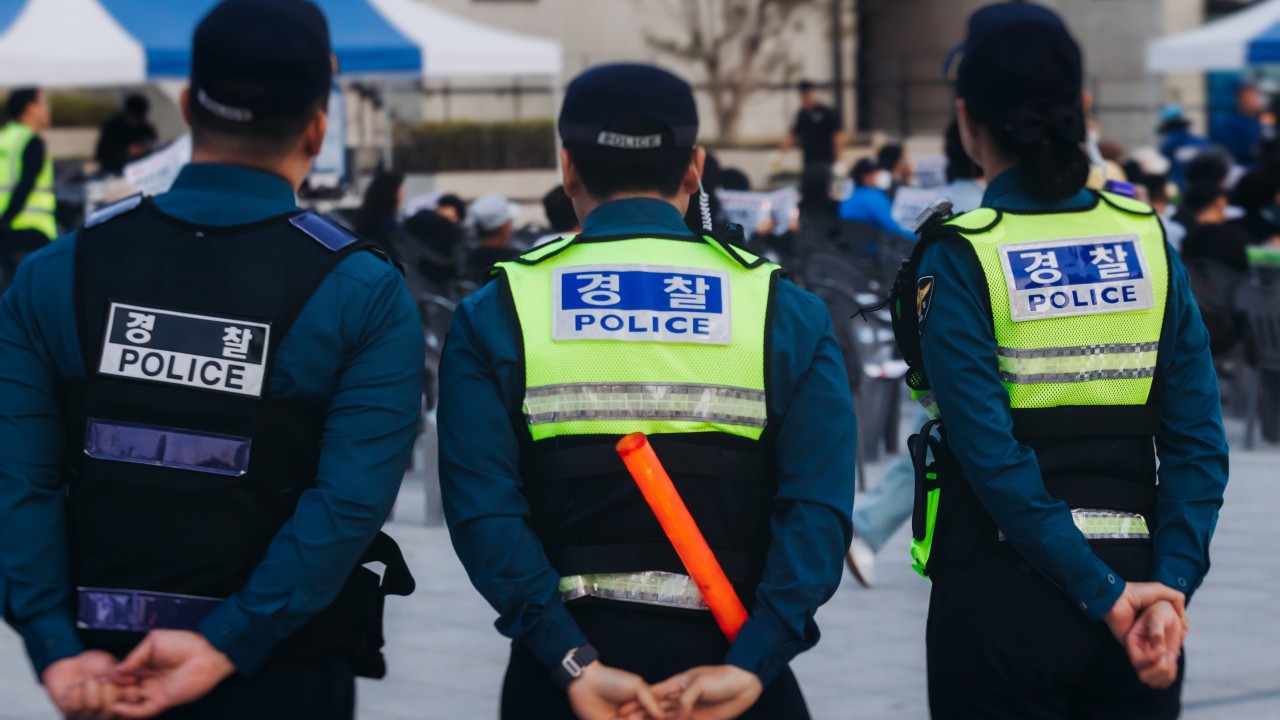
Here's why Beijing prefers white-hulled Coast Guard ships over gray-hulled People's Liberation Army Navy destroyers for this job. When a warship enters contested waters, it triggers military responses and alarms foreign capitals. When a Coast Guard cutter conducts what Beijing labels "routine law-enforcement patrols," it tries to establish administrative control and domestic jurisdiction under the guise of policing.
Taiwan's Coast Guard Administration bluntly called this out in September as cognitive warfare—"law enforcement in name, jurisdictional expansion in practice".
Behind the white hulls, though, sits hard military steel. Taiwanese defense officials warn that Beijing is layering civilian research ships, paramilitary Coast Guard vessels, and naval carrier strike groups to rehearse a full-scale maritime quarantine or blockade. Just days before the G7 statement in November, Taiwan's Defense Minister Wellington Koo confirmed that China was running "area denial" drills in the Western Pacific involving one of its aircraft carriers and accompanying naval formations.
Think about how those pieces fit together in a real crisis. In a quarantine scenario, China wouldn't necessarily need to sink merchant vessels heading toward Taiwan's east coast. Coast Guard cutters could simply hail commercial cargo ships, demand customs inspections, board vessels, or force them to divert to mainland ports. Insurers would freeze coverage overnight. Shipping companies would halt deliveries on their own. Taiwan would be isolated from energy, food, and weapons imports without a single missile strike.
What Critics Get Wrong About the G7 Statement
Whenever the G7 releases a strongly worded communique, skeptics immediately dismiss it as empty diplomatic talk. A piece of paper written in Paris won't stop a 3,000-ton Coast Guard cutter in the Pacific.
That critique misses how international maritime law actually works.
Under the United Nations Convention on the Law of the Sea, claims of historic rights or domestic jurisdiction gain traction if other nations quietly acquiesce to them. Silence gets weaponized as consent. When China's Coast Guard patrols waters east of Taiwan and claims it's enforcing domestic law, Beijing is building a legal paper trail to argue that those waters are internal or subject to Chinese administration.
By formally rejecting those actions as threats to freedom of navigation and international shipping, the G7 nations—which collectively represent the world's largest advanced economies and major maritime powers—placed an official legal objection on the record. That joint stance gives naval commanders, coast guards, and commercial shipping insurers across Europe, North America, and Japan unified political cover to challenge Chinese boarding attempts or exclusion zones.
Still, there's a fair counterargument worth acknowledging. Diplomatic statements create friction, not physical deterrence. Beijing has absorbed plenty of G7 warnings over the South China Sea while continuing to build artificial islands and harass Philippine resupply boats. Without sustained freedom-of-navigation transits by allied navies and stronger asymmetric coastal defenses from Taipei, words from Paris won't push Chinese cutters back across the median line.
Practical Ways to Track Escalation Around Taiwan
If you work in global logistics, semiconductor supply chains, or geopolitical risk—or if you simply want to separate genuine danger from daily media noise—stop reacting to every headline about Chinese fighter jets crossing Taiwan's air defense identification zone. Those flights happen almost every day and have largely been priced in.
Watch these three concrete indicators off Taiwan's east coast instead:
- Coast Guard Relief Cycles: Track whether China maintains continuous, back-to-back rotations of Coast Guard cutters east of Hualien and Green Island. Short deployments signal political messaging; uninterrupted reliefs signal permanent administrative encroachment.
- Commercial Boarding or Inspection Attempts: The true red line isn't a Chinese cutter sailing 80 miles off Taiwan's coast. It's a Chinese cutter ordering a foreign-flagged commercial cargo ship or liquefied natural gas tanker to stop for inspection. The moment Beijing interferes with third-party merchant shipping, maritime insurance premiums for East Asia will spike immediately.
- Coordinated Carrier and Coast Guard Drills: Watch for moments when People's Liberation Army Navy aircraft carriers operating east of the first island chain synchronize their movements with China Coast Guard patrols closer to Taiwan's shore. That overlap is the exact operational blueprint for sealing off Taiwan's Pacific lifeline.
Check monthly maritime tracking summaries from Taiwan's Ministry of National Defense and Coast Guard Administration alongside open-source AIS shipping data from platforms like MarineTraffic. Keep your eye on the Pacific side of the island—because that's where the next real test of regional stability is already unfolding.