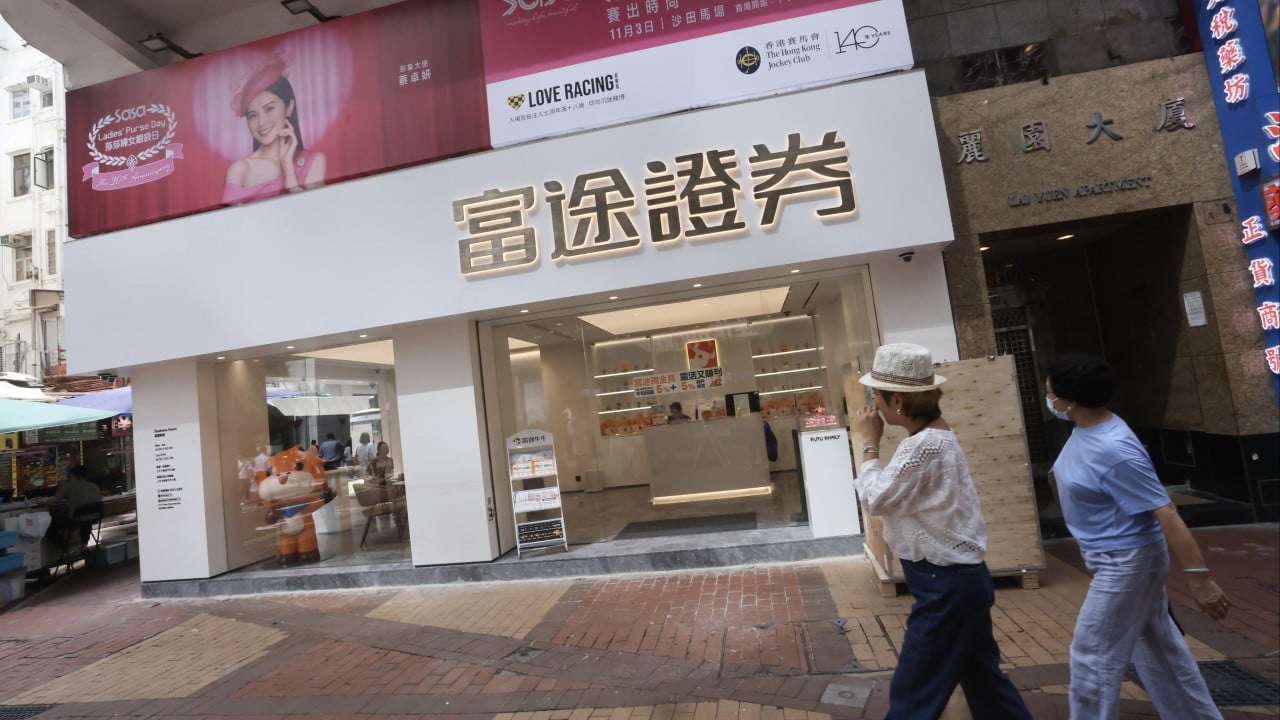
Stock brokerages aren't exactly known for their cozy vibes. Usually, you walk into a sterile office with flickering screens, grey carpets, and a sense of stiff formality that makes you want to check your watch every thirty seconds. Futu Securities is trying to blow that entire image up. By opening a coffee shop right inside its Hong Kong branch, the digital-native broker is signaling that the era of the cold, transactional storefront is over. It's a move that looks like a gimmick on the surface but actually points to a massive shift in how financial firms need to talk to you.
Investors don't just want an app anymore. They want a community. If you’re trading on Futubull, you’re already used to the digital social feeds and the gamified interface. But screens have limits. Futu recognized that their younger, mobile-first client base actually craves physical spaces—provided those spaces don't feel like a tax audit. This isn't about selling lattes. It’s about sticking the brand into your daily routine.
Why a brokerage needs a barista
The logic here is pretty simple. Most people avoid walking into a bank or a brokerage unless they absolutely have to. It feels like a chore. By integrating a cafe, Futu turns a high-friction environment into a low-friction one. You aren't "going to see your broker." You're just grabbing a flat white and maybe checking your portfolio while you're at it.
This shift targets a specific demographic. We’re talking about Gen Z and Millennial investors who grew up with Robinhood and Futu but now have more complex financial needs. They’ve got more capital. They’re looking at IPOs, options, and long-term wealth management. You can't always solve those problems through a chatbot. Sometimes you want to sit down. Futu is betting that you'll be more likely to sit down if there's high-quality caffeine involved.
Retail space in Hong Kong is some of the most expensive on the planet. You don't waste it on a coffee machine unless it serves a broader business goal. For Futu, that goal is customer retention. Digital loyalty is fickle. Physical loyalty, where a person knows your name and your coffee order, is much harder to break. It’s a classic "third space" strategy—positioning the brokerage as a spot between home and work.
Breaking the wall between digital and physical finance
Traditional banks have tried this before, but they usually fail because they can’t shake the corporate stank. They put a mediocre espresso machine in the corner of a branch and call it a "lifestyle center." It doesn't work. Futu’s approach is different because they’re starting from a place of lifestyle and community.
Their Hong Kong presence in districts like Mong Kok and Tsim Sha Tsui isn't just about visibility. It’s about accessibility. When you see a sleek, brightly lit space that looks more like a tech flagship store than a bank, your brain categorizes it differently. It lowers the barrier to entry for people who feel intimidated by the world of high finance.
The competition is watching. Other digital brokers are realizing that purely online models have a ceiling. Without a physical presence, you're just an icon on a phone. With a branch—and a cafe—you're a part of the neighborhood. This physical footprint allows Futu to host seminars, live-stream market events, and run face-to-face workshops. It turns the brokerage into an educational hub.
The lifestyle pivot is about data not just decor
Don't be fooled by the aesthetic. Every square foot of that shop is designed to keep you in the Futu ecosystem. While you wait for your drink, you're surrounded by market data and branding. It’s a soft-sell environment. You're absorbing the brand's authority without being hit over the head with a sales pitch.
In a world where customer acquisition costs are skyrocketing, this is a brilliant play. It costs a fortune to get someone to download an app and actually fund an account. If a coffee shop can bring in foot traffic that wouldn't normally search for "investment platforms" in an app store, the ROI starts to look very different. It’s about capturing the top of the funnel in the real world.
The psychology of the physical branch
There’s a deep psychological element at play here. Money is emotional. When markets are volatile, an app can feel cold and indifferent. Seeing a physical building with real people inside provides a sense of security. It says, "We aren't going anywhere." For a company that started entirely in the cloud, proving physical permanence is a huge step in building long-term trust.
The "lifestyle" angle isn't just marketing fluff. It reflects how people actually manage their lives now. We don't have a "banking hour" and a "coffee hour" anymore. Everything is blended. If you're a freelancer or a remote worker, your office is wherever the Wi-Fi is good. By providing that space, Futu is becoming a utility in your life beyond just being a place where you buy stocks.
High stakes in the Hong Kong market
Hong Kong is the perfect testing ground for this. It’s a dense, fast-moving market with a high concentration of retail traders. The competition between Futu, Tiger Brokers, and traditional giants like HSBC is fierce. To win, you have to offer something the others can't or won't.
Traditional banks are closing branches to save money. Futu is opening them to win hearts. It’s a contrarian move. While the big banks are pushing everyone toward automated phone lines and clunky websites, Futu is leaning into the human element. They’re using tech to make the backend efficient so they can afford to make the frontend personal.
This isn't without risk. Running a food and beverage operation is a nightmare compared to running a software platform. There are health codes, staffing issues, and thin margins. If the coffee is bad, it reflects poorly on the brand. If the service is slow, it irritates the high-net-worth clients they're trying to attract. They have to execute perfectly on two very different businesses at once.
How to use this shift to your advantage
If you’re an investor, you should see this as a win. It means the power is shifting back to the consumer. You should demand more from your financial institutions than just a place to park your cash.
Start by visiting these new-age branches. Use the space. Many of these firms offer exclusive perks or lower fees if you engage with them in person or attend their events. If you're still using a broker that makes you feel like a number in a spreadsheet, it’s time to look at the firms that are actually trying to fit into your life.
Watch how these spaces evolve over the next year. If the cafe model works for Futu, expect every other digital platform to follow suit. You might soon find yourself picking your broker based on their bean roast as much as their commission rates. Honestly, it’s about time the industry caught up to how people actually live.
Go check out the branch in Tsim Sha Tsui. Grab a drink. Sit in the lounge. See if the physical experience actually changes how you feel about your trades. If it doesn't, at least you got a decent cup of coffee out of the deal. The reality is that finance is becoming a hospitality business. The firms that realize this first are the ones that will still be standing when the next market cycle hits. Stop settling for boring banking. Demand a better experience. Regardless of whether you're trading penny stocks or blue chips, you deserve a space that doesn't feel like a hospital waiting room. Move your capital to where the innovation is actually happening.