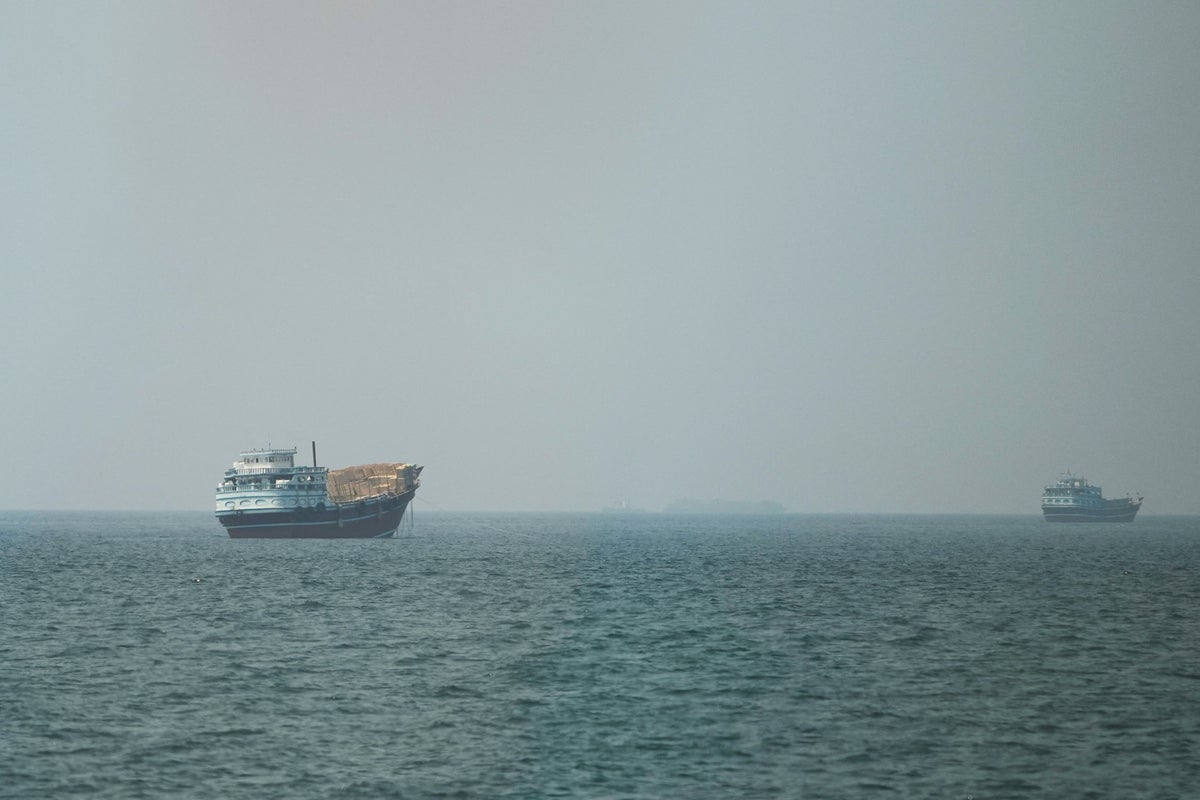
Geopolitical shocks are exposing the structural fragility of maritime choke points, forcing a fundamental recalculation of trade infrastructure. The primary vulnerability in the Persian Gulf is the Strait of Hormuz. When hostilities escalated between the United States and Iran, the closure of this 21-mile-wide passage caused container activity at Dubai’s flagship Port of Jebel Ali to collapse by 90 to 95 percent. In response, DP World initiated a strategic diversification plan to develop a new multipurpose deepwater port and container terminal in Fujairah on the United Arab Emirates’ eastern coast. This initiative represents a capital-intensive shift designed to bypass the Strait of Hormuz entirely by shifting primary maritime entry points to the Gulf of Oman.
Understanding the viability of this project requires analyzing its mechanical, economic, and logistical constraints. The strategic pivot from Jebel Ali to Fujairah cannot be executed by simply building docks; it requires managing a complex trade-off between maritime risk mitigation and land-based operational friction.
The Logistical Friction: Marine vs. Overland Cost Functions
The core thesis of the Fujairah bypass is simple: unload containerized cargo outside the Strait of Hormuz and transport it overland to the UAE’s industrial and commercial hubs. While this eliminates maritime vulnerability, it introduces a significant overland cost penalty.
The economic efficiency of container shipping is driven by scale. To evaluate this pivot, we must analyze the cost function of shifting cargo from Ultra Large Container Vessels (ULCVs) to land-based transit networks.
[Deepwater Port: Fujairah] ──(Discharge)──> [Overland Truck/Rail] ──(180-250 km)──> [Destinations: Dubai/Abu Dhabi]
The Scale Imbalance
A modern ULCV can carry upwards of 20,000 Twenty-Foot Equivalent Units (TEUs). Jebel Ali, which handled 15.6 million TEUs annually prior to the crisis, relies on direct marine discharge to adjacent free zones.
When cargo is diverted to Fujairah, the land-bridge solution requires translating that massive sea-borne volume into discrete overland shipments.
The Cost Equations
The cost of direct marine transit to Jebel Ali ($C_{Direct}$) can be modeled as:
$$C_{Direct} = C_{Ocean} + C_{Port_JA} + C_{Drayage_Local}$$
Where:
- $C_{Ocean}$ is the ocean freight rate.
- $C_{Port_JA}$ represents the port handling charges at Jebel Ali.
- $C_{Drayage_Local}$ is the short-haul delivery cost within Dubai's immediate industrial zones.
Conversely, the bypass cost function ($C_{Bypass}$) via Fujairah introduces high-tariff overland legs:
$$C_{Bypass} = C_{Ocean_Adj} + C_{Port_Fuj} + C_{Handling_Trans} + C_{Overland}$$
Where:
- $C_{Ocean_Adj}$ is the slightly adjusted ocean freight rate to the Gulf of Oman.
- $C_{Port_Fuj}$ is the discharging fee at the new Fujairah facilities.
- $C_{Handling_Trans}$ is the double-handling tariff (moving container from ship to yard, then yard to chassis or railcar).
- $C_{Overland}$ is the long-haul trucking or rail tariff covering the 180 to 250 kilometers across the Al Hajar Mountains to Dubai or Abu Dhabi.
Overland trucking tariffs scale linearly per kilometer and are highly sensitive to diesel price fluctuations and driver availability. Even if rail infrastructure, such as the newly developed Etihad Rail network, is used to absorb high volumes, the unit economics of rail transport over a relatively short distance (under 300 km) suffer from high fixed terminal costs.
As a result, $C_{Bypass}$ is structurally higher than $C_{Direct}$ during peacetime. The project is not designed to optimize daily shipping margins; it serves as a capital-intensive insurance policy against catastrophic operational downtime.
Infrastructure Asymmetry: Why Jebel Ali Cannot Be Replaced
A common misconception is that the construction of a new eastern port will eventually marginalize Jebel Ali. This view overlooks the industrial ecosystem built around Dubai’s primary port over the past five decades. Jebel Ali is not merely a transit point; it is an integrated industrial engine.
- The Scale of Jebel Ali Free Zone (Jafza): Jafza hosts over 11,000 global companies, manufacturing facilities, and distribution centers. These businesses rely on immediate, low-latency access to shipping berths.
- The Capital Stock Illusion: Building berths in Fujairah does not replicate the billions of dollars of private capital invested in warehouses, cold-storage facilities, and specialized manufacturing plants located in western Dubai.
- The Hub-and-Spoke Feeder Network: Jebel Ali acts as the primary transshipment hub for the entire upper Persian Gulf, including Kuwait, Iraq, and upper Saudi Arabia. A port in Fujairah can bypass the strait for UAE-bound cargo, but it cannot easily serve upper Gulf destinations without requiring those feeder vessels to sail back through the Strait of Hormuz anyway.
These realities mean the Fujairah development will function as a complementary dual-gate system rather than a replacement. During periods of regional stability, Jebel Ali will remain the primary port of entry due to its superior cost efficiency and integrated supply chains.
During disruptions, Fujairah will serve as a high-capacity relief valve. This preserves the UAE’s sovereign credit rating and supply chain continuity, even if it comes with higher overland transport costs.
The Geopolitical Chessboard: Redefining Strategic Leverage
Building a deepwater port in Fujairah alters the strategic dynamics of the Persian Gulf by reducing the leverage of regional actors.
                 ┌──────────────────────────────────────┐
                 │    Strait of Hormuz (Choke Point)    │
                 │   - Vulnerable to maritime closure   │
                 └──────────────────┬───────────────────┘
                                    │
                         [Strategic Relocation]
                                    │
                                    ▼
                 ┌──────────────────────────────────────┐
                 │       Gulf of Oman (Fujairah)        │
                 │   - Open access to Arabian Sea       │
                 └──────────────────────────────────────┘
Historically, the ability to disrupt traffic through the Strait of Hormuz has been used as a geopolitical lever. By building infrastructure on the Gulf of Oman, the UAE weakens the economic impact of this threat.
However, this shift does not entirely eliminate security risks. It merely changes the nature of those threats:
- Vulnerability of Overland Corridors: Replacing sea lanes with highways and rail tracks concentrates transit along narrow geographic corridors through the Al Hajar Mountains. This makes cargo vulnerable to land-based disruptions or targeted attacks on infrastructure.
- Bunkering and Anchorage Security: Fujairah is already one of the world's largest bunkering hubs. Concentrating more container shipping and crude oil storage in a single coastal strip creates a high-value target area, requiring the UAE to deploy advanced air defense systems to protect these assets from drone and missile threats.
- The Red Sea Bottleneck: While the Fujairah port bypasses the Strait of Hormuz, vessels bound for Europe must still navigate the Bab al-Mandab strait and the Red Sea. The new port secures the UAE’s eastern trade routes to Asia and India, but it does not protect its western maritime trade routes.
Operational Execution and Implementation Risks
While the strategic rationale for the Fujairah port is clear, DP World faces several execution challenges during the planned 18-month construction timeline:
- Topographical and Marine Engineering Challenges: The east coast of the UAE has a steep continental shelf. While this provides the deep water required for draft clearances of modern mega-vessels, it limits natural harbor protection, requiring extensive breakwater construction to protect berths from open-ocean swells.
- Coordinating concession agreements: AD Ports Group currently holds a 35-year concession to operate Fujairah Terminals. DP World must negotiate complex joint-operating agreements or establish distinct territorial concessions with the local government of Fujairah to build and run its own facilities.
- Overland Integration Speed: To make the bypass viable, the high-speed freight rail link must be fully integrated with the port’s container yard. Any delay in automated intermodal transfer technology will lead to severe port congestion, similar to the bottlenecks experienced during the initial shift of cargo to existing eastern terminals.
The Strategic Play
For supply chain executives, sovereign wealth funds, and multinational corporations operating in the Middle East, the development of the Fujairah bypass requires an immediate reassessment of regional logistics:
- Transition to a Dual-Gateway Model: Logistics operators should establish redundant customs clearance and freight-forwarding structures in both Dubai and Fujairah. Assuming a single port of entry is a point of failure.
- Reposition Warehousing Assets: While heavy manufacturing will remain in Jafza, companies should establish satellite distribution centers along the eastern bypass corridor to handle cargo discharged at the Gulf of Oman.
- Incorporate Risk-Adjusted Costing: Financial models must account for a structural shift in freight pricing. During crises, transport costs will rise as cargo shifts from low-cost maritime routes to higher-cost overland networks.
The Fujairah bypass is a major structural shift in regional logistics. By investing in infrastructure outside the Persian Gulf, the UAE is building a more resilient supply chain network, trading short-term margin optimization for long-term operational security.

