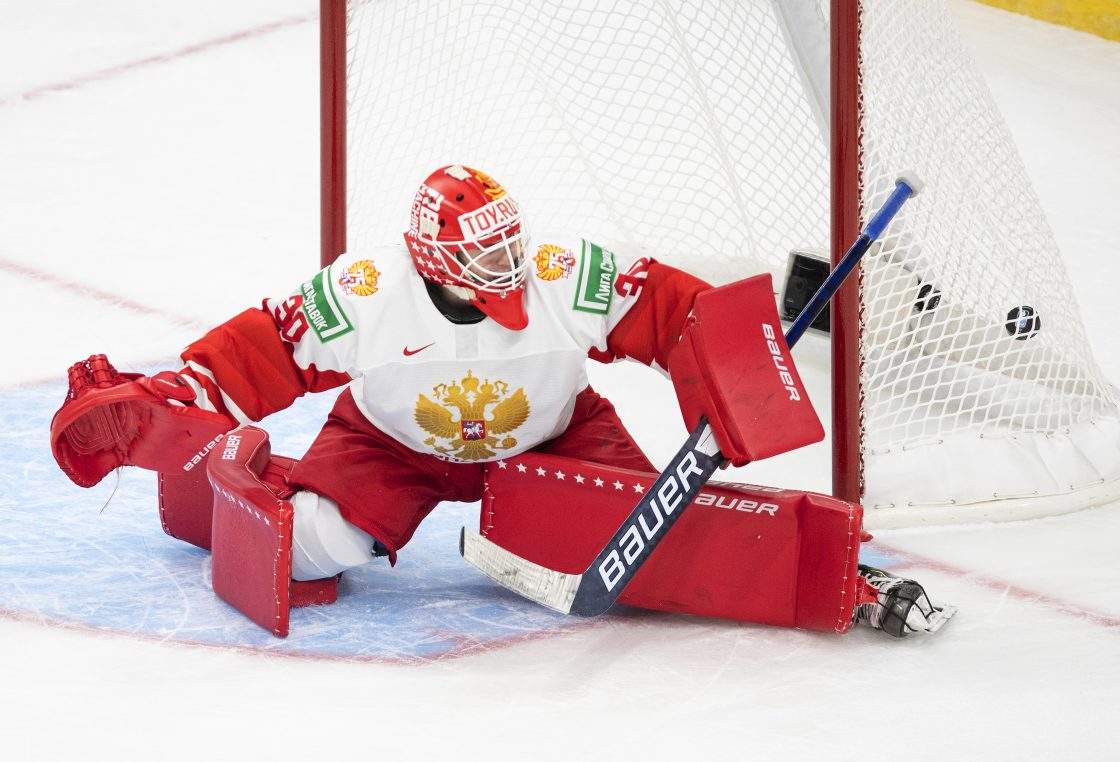
The smell of an ice rink at five in the morning is a specific kind of cold. It tastes like damp wool, sharp ammonia, and cheap vending-machine coffee. If you have ever stood behind the glass at a junior hockey practice before the sun comes up, you know the sound of steel carving fresh ice. It is a rhythmic, scraping hiss that feels like a heartbeat.
For decades, that sound led to one singular destination every December. The World Junior Ice Hockey Championships. For an alternative perspective, read: this related article.
Ask any hockey fan in Toronto, Stockholm, Helsinki, or Chelyabinsk what Christmas tastes like, and they will not tell you about turkey or gingerbread. They will tell you about Boxing Day. They will tell you about teenage boys with patchy facial hair and nerves pulled tight as piano wire, playing the fastest, most reckless, most emotionally unguarded hockey on earth. The Olympics have the prestige. The Stanley Cup has the grueling, four-round war of attrition.
The World Juniors have the raw, terrifying urgency of youth. You only get one or two chances at nineteen. Miss your window, and the door slams shut forever. Further reporting on this trend has been published by NBC Sports.
When the International Ice Hockey Federation announced that Russia would remain barred from the World Junior Championships—extending a suspension that began in early 2022 following the invasion of Ukraine—the headlines treated it like a routine administrative update. A line item on a calendar. A box checked in Zurich.
"Russia won't be able to compete in World Juniors, IIHF says."
Clean. Sterile. Bloodless.
It reads like a weather report or a zoning permit. Yet behind that single sentence sits a quiet, tectonic shift in global sport, an entire generation of athletes trapped in amber, and a tournament that is slowly forgetting what its fiercest rivalry actually felt like.
The Ghost in the Bracket
To understand what happens when you remove a superpower from a youth tournament, consider a hypothetical nineteen-year-old center in Magnitogorsk. Let us call him Alexei.
Alexei was born in 2007. When Russian tanks crossed the border into Ukraine in February 2022, Alexei was fourteen years old. He was worried about geometry exams, growth spurts, and whether his wrist shot had enough whip to make the under-16 regional squad. He did not invade a sovereign nation. He did not sit in a ministry office or draw lines on a military map.
Yet by the time Alexei turned nineteen—the golden age for the World Juniors, the exact winter when NHL scouts crowd the upper bowls with clipboards and radar guns—his international calendar was completely blank.
Gone.
In hockey, time does not wait for geopolitics to untangle itself. A nineteen-year-old cannot simply pause his biology and come back at twenty-three when the diplomats finish talking. The World Junior Championship is strictly an under-20 tournament. It is a biological hourglass. Every grain of sand that falls through the neck is a birth year erased from international competition. The 2003s lost their full run. The 2004s vanished. The 2005s, 2006s, and 2007s watched December after December pass by on television screens while they played domestic games in front of half-empty arenas in the MHL.
I remember watching the 2011 gold medal game in Buffalo. Russia trailed Canada 3-0 heading into the third period. The arena was a sea of red maple leaves, the party already underway, the outcome treated as a formality. Then Russia scored five unanswered goals in twenty minutes. The sheer, chaotic euphoria on the ice—boys weeping openly, slamming their sticks against the boards, screaming until their voices cracked—was unforgettable. It was sports at its purest, stripped of corporate polish.
You cannot manufacture that kind of tension in an exhibition game against Belarus or Kazakhstan. You need the collision of styles. You need the North American dump-and-chase grind crashing headlong into the Russian East-West puck possession artistry. Without that friction, the tournament still shines, still thrills, still produces incredible drama.
But there is a phantom limb where the old enemy used to stand.
Why the IIHF Locked the Door
The decision by the IIHF Council, led by president Luc Tardif, was never really about whether teenage hockey players are personally responsible for war. Everyone in Zurich knows they are not.
The suspension rests on a cold, pragmatic pillar that the federation has cited repeatedly since 2022: safety and security.
Think of the IIHF not as a moral tribunal, but as an event organizer trying to keep a powder keg away from an open flame. Hosting an international tournament requires host cities, local police forces, border agencies, commercial sponsors, and national broadcasters to all agree on the terms of engagement. When the IIHF states that it is "not yet safe" to reintegrate Russian and Belarusian teams, that phrase carries two distinct meanings.
First, there is physical security. Traveling with a Russian national team emblem across Europe or North America in the mid-2020s requires massive, militarized security cordons. Host municipalities—whether in Ottawa, Gothenburg, or St. Paul—are already stretched thin managing public order. Adding a geopolitical lightning rod into the middle of a holiday festival creates an operational nightmare that no city council wants to underwrite.
Second, there is institutional survival. Several European federations—most notably Sweden, Finland, and Czechia—have made their positions unmistakably clear behind closed doors and in public statements. If Russia enters the building, they walk out. A World Junior Championship without Russia is a diminished tournament. A World Junior Championship without Sweden, Finland, Czechia, and Russia is a dead tournament.
Faced with a choice between excluding one powerhouse or watching the entire European hockey ecosystem fracture into boycotts, the IIHF chose self-preservation. It is the logic of a ship captain sealing a bulkhead to stop the whole vessel from taking on water. Brutal for anyone stuck behind the door, completely rational from the bridge.
The Invisible Cost of Isolation
What happens to a hockey culture when you lock it inside its own borders for half a decade?
History already gave us the answer, though we rarely look closely enough at the mechanics of it. During the Cold War, the Soviet Red Machine dominated international hockey precisely because they played the world constantly—in Summit Series, Super Series, Canada Cups, and World Championships. They learned how Canadians defended the slot. Canadians learned how Soviets moved the puck without looking. Each side forced the other to evolve.
Isolation breeds blind spots.
When Russian junior players only face other Russian junior players, their habits calcify. A flashy toe-drag that works against a domestic defenseman in Omsk gets stripped cleanly by a Swedish two-way center in a tight tournament semifinal. A goaltender who looks invincible facing predictable KHL perimeter shots suddenly struggles when Finnish forwards screen his eyes and tip pucks from six inches off the ice.
Even NHL scouts—the bloodhounds of the hockey world—have admitted privately how disorienting this era has become. Evaluating a prospect used to mean watching him under the brightest lights in December, seeing how his heart rate responded when ten thousand hostile fans were screaming at him during a penalty kill. Now, scouts rely on grainy video feeds from Russian junior leagues, trying to project how a player's skills will translate when there is zero international measuring stick left to calibrate the data.
Some Russian prospects still reach the NHL, of course. Talent that bright always finds a crack in the wall. Yet they arrive in North America slightly unformed, missing that crucial rite of passage where boys learn what it means to carry an entire nation's expectations on their shoulders before they are old enough to rent a car.
The View From the Other Side of the Glass
It is easy to feel sympathy for a nineteen-year-old athlete whose dream evaporated because of decisions made in rooms he will never enter. That empathy is human. It is healthy.
Then you remember why the rooms exist in the first place.
In February 2022, Ukrainian junior hockey players did not just lose a tournament bracket. They lost their rinks. Some were shelled into twisted steel and shattered concrete in Kharkiv, Mariupol, and Druzhkivka. Teenage teammates traded their hockey bags for military fatigues or fled across borders with whatever they could carry in a backpack. The Ukrainian under-20 national team had to scrap together practices in borrowed arenas in Poland and Hungary, funded by donations, while air raid sirens wailed on their phones back home.
Sport loves to pretend it floats above politics, pure and untouchable as fresh snow. That has always been a comforting lie. From the 1936 Berlin Olympics to the 1972 Summit Series, from the boycott of apartheid South Africa to the ping-pong diplomacy of the 1970s, sports has always been politics carried out in jerseys instead of suits.
When a nation uses athletes as billboards for state prestige—and Russia has perfected that art for seventy years—those athletes inevitably become tied to the fate of the state. You cannot celebrate the gold medal as proof of national supremacy on Monday and claim sports and politics have nothing to do with each other on Tuesday.
That is the cruelest trap of all. The young players bear the weight of a bargain they never signed.
A Tournament That Learned to Breathe Differently
If you tuned into recent World Junior tournaments expecting a funeral, you didn't find one.
Hockey, like water, always finds a new channel when you dam the old river. Without Russia in the mix, other nations stepped into the vacuum with astonishing ferocity. Czechia surged back into relevance after years in the wilderness, playing a heavy, structured, fearless brand of hockey that stunned North American powers. Slovakia produced waves of electric, high-draft talent that turned preliminary round games into must-watch television. Latvia pulled off historic upsets that had grown men crying in the stands in Riga.
The games remained breathless. Overtime thrillers still ended with sticks flying into the rafters and whole benches vaulting over the boards in dogpiles of pure joy. A new generation of fans—kids who were ten years old in 2022—started watching the World Juniors without ever knowing a version of the tournament that included the Russian double-headed eagle on a jersey.
To them, the rivalry is USA versus Canada, Sweden versus Finland, Czechia playing spoiler. The missing giant is not a tragedy. It is simply how things have always been.
That is perhaps the quietest, most permanent consequence of the IIHF's ruling. History does not wait around for everyone to catch up. Narratives move on. Rivalries rewire themselves. By the time the political conditions finally allow Russia back onto international ice—whenever that day arrives, whether in two years or ten—the sport will have grown new skin over the scar.
What Remains on the Ice
Walk past any outdoor rink in January, anywhere in the northern hemisphere, and you will see the same thing. Kids with red cheeks and frozen laces, playing until the floodlights click off, pretending there are three seconds left in overtime of a gold medal game.
The game itself does not care about council votes in Switzerland or border closures or geopolitical standoffs. The puck is still six ounces of vulcanized rubber. The ice is still two hundred feet long and eighty-five feet wide. The margin between glory and heartbreak is still the width of a goalpost.
Somewhere in a dimly lit arena in Siberia or the Urals this winter, a nineteen-year-old kid will step onto the ice for a morning skate, pull his collar up against the chill, and carve a clean arc into the frost. He has the hands, the vision, and the engine to belong on the biggest stage in junior hockey. He will put up ninety points in his domestic league, sign an entry-level contract, and eventually board a plane to North America to chase the Stanley Cup.
He will have a long, prosperous career. He will make millions of dollars and hear tens of thousands of fans chant his name.
And every December, for the rest of his life, he will turn on the television during the holidays, watch nineteen-year-old boys throw their gloves into the air at the final buzzer, and feel the quiet, permanent ache of a winter he never got to play.