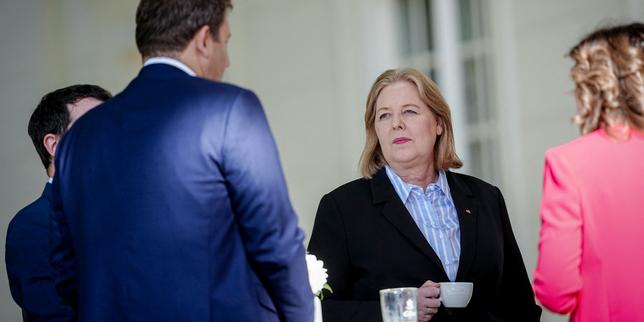
When Bärbel Bas packed up her office at the Ministry of Labor in mid-October 2026, she didn't leave quietly. The former Bundestag president slammed the door on her way out, publicly accusing conservative coalition partners of launching relentless political attacks against her. She felt targeted right when she was grieving a devastating personal tragedy.
That sudden exit hit Berlin like an earthquake. It stripped away the thin diplomatic paint holding together Chancellor Friedrich Merz’s coalition government.
If you've been watching German politics since the CDU/CSU and SPD joined forces in May 2025, you knew something had to break. The partnership was never built on shared vision. It was a marriage of necessity between two bitter political rivals forced to room together because voters left them no other choice. Now, the cracks are turned into full-blown structural fractures.
A Resignation Built on Deep Ideological Warfare
Don't buy the narrative that this was just personal drama or unfortunate timing. The friction around Bärbel Bas had been brewing for months.
Conservatives inside the CDU and CSU were furious over her handling of social welfare and pension reforms. Merz campaigned heavily on tightening unemployment benefits, reining in government spending, and pushing workers to stay in the labor force longer. Bas stood right in the way. Representing the traditional labor wing of the SPD from Duisbourg in the industrial Ruhr valley, she refused to dismantle social safety nets to satisfy conservative budget hawks.
The tension became unmanageable. CDU figures openly blamed her for stalling essential structural changes, while SPD loyalists viewed those demands as an attempt to erase their core identity.
When Bas resigned, Alexander Schweitzer stepped into the role. Swapping ministers doesn't change the underlying math, though. The fundamental contradiction of this government remains completely unresolved.
The Problem with Grand Coalitions
Germany has seen grand coalitions before. Angela Merkel ran them for years, using her compromise-at-all-costs style to smooth over policy gaps. But Friedrich Merz isn't Angela Merkel.
Merz made his name as a fiscal conservative and an unapologetic pro-business advocate. He wanted to cut red tape, lower taxes, and slash social spending. To get into the Chancellery, however, he had to sign a coalition agreement with a center-left party that demands the exact opposite.
The result? Constantly stalled initiatives and late-night haggling sessions that leave everyone unsatisfied.
Look at the recent energy package negotiated to ease inflation pressure. Lowering the electricity tax and capping fuel prices offers temporary relief to households and small businesses. Yet it took intense, exhausting negotiations to get over the finish line. Every single bill turns into a high-stakes standoff where neither side trusts the other.
Why Friedrich Merz Has No Room to Maneuver
Merz faces pressure from every angle, and his options are shrinking by the day.
On his right, the far-right Alternative for Germany (AfD) continues to capitalize on voter frustration. Conservative voters who expected Merz to deliver a sharp right turn on economic and migration policy feel let down by his constant concessions to the SPD.
On his left, SPD leadership faces a revolt from its own grassroots. Many social democrats feel they're getting dragged into enacting conservative austerity measures while receiving none of the credit.
Here is what makes Merz's position so precarious:
- No alternative partners: Rebuilding a coalition with the Greens or FDP isn't viable under current parliamentary dynamics.
- Low voter approval: Public confidence in the government's ability to fix Germany's sluggish economy has dropped sharply.
- Internal party discontent: Younger conservative lawmakers want Merz to push harder, even if it risks collapsing the alliance.
When a minister resigns under bitter circumstances, it tells rival factions that the Chancellor cannot protect his own cabinet. That perception of weakness is deadly in Berlin politics.
What Happens to the German Economy Now
Foreign investors and business leaders hate instability above all else. Germany's industrial engine has struggled with high energy costs, bureaucratic inertia, and labor shortages for years.
The business community backed Merz because he promised fast, decisive economic modernization. Instead, economic reforms are getting bogged down in endless coalition gridlock.
When the labor ministry is stuck in political crossfire, critical updates to workforce training, immigration rules for skilled labor, and pension funding get delayed. Germany can't afford to sit on its hands while global competitors move forward.
How to Track the Stability of Berlin's Government
If you want to know whether this coalition will survive its term or collapse early into snapshot elections, don't just read press releases. Watch these three indicators closely:
- Voter turnout in regional elections: Watch how conservative and SPD bases respond in upcoming state votes. If the SPD loses ground, backbenchers may force a break to save their own seats.
- Budget negotiations: The ultimate test for any German government is agreeing on the national budget. Watch whether Merz can enforce debt limits without triggering an SPD veto.
- Key social legislation: Pay attention to how Alexander Schweitzer handles upcoming labor reforms. If conservative MPs block his proposals out of spite, the coalition's working majority exists on paper only.
The resignation of Bärbel Bas wasn't an isolated bump in the road. It was a clear warning signal that Berlin's political center is fraying under pressure. Friedrich Merz still holds the Chancellor's office, but holding power and actually governing are two entirely different things.