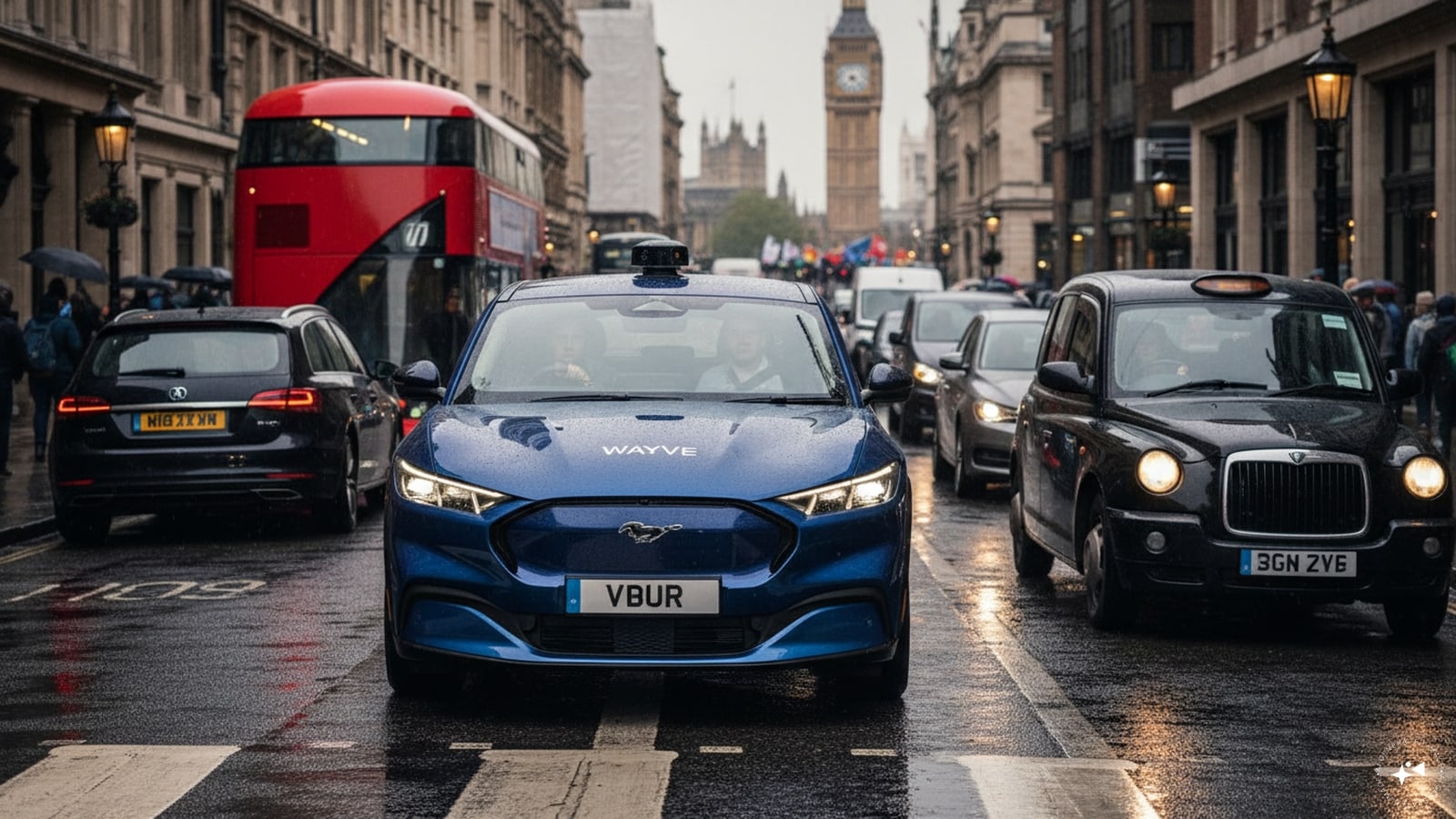
The headlines are celebrating a free lunch that never existed. When tech blogs and legacy transport reporters breathlessly write about London commuters booking a robotaxi through the Uber app at no extra cost, they are swallowing a marketing budget disguised as a milestone. They look at a zero-dollar line item and see philanthropy. I look at a customer acquisition cost subsidy designed to anchor your expectations before the algorithm tightens the screws.
I have spent the last decade watching mobility giants burn through venture capital to subsidize behavior they intend to tax later. I have seen fleet operators drop prices to zero in specific municipal testbeds while quietly rewriting terms of service behind the scenes.
Uber is not running autonomous vehicles in London out of the goodness of its corporate heart or to save you a few quid on your morning crawl down Euston Road. They are running them to collect training miles on British asphalt while conditioning the public to accept a cockpit without a human pulse. The moment the novelty wears off and the municipal permits lock in, that free ride will look like a quaint relic of a bygone pricing war.
The Economics of the Phantom Fare
Let us look past the press release. When a ride costs nothing, someone else is paying the differential. In this case, it is a combination of venture capital depreciation reserves and corporate R&D write-offs.
Autonomous fleets require staggering capital expenditure. We are talking about lidar rigs that cost more than the chassis they sit on, high-definition mapping maintenance that never stops, and remote teleoperation centers staffed by human engineers ready to take the wheel when a delivery van double-parks on a narrow Shoreditch lane.
If you think those costs vanish simply because the app says zero cost today, you do not understand vehicle amortization.
The lazy consensus in tech reporting assumes that removing the driver removes the variable cost of the trip. The human driver was never the primary cost center of a mature taxi network; depreciation, insurance, and asset utilization were. An autonomous vehicle sitting idle in a depot because it cannot parse a flooded roundabout in Mayfair is burning capital faster than a human driver parked outside a pub waiting for a late-night fare.
When companies price these experimental routes at zero, they are conducting price elasticity research disguised as a consumer benefit. They want to know how many people will trade the reliability of a human black cab driver for the Silicon Valley lottery of whether the car can handle a London drizzle without freezing its sensor suite.
The Congestion Fallacy
London does not need more cars, and it certainly does not need more cars wandering around empty or half-full while hunting for satellite positioning.
The pro-robotaxi lobby loves to argue that shared autonomous fleets will eventually reduce the total number of vehicles on the road. It is a comforting narrative, but it ignores the fundamental physics of urban transit. If you make point-to-point private vehicle transport free or artificially cheap, you pull commuters off the Tube and out of buses.
Imagine a scenario where a fleet of autonomous pods floods zone one during rush hour. They do not magically disappear when they drop you off at Farringdon. They either circulate, clogging intersections while waiting for the next ping, or they crawl back to peripheral depots, adding dead-mile congestion to arterial roads already choking on delivery vans.
Transport for London has spent decades implementing congestion charging and Ultra Low Emission Zones to reclaim public space from private metal boxes. Injecting hundreds of autonomous vehicles into that ecosystem under the banner of convenience is a step backward. It trades human labor for algorithmic gridlock.
The Safety Mirage
We need to talk about safety performance metrics, because the marketing departments are playing fast and loose with the comparisons.
Every time an autonomous vehicle completes a journey without hitting a bollard, the company issues a digital sigh of relief and calls it a triumph of safety. They compare machine error rates against aggregate human statistics, as if a computer navigating a predictable suburban grid in Arizona faces the same cognitive load as a driver navigating Seven Dials at 6 PM on a Friday.
London traffic is an ecosystem of unspoken communication. It relies on eye contact with cyclists, subtle hand gestures from couriers, and the shared understanding that everyone on the road is slightly exasperated and entirely unpredictable.
An algorithm does not read the body language of a pedestrian stepping off a curb near Oxford Circus while staring at their phone. It relies on probability matrices. When those matrices fail, they fail catastrophically because the system lacks intuition.
When you book one of these vehicles through a mainstream app at no extra cost, you are not a passenger. You are a test pilot who forgot to sign the liability waiver.
What Uber Actually Wants
Let us dismantle the platform strategy. Uber spent years fighting regulatory battles across Europe to classify drivers as independent contractors, fighting to keep labor costs low while dodging benefits obligations.
The ultimate corporate endgame of autonomy has nothing to do with customer comfort. It has everything to do with margin expansion by eliminating the labor force entirely.
Once the public accepts the cabin without a driver, the platform owns the entire value chain. They control the dispatch, they control the vehicle asset, and most importantly, they control the pricing algorithm without having to split the fare with a human worker.
The current zero-cost promotion is the first hook in the water. It builds dependency. Once the traditional black cab trade is hollowed out and local minicab firms can no longer compete with VC-backed subsidies, the pricing power shifts entirely to the platform.
When that happens, your free ride will be replaced by dynamic surge pricing that makes a standard cab look like public service philanthropy.
Stop cheering for the automation of transit as if it were an inevitable civilizational upgrade. It is a corporate land grab wrapped in sleek user interfaces and subsidized introductory rates.
Next time you open that app and see a zero next to the fare, remember who is actually paying for the miles. You are just renting the seat while they train the machine to replace you.