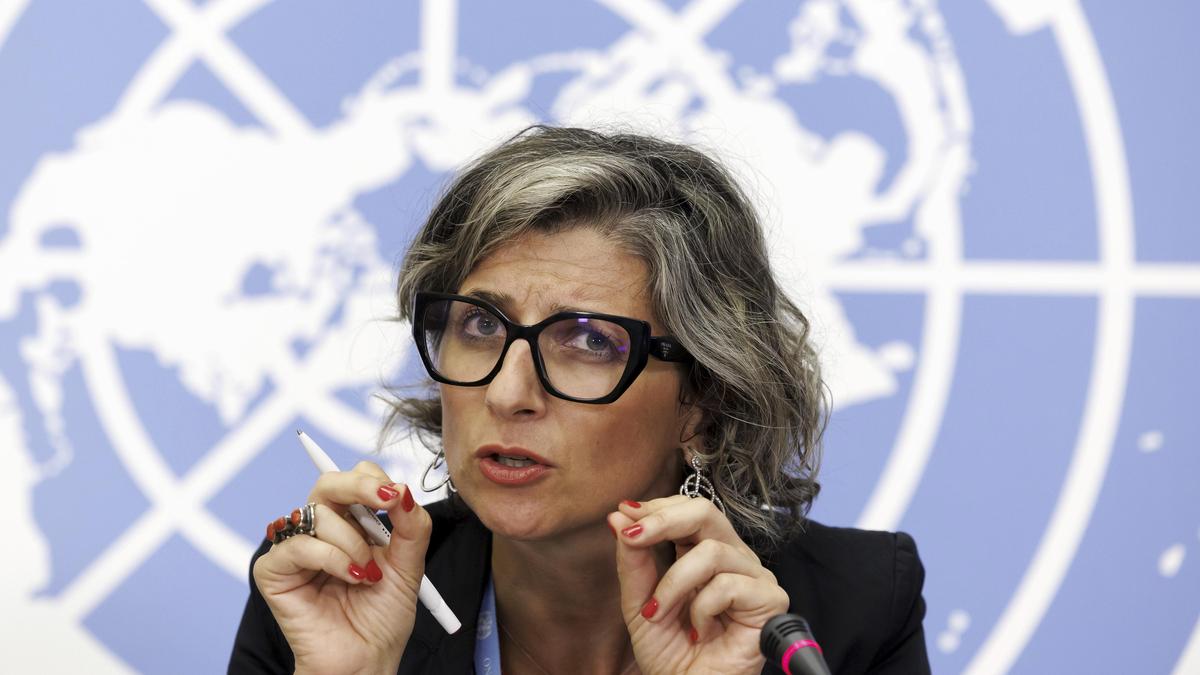
The financial hammer has dropped again. In a whiplash legal sequence, the U.S. Treasury Department has put United Nations Special Rapporteur Francesca Albanese back on its global blacklist. The move comes just one week after a federal judge ordered the government to strip her name from the database.
This isn't just a standard bureaucratic spat. It is a high-stakes constitutional collision involving the U.S. State Department, the International Criminal Court (ICC), corporate giants, and a family home in America. You might also find this related story insightful: The Mail-In Voting Melodrama and the Judicial Reality Nobody Wants to Admit.
If you're trying to make sense of how a UN human rights expert suddenly found herself blocked from using a standard credit card or accessing a bank account, you need to look past the political talking points. This battle changes how Washington uses financial warfare against foreign critics.
The Legal Whiplash
On Wednesday, the Treasury Department’s Office of Foreign Assets Control (OFAC) updated its Specially Designated Nationals list. Albanese's name was right back on it. As highlighted in recent articles by BBC News, the results are significant.
The update effectively froze her U.S.-linked assets and banned American citizens and businesses from dealing with her. This reversal happened because a three-judge panel of the U.S. Court of Appeals for the D.C. Circuit issued an administrative stay. They paused an earlier ruling by U.S. District Judge Richard Leon, who had blocked the sanctions on May 13.
Judge Leon originally argued that the government was trying to police free speech. He noted that since Albanese doesn't work for the ICC, her sharp words and recommendations were protected opinions under the First Amendment. The Justice Department scrambled, filed an emergency motion, and got the appeals court to freeze that decision while they argue the actual merits of the case.
So, for now, the sanctions are live.
Why Washington Targeted Albanese
The Trump administration first slapped sanctions on Albanese in July 2025. Secretary of State Marco Rubio didn't pull any punches, accusing her of running a campaign of "political and economic warfare" against the U.S. and Israel.
Albanese, an Italian human rights lawyer who has served as the UN Special Rapporteur on the Occupied Palestinian Territories since 2022, has been a fierce critic of Israel’s military campaigns. She publicly accused Israel of committing genocide in Gaza following the October 7, 2023, attacks by Hamas.
But Washington didn't just target her for her speeches. The real trigger was her direct push for accountability through the ICC. The U.S. government took aim at her for urging the court to pursue war crimes prosecutions against both Israeli and American nationals.
Things got even messier when Albanese sent letters to dozens of global corporations, including American tech giants like Microsoft, Alphabet, Amazon, and Palantir. She alleged these corporations were facilitating the Israeli occupation of Palestinian lands and suggested they could face ICC scrutiny. That move crossed a line for Washington, which viewed the letters as corporate intimidation targeting American economic interests.
The First Amendment Fight Over Foreign Nationals
Can a foreign citizen living abroad claim protection under the U.S. Constitution? That is the core question making this case a legal landmark.
When the Trump administration sanctioned Albanese under an executive order aimed at those assisting the ICC, it didn't just stop her from traveling to New York. It disrupted her family's daily existence. Her husband, World Bank economist Massimiliano Cali, and their minor daughter, who is an American citizen, filed a lawsuit in February to fight back.
They pointed out that the sanctions made normal life impossible. She couldn't access bank accounts, use credit cards, or manage their family property inside the United States.
Judge Leon sided with the family. He ruled that foreign nationals can claim First Amendment protections if they have "substantial connections" to the U.S. In Albanese's case, she owns a home in the country, and her child is an American citizen.
The Justice Department is fighting this hard. Government lawyers argue that owning a piece of real estate shouldn't give a foreign critic a constitutional shield against U.S. foreign policy tools. If Judge Leon’s logic holds long-term, it could fundamentally weaken the executive branch’s ability to use sanctions against foreign individuals who hold American assets.
The Fallout for International Bodies
Pro-Israel groups and U.S. officials argue that Albanese has routinely violated UN rules requiring neutrality. They point to her past statements as evidence of deep-seated bias.
On the flip side, human rights organizations see the sanctions as a dangerous precedent. They view the measures as an attempt to bully independent UN investigators and shield U.S. allies from international legal scrutiny. By using aggressive counter-measures normally reserved for terrorists and cartel leaders against a UN mandate-holder, Washington is signaling that international legal advocacy can carry a massive personal financial cost.
The D.C. Circuit will receive additional legal filings in early June before making a final decision on whether the sanctions stay or go.
If you want to track where this goes next, keep your eyes on the D.C. Circuit docket next month. The court's decision will decide more than just Francesca Albanese's bank account access. It will draw the exact boundary line where U.S. national security power ends and the First Amendment begins for global figures holding American property.