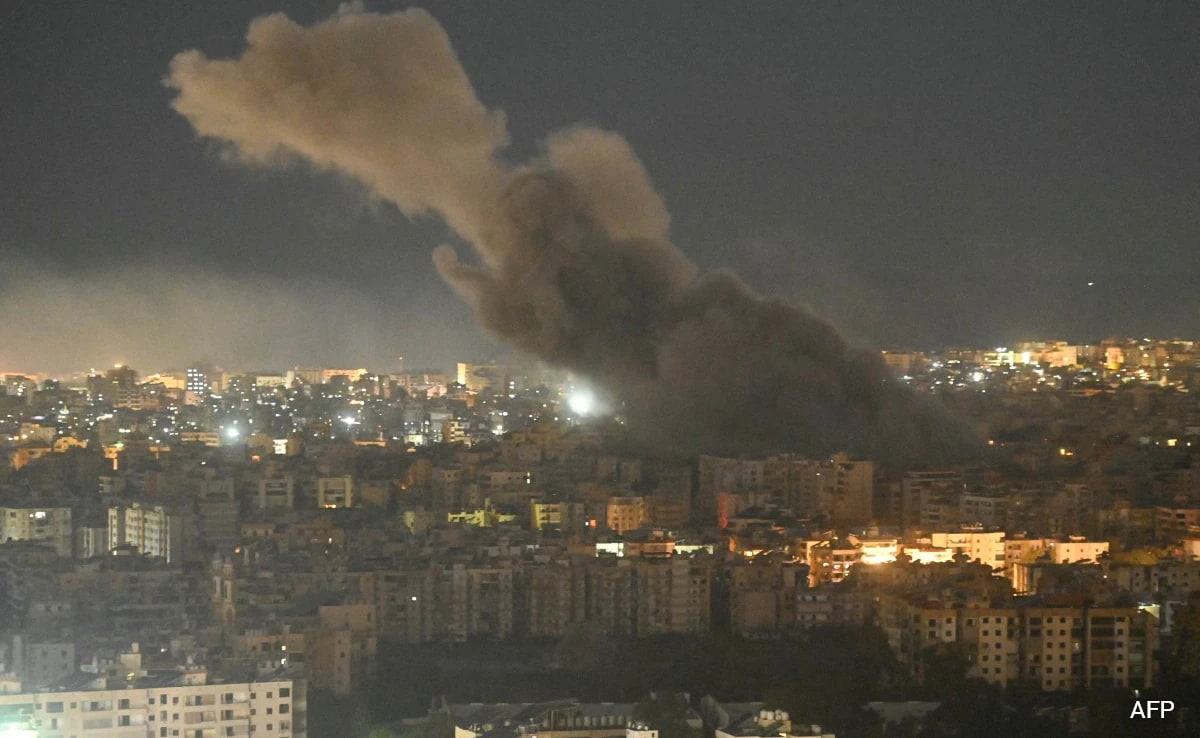
The clock began ticking at dawn. After months of relentless aerial campaigns and ground incursions that threatened to pull the entire Middle East into a terminal spiral, Israel and Lebanon have entered a breathless ten-day ceasefire. On the surface, the agreement provides a window for humanitarian relief and the potential for a more permanent diplomatic framework. Beneath that surface, however, the deal is a high-stakes poker game where both sides are betting on the exhaustion of the other. This is not a peace treaty. It is a tactical pause designed to allow the primary actors to reload, reassess, and determine if the cost of total war has finally surpassed the price of an uncomfortable silence.
The immediate terms are deceptively simple. Israeli forces are to hold their current positions without advancing further into Lebanese territory, while Hezbollah has agreed to cease rocket fire and withdraw heavy weaponry from the immediate border zone. For the residents of southern Lebanon and northern Israel, the silence is heavy. It is a respite bought with the blood of a campaign that has displaced hundreds of thousands and shattered the economic stability of the region. But history in this corridor of the world suggests that a ten-day window is less a bridge to peace and more a logistical opportunity.
The Architecture of a Temporary Truce
Diplomacy in the Levant usually happens in the shadows long before it reaches a podium. This specific deal was hammered out through intense back-channel pressure from Washington and Paris, targeting the specific vulnerabilities of both the Israeli cabinet and the Lebanese caretaker government. Israel faces a mounting domestic crisis over the length of the reserve duty for its citizens and the hollowed-out economy of its northern Galilee region. Lebanon, already a failed state in almost every financial sense, cannot survive a total decapitation of its remaining infrastructure.
The mechanism of the ceasefire relies on a "monitor and react" policy. Unlike previous United Nations-led efforts that relied on the often-toothless UNIFIL checkpoints, this ten-day window is being policed by the threat of immediate escalation. If a single launch occurs from a specific village, the deal allows for a localized return to hostilities. This "proportionality clause" is the most dangerous element of the agreement. It creates a hair-trigger environment where a rogue commander or an accidental discharge could ignite the entire front before the first forty-eight hours have elapsed.
Why Ten Days is a Strategic Choice
Critics argue that ten days is an insult to the scale of the suffering. They are right, but they miss the military logic. In modern urban and mountain warfare, ten days is the exact amount of time required to rotate exhausted frontline units and replenish depleted stockpiles of precision-guided munitions. By agreeing to this specific timeframe, both the Israel Defense Forces (IDF) and Hezbollah are acknowledging a logistical reality: they are running hot, and their hardware needs a cooling-off period.
For the Israeli leadership, the pause offers a chance to quell the rising tide of internal dissent. The families of those displaced from the north have grown increasingly vocal about the lack of a clear "end state" for the military operation. Ten days of quiet allows the government to point to a tangible result, even if that result is as thin as rice paper. It also provides a diplomatic "off-ramp" for international allies who have found it increasingly difficult to justify the continued scale of the destruction in Lebanese civilian centers.
Hezbollah, conversely, needs this time to reorganize its command structure. The group has taken significant hits to its mid-level leadership. A ceasefire isn't just about stopping the bombs; it’s about rebuilding the communication lines that have been severed by targeted strikes. They are using this silence to verify who is still standing and who can still take orders.
The Hidden Economic Undercurrents
We cannot ignore the money. War is an expensive endeavor for a nation like Israel, which relies on a high-tech workforce that is currently sitting in tanks instead of coding in Tel Aviv. The cost of intercepting a single drone or rocket far exceeds the cost of the projectile itself. By some estimates, the daily burn rate of the conflict was beginning to threaten Israel’s long-term credit rating and its ability to fund social services.
On the Lebanese side, the "economy" is a polite fiction. The country operates on a shadow system of remittances and black-market exchanges. The destruction of agricultural land in the south hasn't just displaced people; it has destroyed the 2026 harvest. This ceasefire is the only hope for local farmers to salvage what remains of their livelihoods before the soil is poisoned further by the debris of war. The pressure from the Lebanese commercial class—those who still have something to lose—on the political wing of Hezbollah was a decisive, if quiet, factor in the group's willingness to sit at the table.
The Role of the Regional Shadow Players
No conflict in Lebanon is purely local. Iran and the United States are the silent signatories to this ten-day deal. Tehran has signaled a desire to avoid a direct, catastrophic confrontation that would force it to choose between its proxy's survival and its own domestic stability. By allowing the ceasefire to take effect, Iran is signaling that it prefers a preserved, if weakened, Hezbollah to a destroyed one.
The United States, meanwhile, is desperate for a foreign policy win in an election cycle defined by instability. The State Department has invested significant political capital into ensuring that the "technicalities" of the ceasefire—such as the definition of defensive posturing—remained vague enough for both sides to save face. The risk is that vagueness is the enemy of longevity. When rules are not strictly defined, they are interpreted by men with guns in their hands and adrenaline in their veins.
The Problem of the Litani Buffer
A central pillar of any long-term resolution involves the Litani River. The 2006 UN Resolution 1701 called for the area between the Israeli border and the Litani to be free of any armed personnel other than the Lebanese army and UN peacekeepers. This has never been fully realized. During these ten days, the focus will be on whether the Lebanese Armed Forces (LAF) actually move into the vacuum left by the temporary withdrawal of combatants.
The LAF is in a precarious position. It is respected by the population but lacks the heavy weaponry or the political mandate to forcibly disarm Hezbollah. If the LAF moves south during this ceasefire and merely acts as a screen for the return of militant infrastructure, the deal will collapse before day five. The IDF has made it clear that they are watching every truck and every tunnel entrance with satellite and drone surveillance.
The Humanitarian Gambit
Beyond the tactical maneuvering, there is a massive logistical challenge involving the displaced. In Lebanon, schools and public buildings are overflowing with families who fled the southern suburbs. These people are now faced with a brutal choice: do they use these ten days to return home and check on their property, or do they stay away, fearing that the ceasefire is a trap?
In northern Israel, the situation is mirrored. Ghost towns like Kiryat Shmona remain empty. The government is hesitant to tell citizens to return, knowing that a single barrage of Grad rockets would turn a homecoming into a massacre. The ceasefire is thus a psychological test. If people do not return to their homes, the "deal" has failed to achieve its most basic civilian goal. If they do return and the fighting restarts, the political fallout will be terminal for those who negotiated the pause.
The Intelligence Gap
One overlooked factor in this ceasefire is the "intelligence gathering" pause. When the guns are firing and the electronic warfare suites are at maximum power, it is difficult to map out the enemy’s true remaining strength. During a ceasefire, the signatures change. Analysts on both sides will be looking at heat signatures, movement patterns, and communication bursts that occur when the immediate threat of a strike is lowered.
The IDF will be looking for the "ratlines"—the supply routes used to bring in fresh equipment from the Bekaa Valley. Hezbollah will be looking for the vulnerabilities in the Israeli "Iron Dome" and "David's Sling" deployments that were revealed during the high-intensity phases of the conflict. This isn't just a rest; it is a reconnaissance mission disguised as a diplomatic breakthrough.
The Breakdown of Trust
Trust is a non-existent commodity in this negotiation. The deal works only because of mutual interest, not mutual respect. We have seen this play out in previous conflicts where "humanitarian pauses" were used to reposition snipers or mine key transit routes. The skepticism on the ground is palpable. Soldiers on the frontline aren't putting down their rifles; they are just keeping their fingers slightly further from the trigger.
The volatility is exacerbated by the presence of smaller, radical factions that do not answer to the central commands of either the IDF or Hezbollah. These "spoilers" have a vested interest in the continuation of the war. A single mortar shell from a rogue cell can trigger a "retaliatory" strike that escalates into a full-scale barrage within minutes. The ceasefire lacks a robust, neutral third-party enforcement mechanism that can distinguish between a deliberate breach and an isolated incident.
Tactical Reality vs Political Rhetoric
The rhetoric coming out of Beirut and Jerusalem remains defiant. Both leaderships are telling their respective publics that they are "winning" and that the ceasefire is a sign of the enemy’s weakness. This is a dangerous game. When you tell your population that the enemy is on the ropes, any compromise looks like a betrayal. This limits the political maneuverability of the negotiators who are trying to turn these ten days into something more substantial.
The IDF's Chief of Staff has hinted that the military is ready to resume operations "with greater force" if the conditions are not met. Meanwhile, Hezbollah’s media wing continues to broadcast footage of "unbroken" units. This posturing is intended for domestic consumption, but it reaches the ears of the opposing side, creating a feedback loop of paranoia. The ceasefire is being built on a foundation of threats rather than a framework of cooperation.
The Infrastructure of a Long War
If the ceasefire fails—and the historical odds are not in its favor—the subsequent phase of the conflict will likely be more brutal. Both sides have used this time to identify the "limitations" of their initial strategies. Israel has seen that airpower alone cannot clear the tunnels; Hezbollah has seen that its rocket stockpiles are vulnerable to pre-emptive strikes.
If the fighting resumes on day eleven, we should expect to see a shift toward deeper, more destructive incursions. The "buffer zone" concept will be pushed further north, and the targeting of Lebanese state infrastructure—bridges, power plants, and ports—will likely intensify. Hezbollah, in turn, will likely shift its targeting toward Israeli economic hubs further south, moving beyond the border communities into the heart of the country's commercial centers.
The Mirage of Diplomacy
We must be honest about what is being achieved here. A ten-day ceasefire is a band-aid on a gunshot wound. It stops the immediate bleeding but does nothing to address the underlying infection. The core issues—the presence of an armed non-state actor in southern Lebanon, the disputed border points, and the broader regional proxy war—remain untouched.
There is no talk of a permanent border demarcation. There is no plan for the long-term disarmament of the border zone. There is only a shared exhaustion and a mutual need to count the remaining bullets. To call this a "deal" is to misunderstand the nature of the struggle. It is a suspension of active operations, a pause in the music, but the instruments are still tuned for a dirge.
The international community will celebrate these ten days as a victory for "dialogue." They will release statements praising the "restraint" shown by all parties. But for the analysts who have watched this cycle repeat since 1978, 1982, 1996, and 2006, the sentiment is one of weary cynicism. We know that in the Middle East, a ceasefire is often just the period of time it takes for the dust to settle enough to see where to aim next.
The real test of this agreement isn't what happens in the meeting rooms of Paris or the bunkers of Tel Aviv. It is what happens at a lonely checkpoint near the village of Bint Jbeil on the ninth night. If the silence holds then, it is because the cost of the noise has finally become unbearable for everyone involved. If it doesn't, the next decade of the Levant has already been written in the smoke of the last forty-eight hours. The world is watching the calendar, but the soldiers are watching the horizon. Both are waiting for the sun to rise on day eleven to see if the world they knew is still there, or if the pause was simply the intake of breath before the final scream.