A single millimetre is thinner than a fingernail. It is a distance so small that the human eye barely registers it across a room. Yet in a Chautauqua courtroom, that tiny span of space became the boundary between a tragic recovery and an immediate end.
During the opening proceedings of the trial surrounding the 2022 attack on author Salman Rushdie, medical testimony brought the physical reality of violence into sharp, stark focus. The jury heard how a blade aimed at the writer's head stopped just a fraction of a millimetre short of penetrating his brain. It is a detail that transforms abstract headlines into a visceral shudder.
Violence in the abstract feels distant. We read about targeted attacks, political tensions, and security failures in the morning news, digest the bullet points, and move on with our day. But sitting with the detail of a millimeter alters the perspective. It forces an encounter with the terrifying fragility of human life and the frightening speed with which a moment of hatred can alter history.
The Physicality of an Invisible War
For decades, the danger surrounding Rushdie existed primarily in the realm of ideology. It was a dark shadow hanging over dinner parties, literary lectures, and quiet evenings at home. It lived in security briefings and high-profile bodyguards. To the public, the threat often seemed like a relic of another decade, an enduring historical footnote that had lost its immediate sharp edge.
Then came a bright August morning on a quiet stage in upstate New York.
When the assailant lunged, the long-simmering tension materialized into raw steel. The prosecution detailed the mechanics of the assault: a succession of rapid, devastating strikes targeting the neck, chest, and eye. The court heard how close the blade came to ending the life of a man whose only weapon had ever been written language.
The detail about his brain wasn't just a medical note. It was a measure of how narrow the margin is between survival and silence.
When a writer is targeted for their words, the attack isn't merely an assault on one individual. It functions as a message intended to echo through every typewriter, laptop, and notebook across the globe. It seeks to prove that blood is thicker than ink, and that fear can override thought.
Standing on the Edge of Silence
Consider the atmosphere inside that lecture hall before the chaos began. An audience had gathered to hear a discussion about asylum for persecuted writers—about creating safe harbors for those whose ideas make powerful people uncomfortable. The irony was immediate and devastating. Within seconds, a sanctuary dedicated to free thought transformed into a crime scene.
What happens to a community when the theoretical becomes physical?
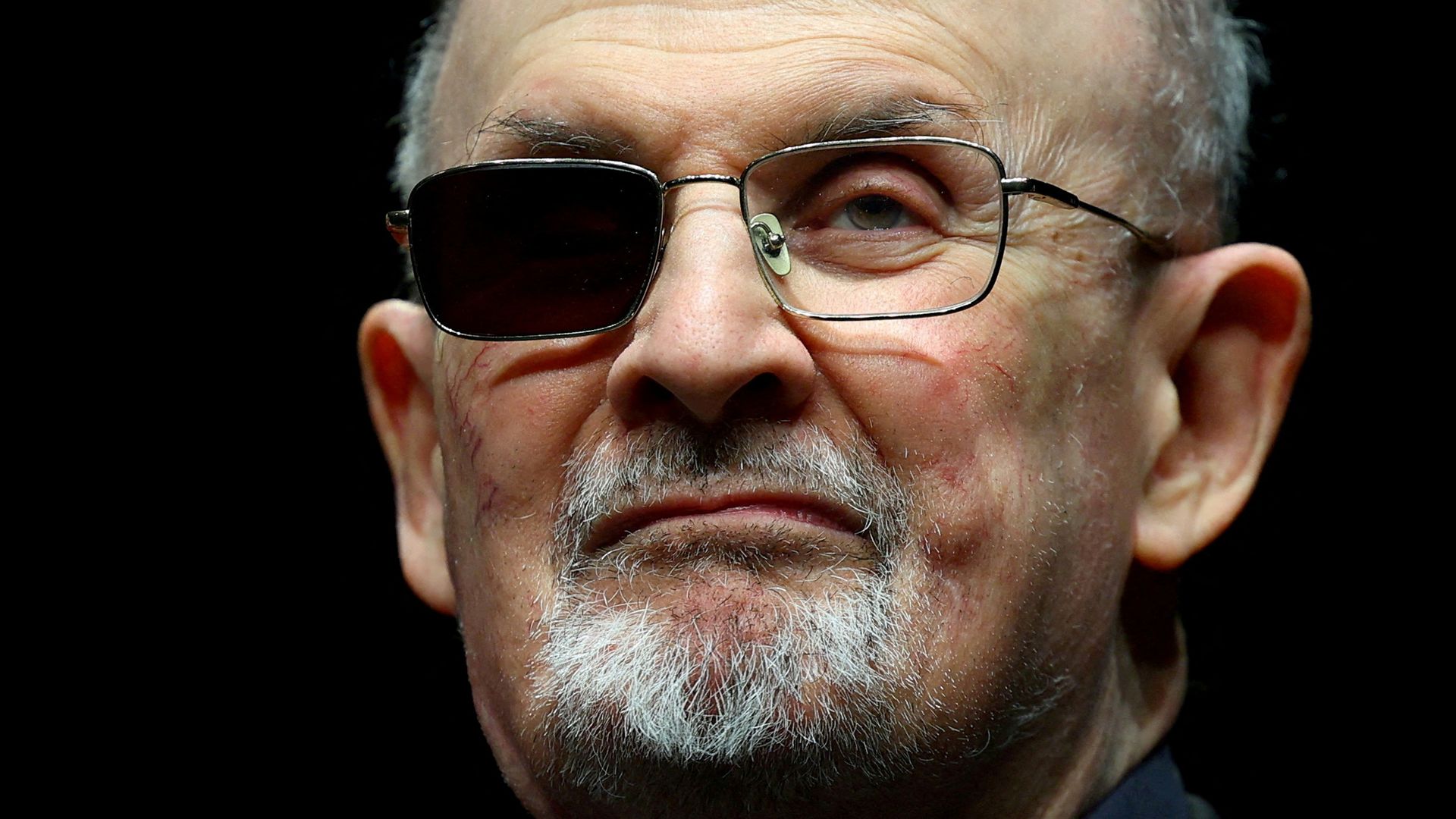
In the aftermath of such an attack, witnesses and observers describe a lingering sense of cold shock. The sudden realization that the physical world can shatter so quickly leaves people searching for grounding. For Rushdie, the physical consequences were severe and permanent: the loss of sight in one eye, nerve damage, and months of arduous physical rehabilitation.
Yet, as the medical evidence presented in court revealed, the difference between the reality he survived and a eulogy came down to a structural stroke of blind luck. A slight angle of the wrist. A microscopic shift in position. A fraction of a millimetre.
The Cost of Free Expression
We often talk about freedom of speech as a lofty, constitutional ideal. We debate its boundaries in university halls, write op-eds about its nuances, and reference it in political speeches. It sounds noble, clean, and elevated.
In the Chautauqua courtroom, freedom of speech was presented in terms of scar tissue, severed nerves, and surgical reports.
The trial serves as a stark reminder of what those ideals cost when forced to meet violent opposition. It strips away the academic polish and reveals the human body underneath—vulnerable, soft, and terrifyingly close to destruction.
When the prosecution presented the precise path of the blade, they weren't just proving intent. They were laying bare the extreme stakes of a conflict that has spanned over three decades. They showed that behind the grand debates about censorship and tolerance lies a human being who had to lie on a stage, bleeding, waiting for help that felt minutes away.
The physical recovery from such trauma is long, but the psychological aftermath spreads far beyond the victim. It asks everyone who writes, speaks, or creates a uncomfortable question: What are you willing to risk for your thoughts?
The testimony in that courtroom offered no easy comfort. It didn't offer a clean resolution or a triumphant summary. Instead, it left those listening with a quiet, heavy truth. The line between life and death, between a voice heard and a voice permanently silenced, is sometimes as thin as a single sheet of paper.


