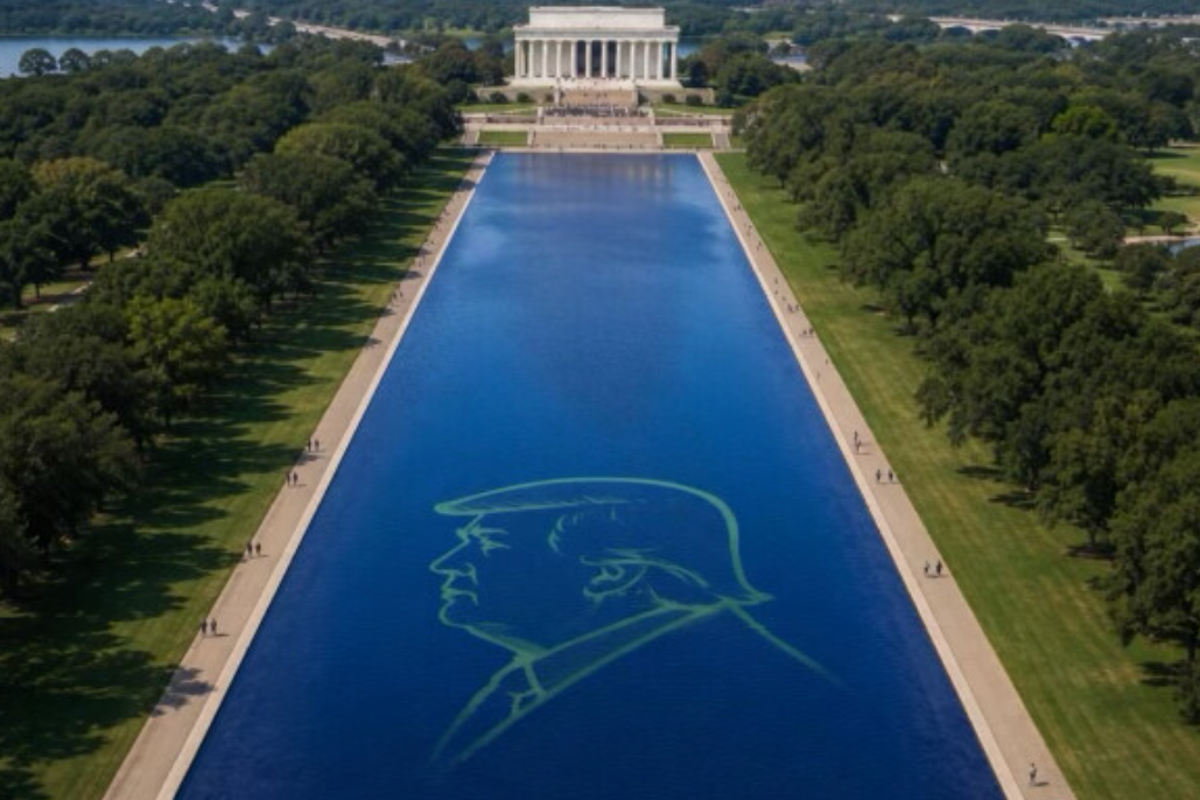
The water at the base of the Lincoln Memorial is supposed to act as an immaculate mirror. For decades, the century-old basin has captured the white stone columns and the soaring obelisk of the Washington Monument in a crisp embrace. Summer heat in the capital district usually brings a familiar nuisance. Algae blooms, born of stagnant water and rising temperatures, routinely turn the historic reflecting pool into a murky shade of green.
Enter a massive renovation initiative pushed through during a second presidential term, costing taxpayers upwards of fourteen million dollars. The grand plan promised a permanent fix. Workers coated a surface area larger than six soccer fields with a specialized dark hue dubbed "American flag blue," while advanced aerating technology was installed to pump oxygen bubbles into the shallow depths. Officials declared the mission an absolute triumph. Celebratory announcements online proclaimed that the monument's water feature was finally operating wonderfully for the first time since its construction.
Less than two weeks later, the vivid emerald tint returned.
The sudden reappearance of heavy algae growth exposed the stark friction between optimistic political announcements and biological reality. Laboratory testing later identified the culprit as Scenedesmus, a resilient genus of green algae that thrives in shallow, sunlit urban waters. Rather than accepting that a multi-million-dollar paint job and bubbling systems could not instantly conquer basic limnology, the official narrative shifted dramatically.
Blame was redirected toward alleged malice. High-ranking statements claimed that malicious actors had deliberately cut massive gashes into the pool liner and introduced foreign chemicals to sabotage the aesthetic improvements. Arrests were announced, and severe prison sentences were threatened for individuals accused of damaging national monuments. Yet court documents and subsequent legal filings told a very different story. Engineering assessments revealed that the newly applied waterproof coating was already peeling away from the concrete expansion joints on its own, victims of adhesion failures and rapid thermal expansion under intense seasonal heat.
Public figures and observers seized on the discrepancy, pointing out the absurdity of turning routine infrastructure maintenance into a conspiracy thriller. Maintenance crews equipped with skimmers and hydrogen peroxide were rushed back to the site to vacuum up dead organic matter while large flakes of blue paint floated to the surface. The gap between administrative ambition and physical execution widened for anyone walking along the National Mall, where the contrast between promised perfection and peeling paint became impossible to ignore.
Fixing a century-old water basin sitting on former marshland requires more than a coat of paint and aggressive rhetoric. When complex engineering challenges meet administrative hubris, the result is rarely a pristine mirror. It is an expensive spectacle of peeling blue flakes and stubborn green blooms, watched by an unimpressed public waiting for competence to catch up to the rhetoric.
Watch the video report on the reflecting pool saga for a closer look at the webcam footage, political statements, and conflicting official accounts surrounding the renovation.
http://googleusercontent.com/youtube_content/1