Silence.
That is the first thing you notice when you step out of a black SUV onto the curb of a Beverly Hills ballroom event and the valet door clicks shut behind you, sealing out the low, persistent hum of Wilshire Boulevard traffic. Inside, crystal catches the warm amber glow of spot-lit centerpieces, servers move with the practiced, invisible grace of stagehands during a scene change, and three hundred people in tailored wool and silk lean across white tablecloths to catch up on lives lived between soundstages and school drop-offs. For a different view, see: this related article.
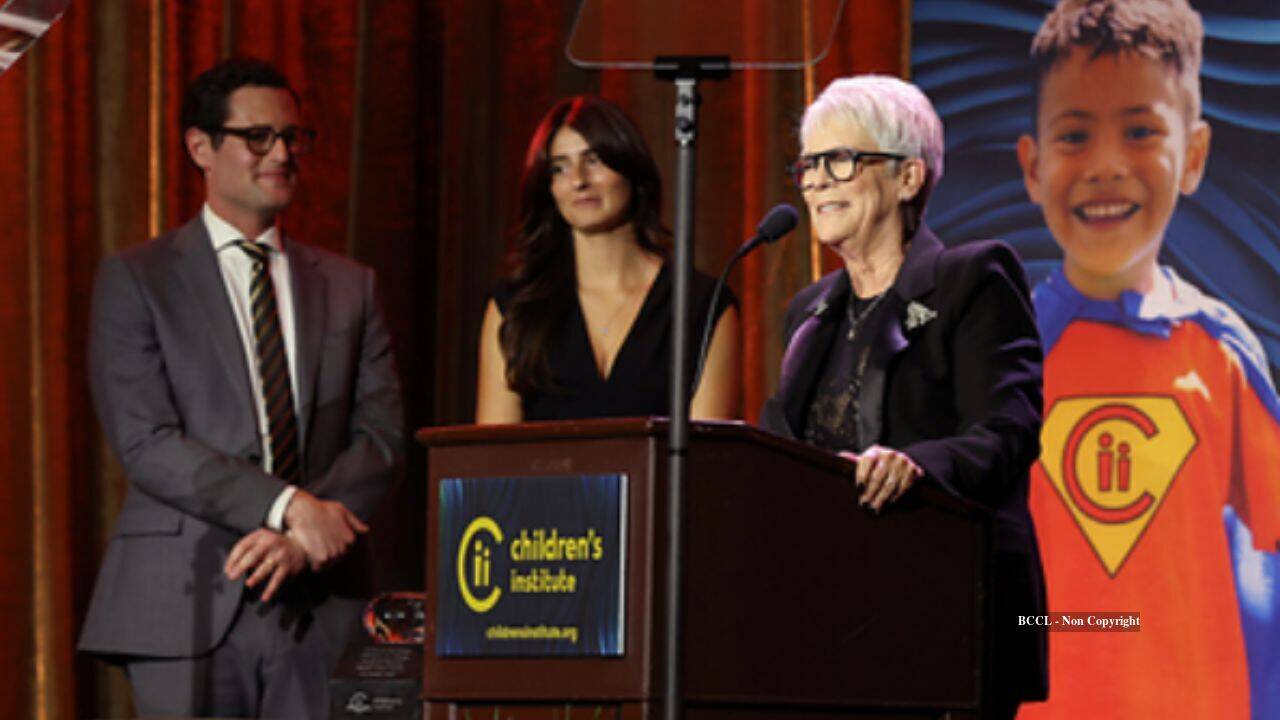
To the casual observer scrolling past a press release the next morning, a charity gala looks like an exercise in pleasant excess. A headline announces that a Los Angeles organization raised a record four million dollars while honoring Rob and Michele Reiner. Numbers like that tend to glide right off the human brain. Four million is too big to picture in crisp twenty-dollar bills stacked on a kitchen counter, yet small enough compared to a studio tentpole budget that Hollywood barely blinks. You read the figure, nod at the familiar names, and move on to the weather.
You miss the entire point. Similar insight on this trend has been shared by Deadline.
Because four million dollars in a room like that is never just a bank transfer. It is an argument against forgetting. More than that, it is a bridge built out of applause, checkbooks, and stubborn affection—stretching from the glittering, climate-controlled safety of a Los Angeles dining room straight into the messy, unscripted lives of families who will never walk a red carpet.
The Architecture of a Room That Remembers
Consider what happens when a city built on reinvention decides to pause and honor two people who spent decades refusing to look away from the world outside the studio gates.
Rob Reiner is easy to file away in the cultural memory under nostalgia. For millions, he is the sharp-tongued son-in-law pacing a Queens living room in the seventies, or the director who somehow bottled lightning across wildly different genres—giving us the wry mockumentary absurdity of This Is Spinal Tap, the aching boyhood loyalty of Stand by Me, the fairy-tale wit of The Princess Bride, and the courtroom thunder of A Few Good Men. Those films live in the permanent bloodstream of American storytelling. They quote themselves at dinner parties. They comfort us on rainy Sunday afternoons.
Yet anyone who has spent real time around the civic machinery of California knows that Rob and Michele Reiner treated fame less like a trophy and more like a crowbar. A tool meant to pry open stuck doors.
Take early childhood development, an issue that rarely wins magazine covers or generates breathless red-carpet chatter. Long before brain science became fashionable talking points on parenting podcasts, the Reiners threw their weight behind the simple, radical idea that a child’s first five years determine almost everything that follows. Through decades of advocacy—most visibly the push for California’s First 5 initiative and tireless work on marriage equality and social justice—they operated on a clear, unglamorous conviction: if you wait until a human being is broken to start caring, you have already arrived too late.
That history hung in the air of the gala long before the first salad fork touched porcelain. I have sat at enough fundraising tables over the years to recognize the difference between polite obligation—the kind where executives buy a table because their publicist said it looked good—and genuine, electric urgency. At a standard benefit, people check their phones under the table during the keynote speech. Here, phones stayed face down on the linen.
Let Us Put a Face on the Ledger
To understand why those four million dollars matter, we have to leave the ballroom. Let us step into a hypothetical scenario, grounded in the daily reality of Los Angeles County’s safety net, and meet Elena.
Elena is twenty-six, works double shifts stocking shelves at a warehouse off the 710 freeway, and raises a three-year-old son named Mateo in a one-bedroom apartment where the window air conditioner rattles like a loose hubcap. Mateo is bright, curious, and almost entirely silent. While other toddlers at the laundromat string together insistent sentences, Mateo points, hums, and occasionally bangs his forehead against the sofa cushions when frustration boils over.
Elena knows something is off. Her gut tells her every morning when she drops him at an informal neighborhood daycare because licensed preschool slots near her bus route cost more than her rent. But knowing something is wrong and knowing where to turn are two different universes. She does not have a pediatrician on speed dial. She does not have four hundred dollars an hour for a private speech pathologist in Santa Monica. What she has is fear, exhaustion, and a growing suspicion that her son is falling behind before he has even reached the starting line.
Now trace the invisible thread connecting Elena’s apartment to that Beverly Hills ballroom.
When a Los Angeles charity clears a record four million dollars in a single evening, the money does not vanish into an abstract cloud of "awareness." Think of a nonprofit’s operating budget like the foundation of a house built on coastal hillside soil. Foundations are boring. Nobody comes over to admire the concrete pilings sunk thirty feet into the bedrock; they admire the ocean view from the deck. Yet without the pilings, the first heavy winter rain sends the whole structure sliding into the canyon.
Large-scale gala revenue provides those pilings. It funds the bilingual intake coordinator who answers the phone when Elena finally works up the nerve to call a community clinic. It pays for the developmental screening van parked outside a public library in South Los Angeles on a Saturday morning. It covers the speech therapy sessions, the parenting workshops, and the emergency grocery vouchers that keep a family from unraveling during the three months it takes for state assistance paperwork to clear.
Why Celebrities in Tuxedos Still Move the Needle
A cynical voice always pipes up around events like this. I have heard it in newsrooms, in coffee shops, and occasionally in the mirror after a long week covering wealth inequality: Why do we need millionaires eating short ribs to fund basic human dignity?
It is a fair question. Honestly, in a perfectly rational society, we wouldn't. Public infrastructure would catch every Mateo before he ever stumbled, and no child’s trajectory would depend on whether a room full of producers felt generous between courses.
We do not live in that society. We live in a city of staggering, side-by-side contrasts, where zip codes separated by fifteen minutes on the freeway can differ by more than a decade in average life expectancy. In that imperfect reality, philanthropy acts as rapid-response capital—money that can move in weeks rather than waiting three legislative cycles for a state budget appropriation.
And this is where honoring figures like Rob and Michele Reiner changes the chemistry of the room.
When an organization chooses honorees, it is making a public declaration of its own soul. Honor someone who merely shows up for photo ops, and the donors give casually—a few thousand here, a tax-deductible gesture there. Honor a couple whose entire adult partnership has been defined by putting skin in the game, and the standard shifts. Michele Reiner, a photographer and producer with an unflinching eye for human truth, and Rob, who has absorbed decades of political slings and arrows without softening his stance, embody endurance. They have shown up when the cameras were rolling and, more tellingly, when the news cycle had moved on to shinier distractions.
Standing in that ballroom, surrounded by collaborators, longtime friends, and younger artists who grew up watching Reiner films on VHS, you could feel a quiet peer pressure working in the best possible direction. Nobody wanted to be the person who offered applause without backing it up.
The Anatomy of a Record-Breaking Night
Four million dollars does not happen by accident. Behind every "record-breaking" headline lies months of unglamorous, borderline obsessive choreography.
It starts half a year earlier with a volunteer committee sitting around a conference table, staring at a spreadsheet that looks terrifyingly empty. Someone has to call old friends and ask for favors they swore they wouldn't call in until next year. Someone has to secure auction items that actually tempt people who can already buy almost anything they want—not another gift basket, but a walk-on role, a private dinner, a piece of film history signed by the people who made it.
Then comes the night itself, which runs on emotional pacing as delicate as any third-act screenplay.
First, you warm the room. You remind people why they like each other, why Los Angeles, for all its vanity and traffic and heartbreak, remains a town built by dreamers who still believe a story can change someone’s mind.
Next, you tell the truth. Usually, this comes through a short documentary film screened right after dinner, when the clinking of silverware has stopped and the lights drop to black. The screen fills with faces that look nothing like the faces in the room—mothers, caseworkers, kids learning to read, families holding onto stability by their fingernails. In that darkness, the distance between Beverly Hills and Elena’s apartment collapses to zero. You hear a sniffle two tables over. You see a studio executive reach quietly for a cocktail napkin.
Finally, you open the floor.
The paddle raise is the purest piece of live theater in modern philanthropy. An auctioneer steps to the podium, spots a hand in the back corner, calls out a hundred thousand dollars, then fifty, then twenty-five, then ten. Each raised card triggers a ripple of applause that builds momentum like a train leaving the station. People who planned to give five thousand suddenly hold their number up at ten because the energy in the room makes generosity feel contagious. By the time the tally crosses the previous record and pushes straight to four million, the room isn't celebrating its own wealth. It is celebrating its own usefulness.
What Lingers After the Valet Brings the Car
The danger of any great night is the morning after.
By Tuesday, the floral arrangements have been composted, the rented chairs are stacked in a warehouse in Burbank, and the headline about the record-setting gala has been replaced by box-office projections and casting rumors. The four million dollars, meanwhile, is just beginning its real work—slowly, quietly, without a single photographer in sight.
Over the next twelve months, that money will fracture into tens of thousands of tiny, unremarkable moments. A social worker will have enough gas money in the program budget to make a second home visit instead of closing a file. A terrified parent will sit across from a counselor who speaks her language and hear the four words that change everything: You are not alone. A three-year-old boy who used to bang his head against the couch in frustration will look up at his mother, find the right word for the very first time, and speak it out loud.
Rob and Michele Reiner spent a lifetime understanding that stories are only as good as what they leave behind once the credits finish rolling. Down on Wilshire Boulevard, the traffic never really stops, and the city keeps rushing toward whatever comes next—but somewhere across town tonight, a small door that used to be locked stands wide open.


