Salt on the Wind
The water in the Gulf of Aden does not look like a battleground. On a quiet afternoon, it stretches toward the horizon in shades of deep indigo, smooth as liquid glass, shimmering under a brutal equatorial sun.
Then the engine noise changes.
A sudden shift in pitch breaks the drone of the cargo ship's heavy diesels. High-speed skiffs—small, low-slung fiberglass boats carrying powerful outboard motors—cut through the swells. They leave razor-white wakes in their path as they close the distance toward a slow-moving target.
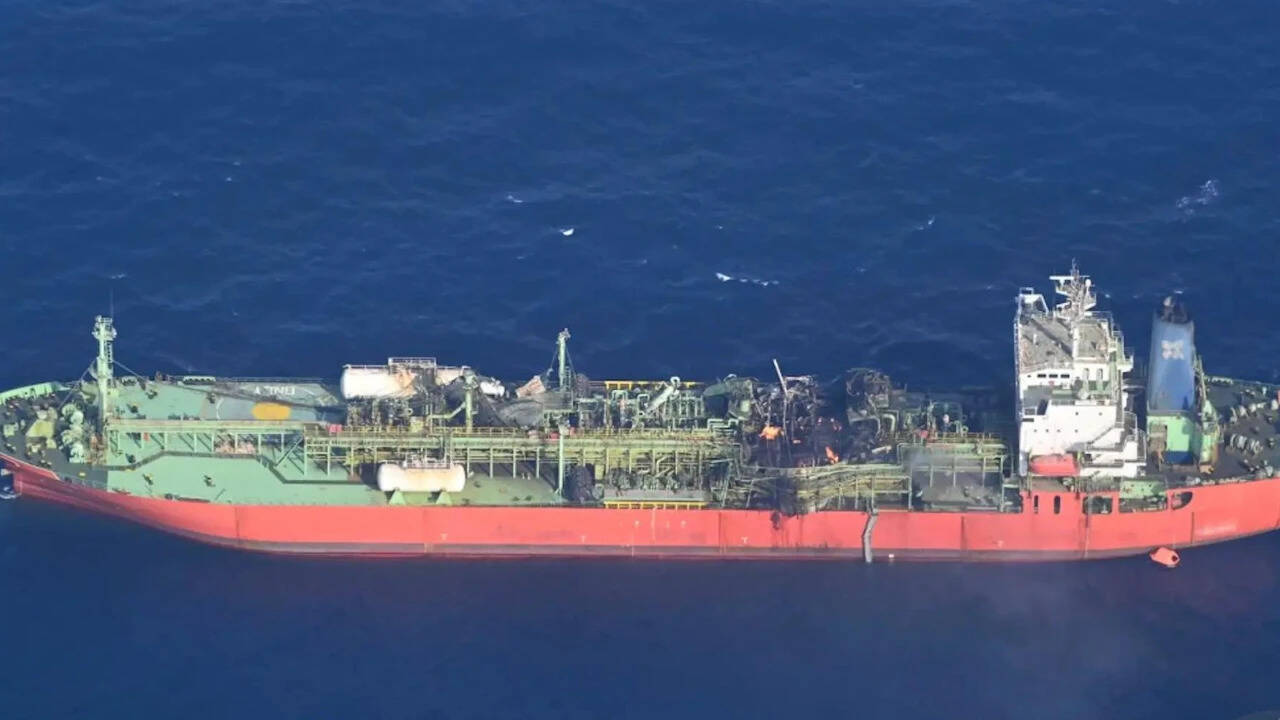
To understand what happened aboard the chemical tanker Asana, you have to strip away the dry language of maritime security briefings. Reports talk about coordinates, vessel specifications, and flag registries. They measure risk in nautical miles and insurance premiums.
The crew measures risk in heartbeats.
The Wire and the Deck
Picture a deck officer standing on the bridge wing of a heavy vessel loaded with thousands of tons of hazardous chemical cargo.
(Note: While the specific names of crew members remain unconfirmed in early intelligence reports, their reality mirrors that of thousands of merchant seafarers navigating these waters daily.)
The heat rising off the steel deck is suffocating, pushing past ninety degrees. Every surface burns to the touch. For weeks, the routine has been endless hours of monitoring gauges, checking pressure valves, and tracking weather patterns. Merchant shipping is a world built on predictability. Schedules are set months in advance; arrivals are calculated down to the minute.
Then a radar blip appears where no commercial vessel should be.
It moves too fast. It ignores radio calls on the international distress channels. Within minutes, the distant speck becomes two fast craft, riding low, dodging the vessel’s wake. Onboard the chemical tanker, emergency alarms shatter the heavy silence.
A chemical tanker is not a naval destroyer. It has no armor plate, no deck guns, no military escort riding alongside. Its defenses are humble: razor wire wrapped along the lower guardrails, high-pressure fire hoses aimed over the sides to flood approaching craft, and a designated citadel—a reinforced steel room deep within the ship’s hull where the crew can lock themselves away to await rescue.
When assailants board a vessel carrying volatile chemicals, the math changes instantly. Standard defensive measures become terrifyingly precarious. A single stray round fired near venting hazardous cargo transforms a maritime robbery into an catastrophic explosion.
The crew knows this. The hijackers know it too.
The Geography of Vulnerability
The Gulf of Aden is one of the world's primary maritime highways, a narrow aquatic corridor connecting the Indian Ocean to the Red Sea and the Suez Canal. Millions of barrels of oil and thousands of tons of consumer goods filter through this bottleneck every single day.
It is also one of the most geographic choke points on Earth.
To the north lies Yemen, torn by years of conflict and economic collapse. To the south lies the Horn of Africa. For years, international naval task forces managed to suppress the wave of piracy that peaked over a decade ago. Heavy patrols, armed onboard security teams, and strict industry transit guidelines drove the attack numbers down toward zero. The world moved on, assuming the problem was solved.
It was not solved. It was merely dormant.
When geopolitical instability flares across the region, maritime security fractures. Naval assets get reassigned to protect broader shipping lanes or monitor regional conflicts. The gaps in coverage widen. For desperate or calculated operators on the coastline, those gaps represent an opportunity.
When the alert went out that the Asana had been boarded, it shattered the fragile illusion of security that had settled over the regional shipping industry.
Inside the Steel Citadel
When unknown contacts cross the rail, the ship’s captain makes a choice that takes seconds to execute but hours to endure.
The engines are shut down or set to spin uselessly. Power systems are locked out. The crew retreats down narrow steel ladders, ducking through watertight hatches, retreating into the heart of the vessel. The heavy steel door of the citadel swings shut, and the deadbolts slide home.
Inside, the noise of the outside world dies instantly.
There are no windows in a ship’s citadel. There is only the dim glow of emergency lighting, the hum of recirculated air, and the overwhelming heat radiating from the surrounding machinery. Outside, boots tread on the upper decks. Heavy tools smash against locked access doors.
The human mind does strange things in total confinement. Seconds stretch into hours. Every muffled clang echoing through the ship's frame sounds like a breaching attempt. The air grows thick, heavy with sweat and adrenaline.
The people trapped inside are not soldiers. They are mariners from small coastal towns, working long contracts to send money home to families thousands of miles away. They signed up to manage cargo, maintain engines, and navigate by the stars—not to endure a siege at sea.
The Ripple Beyond the Horizon
When news breaks that a chemical tanker has been seized, the immediate focus is on the tactical situation off the coast. Warships pivot, security centers in London and Dubai issue urgent alerts, and satellite tracking systems freeze on the last known coordinates of the vessel.
Yet the true impact ripples outward long before the ship's fate is resolved.
In shipping offices across Asia and Europe, risk officers stare at digital charts, quietly recalibrating routes. A decision to divert ships away from the Gulf of Aden, routing them around the southern tip of Africa instead, adds thousands of nautical miles to a journey. It consumes tens of thousands of extra tons of fuel. It delays medicine, grain, and fuel shipments by weeks.
Every time a vessel is boarded, the cost of moving everything on Earth creeps upward. The price of gasoline at a pump in Ohio, the cost of fertilizer for a farm in South Africa, the delay of electronics arriving in Rotterdam—all of them trace back to a few desperate minutes on a sun-drenched deck off the Yemeni coast.
The Unforgiving Sea
Hours pass. The status of the vessel remains fluid, caught in a high-stakes standoff between naval forces tracking from a distance and the armed men occupying the decks.
Eventually, the sun sinks below the horizon in the Gulf of Aden, turning the water from indigo to an absolute, unyielding black.
The sea shows no trace of what happened on its surface. The white wakes of the skiffs have long since dissolved back into the deep water. The radio channels crackle with routine static, intermingled with distant, calm voices relaying coordinates into the dark.
Out there, miles from the nearest shore, a steel hull sits dead in the water, carrying a silent crew, a dangerous cargo, and the stark reminder that the world’s most vital trade routes are only ever as secure as the fragile peace holding them together.