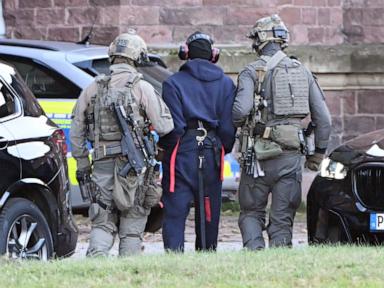
A 50-year-old former Ukrainian officer sits in a Hamburg courtroom accused of blowing up the Nord Stream pipelines. Four years after underwater blasts tore through the Baltic Sea in September 2022, the legal reckoning has finally arrived.
Most headlines treat this like a straightforward spy thriller. It isn't. Prosecutors aren't just chasing a single saboteur; they're testing whether covert wartime infrastructure strikes cross the line into prosecutable war crimes under German law. And honestly, the geopolitical fallout is just getting started.
How a Former Ukrainian Officer on Trial Ended Up in Hamburg
The defendant, identified in German court filings as Serhii K. and widely reported as former Ukrainian officer Serhii Kuznietsov, didn't walk into a courtroom by accident. Italian police arrested him in August 2025 while he was on vacation with his family, and authorities later transferred him to Germany in November 2025 following extradition proceedings. He has denied any involvement in the blasts.
When proceedings opened on October 14, 2026, at the Hanseatic Higher Regional Court in Hamburg, his defense lawyers immediately pushed to throw the case out. They argued that Ukrainian military secrecy rules restrict what he can say and that his defense faces unfair constraints. The court rejected that dismissal bid, setting up a grueling schedule of hearings running through December 2026 and into early 2027, with no verdict date yet set.
Look closely at the courthouse setting in Hamburg. That stately stone building symbolizes how domestic criminal courts are now being asked to untangle messy, state-linked covert operations from a live war. A local criminal docket suddenly carries massive weight for European energy security, alliance trust, and international law.
Why Prosecutors Call a Pipeline Blast a War Crime
Here's the detail most people miss: this isn't just a charge of blowing up pipes or wrecking property. German federal prosecutors have paired domestic charges—such as causing an explosion, destroying structures, and disrupting public services—with an international law charge alleging an attack on protected civilian infrastructure connected to an armed conflict.
Under German criminal law, blowing up a major utility or pipeline can violate domestic statutes even if the line wasn't actively pumping gas at that exact moment. Turning that act into a war crime accusation pushes into much trickier territory. Prosecutors have indicated that suspects allegedly acted on behalf of state authorities in Ukraine, while defense counsel has countered that the pipelines functioned as a Russian leverage tool rather than a purely civilian asset.
Legal analysts watching the trial point out a sharp tension between statutory definitions and military reality:
- Infrastructure status: Even if a pipeline isn't flowing gas continuously, courts can still examine whether disabling it interferes with essential public infrastructure.
- Armed conflict nexus: Prosecutors must tie the alleged sabotage to the broader conflict and argue why it wasn't a lawful military target.
- Individual vs. state responsibility: A criminal trial in Hamburg focuses on individual guilt, even when prosecutors point toward state backing behind the scenes.
That distinction matters. If a court convicts a defendant on a war crime theory tied to covert wartime sabotage, it creates a precedent that states and intelligence services will scrutinize for years.
The Messy Web of Competing Narratives
Whenever a high-stakes trial opens years after a mystery event, certainty is in short supply. German investigators have identified multiple Ukrainian suspects—including another Ukrainian diver arrested in Croatia in August 2026 who has fought extradition—yet Kyiv has repeatedly denied involvement.
At the same time, rival claims keep swirling outside the courtroom. Some commentators and media reports have pointed toward Ukrainian actors or intelligence channels, while others have raised questions about wider intelligence awareness or floated alternative theories. Meanwhile, Moscow has demanded a verdict that names orchestrators, and Washington and Kyiv have pushed back against allegations tying them to the blasts.
What works in theory—clean forensic attribution followed by tidy diplomatic consensus—rarely happens in covert maritime cases. Underwater infrastructure is hard to guard, hard to inspect quickly, and easy to spin in information warfare.
What This Means for Germany, Ukraine, and Europe
For Germany, the trial is a delicate balancing act. Berlin has been one of Ukraine's biggest European backers while keeping its judiciary independent of political pressure. German officials have stressed that the courts must decide the case on the evidence, even as the proceedings put uncomfortable strain on political ties.
In Ukraine, reactions are split between skepticism of the prosecution's case and fierce debate over wartime survival. Some observers argue the case is weak or politically fraught, while others note a blunt reality on the ground: many Ukrainians view actions that hurt Russian war financing differently than European prosecutors do.
And for maritime security across Europe, the lesson is unmistakable. Offshore pipelines and subsea cables sit exposed on the seabed. Better sonar, patrols, and cable repairs help, yet no single sensor or treaty can make thousands of miles of undersea infrastructure invulnerable.
Practical Ways to Follow the Case Without Getting Played
If you're tracking this trial over the coming months, don't rely on viral clips or hot takes. A few simple habits will keep your view grounded:
- Read court filings and wire dispatches first. Look for what prosecutors actually charge in court and what judges rule on motions, rather than social media speculation.
- Separate charges from verdicts. An indictment or opening statement is an allegation, not proof of guilt.
- Watch the procedural milestones. Track scheduled hearing blocks in Hamburg, extradition rulings in neighboring countries, and evidentiary motions—those often reveal where the case is actually heading.
- Check who benefits from a claim. Every capital and commentary outlet has incentives around how Nord Stream is framed. Follow the verifiable record in Hamburg.