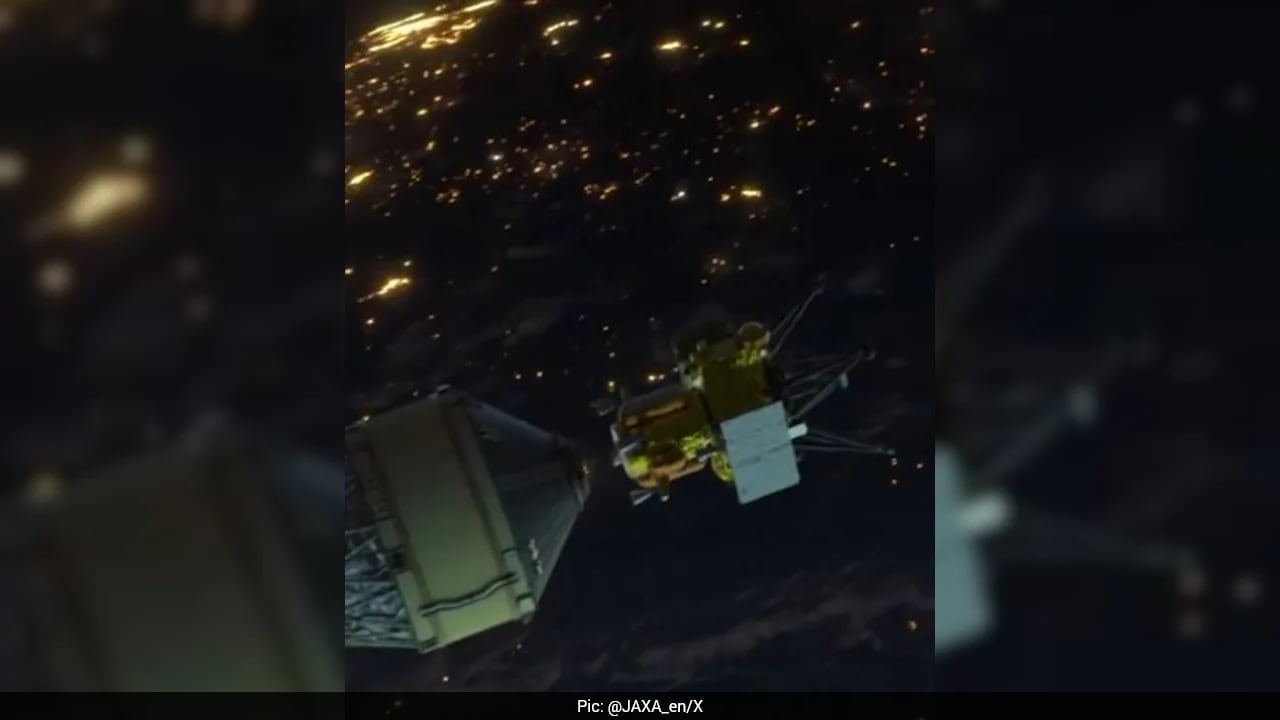
Call it historic if you want. Call it a triumph of engineering. Just do not call it the shortcut to Mars everyone pretends it is.
Every time a spacecraft heads toward Phobos or Deimos—JAXA's Martian Moons eXploration (MMX) mission being the prime headline magnet—the standard press coverage writes itself. First sample return from a Martian moon. Stepping stone to crewed Mars missions. Unlocking the origin of moons. Expanding on this idea, you can find more in: Why Striking Russian Google Never Actually Locks People Out of Their Money.
Lazy. Predictable. Completely blind to orbital mechanics.
Phobos is a battered, potato-shaped rock orbiting Mars at roughly 6,000 kilometers above the surface—closer to its planet than Earth's Moon is to ours, orbiting faster than Mars rotates. Deimos sits further out, smaller and smoother, coasting in a quieter orbit. Together, they are tantalizing targets for space agencies hungry for firsts and journalists hungry for "world-first" hooks. Experts at Ars Technica have also weighed in on this matter.
Yet the prevailing narrative treats a Martian moon as a convenient pit stop, a cosmic gas station, or a low-gravity balcony overlooking the Red Planet. None of those metaphors survive contact with astrodynamics or mission economics.
I have watched aerospace programs burn through staggering budgets chasing flashy milestones while dodging the brutal physics of deep space. When a mission's headline value outpaces its operational utility, engineers end up building expensive detours and calling them progress.
The "Stepping Stone" Myth Collides With Delta-V
Ask ten casual readers why going to a moon of Mars matters, and at least eight will say it is a stepping stone to landing humans on Mars.
That sounds intuitive. It is also astrodynamically backwards.
In spaceflight, distance is a terrible proxy for difficulty. What matters is delta-v—the change in velocity required to maneuver between orbits, brake into gravity wells, and escape them. Getting from low Earth orbit to trans-Mars injection already eats up the lion's share of a rocket's energy budget. Once you arrive at Mars, capturing into orbit around the planet and matching the orbital plane and velocity of Phobos or Deimos is not a free ride.
Worse still, landing on Mars and landing on Phobos are two completely different engineering worlds.
Mars has an atmosphere—thin enough to ruin your day if you miscalculate entry heating or parachute deployment, yet thick enough to use aerobraking and hypersonic deceleration to shed speed. Phobos has virtually no atmosphere. Touching down on a tiny, irregular body with microgravity means you cannot rely on aerodynamic drag or familiar landing gear dynamics. Surface contact at even a few meters per second can turn a gentle touchdown into a bounce or a tumble. Navigating around a jagged boulder field where escape velocity is measured in meters per second rather than kilometers per second requires precision guidance, hazard avoidance, and propulsion control that share very little DNA with landing a heavy payload on Martian soil.
If your goal is putting boots or a large rover on Mars, detouring to a Martian moon does not simplify the descent problem. It adds an extra stop in a harsh radiation environment while solving a different set of docking, station-keeping, and microgravity surface problems.
What People Actually Ask—And Why the Premise Is Often Broken
Search feeds around these missions tend to cluster around predictable questions. Most of them smuggle in a flawed assumption.
"Is Phobos a captured asteroid or leftover debris?" That is a legitimate planetary science question, and it is the strongest reason to go there. Phobos shows traits that resemble carbonaceous chondrite meteorites, yet its nearly circular, equatorial orbit argues against a messy, unassisted capture unless tidal forces or a past collision reshaped it. Answering how Phobos and Deimos formed helps constrain how giant impacts, disk accretion, and tidal evolution shape planetary systems.
"Can we mine Phobos for fuel or water on the way to Mars?" Here is where the premise cracks. Even if hydrated minerals or volatiles exist in trace or localized amounts inside Phobos, extracting, processing, liquefying, and storing propellant in microgravity—with loose, regolith-covered, irregular terrain and solar power cycles—is a massive industrial campaign, not a casual pit stop. Sending dedicated hardware to prospect and refine resources at Mars before you even have proven closed-loop life support or heavy Mars transport is putting the factory before the road.
"Why not just land on Mars instead?" Because planetary protection rules, entry-descent-landing mass limits, and communication delays make Mars surface operations brutal, whereas a moon offers a clean, airless surface without atmospheric entry risk. That is a real trade-off—not a reason to pretend a moon is a substitute for Mars.
The Origin Story Trap
Space agencies love origin stories because origin stories justify robotic sample return. Bring back a few hundred grams of regolith from Phobos, analyze it in terrestrial laboratories with instruments too heavy and power-hungry to fly on a probe, and suddenly planetary scientists have decades of data.
Nobody serious disputes the scientific value of pristine samples. Terrestrial labs can run isotopic analyses, mass spectrometry, and mineralogical checks that no spacecraft payload can match on its own.
The trap is pretending that scientific curiosity and human exploration logistics are the same thing.
Imagine a scenario where a mission scoops up regolith from Phobos, survives the return trip to Earth, and hands scientists definitive proof that the Martian moons formed from debris blasted off Mars by an ancient impact. That would be a career-defining result for planetary geologists. It would also do almost nothing to solve life-support reliability over a two-year round trip, radiation shielding for crew quarters, or high-thrust propulsion bottlenecks.
Conflating a planetary science breakthrough with a human-exploration milestone is a classic way to oversell a mission to taxpayers and executives. Good science deserves honesty on its own terms. It does not need a fake operational excuse.
What Microgravity Actually Does to Hardware
Microgravity near a small body looks peaceful in animations. In practice, it is unforgiving.
Without strong gravity to anchor dust or settle loose material, fine regolith kicked up by thrusters or sampling mechanisms behaves unpredictably. Electrostatic charging of dust grains in sunlight and shadow adds another layer of nuisance for optics, mechanisms, and thermal surfaces.
Add communication latency. Depending on where Earth and Mars sit in their respective orbits around the Sun, a one-way radio signal can take roughly three to over twenty minutes. A round-trip command-and-confirmation loop can stretch past forty minutes. You cannot joystick a spacecraft out of a bad geometry call in real time when the signal takes twenty minutes just to arrive. Autonomy has to carry the weight, and every edge case not anticipated on the ground becomes a high-stakes gamble millions of kilometers from home.
Comparing the Real Trade-Offs
To see why the "world-first" framing misses the mark, compare how a Martian moon stack-ranks against Mars itself and Earth's Moon across practical mission realities.
| Dimension | Martian Moon (e.g., Phobos / Deimos) | Mars Surface | Earth's Moon |
|---|---|---|---|
| Atmosphere | Negligible (no aerobraking or entry heat) | Thin CO2 atmosphere (entry heating & parachutes required) | Negligible |
| Gravity & Surface | Extreme microgravity; irregular shape; loose regolith | ~0.38g; craters, plains, dust storms, canyons | ~0.16g; heavy regolith, sharp craters, extreme thermal swings |
| Comms Delay (One-Way) | ~3 to 22+ minutes | ~3 to 22+ minutes | ~1.3 seconds |
| Primary Value | Moon origin/evolution science; Mars system observation | Astrobiology, geology, surface infrastructure testbed | Proximity, rapid iteration, cislunar & surface testing |
Look at that table and ask a simple question: if you are trying to mature technology quickly and affordably, why start at the hardest communication distance with the trickiest microgravity surface dynamics when you haven't exhausted closer, faster feedback loops?
Heavy Hitters and Hard Realities
In deep-space exploration, credibility belongs to the people and institutions who have actually flown hardware across interplanetary voids and lived with the consequences of every mass gram and power watt. JAXA has earned genuine respect for precision sample-return execution in small-body environments through the Hayabusa and Hayabusa2 campaigns, just as NASA's Jet Propulsion Laboratory has set the benchmark for sustained Mars surface and orbital operations.
Those track records matter because they prove what is hard. Touching down on a small body, collecting material, and bringing it home is an extraordinary engineering feat. Treating that feat as a silver bullet for interplanetary logistics is not.
I have seen ambitious space ventures treat early milestones as proof that the hard parts are solved, only to run headlong into mass growth, thermal margins, power shortfalls, and schedule slip when scaling up. Hardware does not care about press releases. If a subsystem lacks margin in vacuum or thermal cycling, it will find the weak spot far from any repair crew.
Where My Contrarian Stance Can Bite Back
Being contrarian in spaceflight is easy when you point out hype. Staying honest means admitting where skepticism can blind you to real value.
First, serendipity. Planetary exploration routinely uncovers features, compositions, or dynamical quirks that models failed to predict. If a mission to a Martian moon reveals unexpected volatile distribution or surface structure, dismissing the target purely on paper could mean missing a genuinely useful discovery.
Second, strategic and industrial momentum. Complex deep-space missions force organizations to build deep-space navigation, fault-tolerant autonomy, high-gain communications, and heavy-lift or high-efficiency propulsion muscle. Even when a specific destination isn't the most direct path to a crewed landing, the institutional capability built along the way can pay off later—provided leadership doesn't confuse capability building with destination readiness.
Third, timing windows. Orbital mechanics dictates when launch windows open between Earth and Mars. Waiting for a "perfect" architecture often means years of stagnation, while flying a focused, well-scoped mission keeps teams sharp and data flowing.
Actionable Advice If You Track or Build in Space Tech
If you are an engineer, founder, investor, or policy watcher trying to separate real progress from headline noise in deep space, stop grading missions by "firsts" and start grading by systemic bottlenecks removed.
- Audit the bottleneck, not the headline. When a mission claims to advance human exploration or space resources, ask which specific bottleneck it actually retires: propulsion efficiency, closed-loop life support, autonomous hazard avoidance, power generation in dust/eclipse, or deep-space communications. If none of those move forward meaningfully, treat the milestone as science or prestige—not logistics.
- Price in operations, not just launch. Getting hardware to a target is half the story; operating it reliably across months or years with multi-minute signal delays, thermal swings, and radiation exposure is where budgets and schedules quietly bleed.
- Demand mass and power realism. Every extra instrument, drill, sample container, or thruster margin costs mass, and mass cascades through structure, propellant, and launch vehicle selection. Skepticism toward grandiose "refueling depot" claims starts with asking how much propellant mass it takes just to deliver the mining gear.
- Separate science budgets from exploration hype. Support high-value planetary science missions openly for what they are—windows into Solar System history—without dressing them up as shortcuts to crewed missions they were never designed to execute.
A mission to a moon of Mars can be a brilliant scientific expedition and a terrible shortcut to the Red Planet at the very same time. Applaud the engineering, question the grand narrative, and watch the physics—because gravity never reads the press release.


