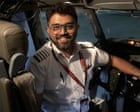
Two hours into a flight from Dubai to Tel Aviv, Captain Smit Machchhar thought his first officer had stood up to pray. That routine moment turned into a life-or-death struggle inside a Boeing 737-8 MAX.
According to accounts shared by Machchhar and reported by international outlets including The Guardian and CBC News, the co-pilot—identified in reports as Hamam al-Hammami—turned on him with the flight deck's crash axe. Machchhar unbuckled his harness, threw up his arms to block blows aimed at his head, and fought to reach the door release while the jet plunged steeply. All 172 people aboard Flight FZ1073 survived after the aircraft diverted to Tabuk, Saudi Arabia. Don't forget to check out our previous coverage on this related article.
Honestly, this incident shatters two comforting assumptions at once. First, people assume a reinforced cockpit door keeps danger outside. Second, they assume a pilot sitting in the right seat has already passed every imaginable filter. Flight FZ1073 proved that a threat can sit right beside you—and use standard emergency gear against you.
How Flight FZ1073 Unfolded at Cruising Altitude
On September 30, 2026, flydubai Flight FZ1073 was flying from Dubai to Tel Aviv on a Boeing 737-8 MAX. Around two hours into the trip, the co-pilot rose from his seat. Machchhar initially saw nothing unusual in that movement. To read more about the context here, Al Jazeera provides an informative summary.
Then came the strike to the back of Machchhar's head and a sudden loss of vision. Bleeding and hurt, the captain fought off blows aimed at his head, wounded his arm defending himself, and reached for the mechanism to unlock the cockpit door while calling out for help. Flight-tracking data from Flightradar24 showed the aircraft transmitting emergency squawk codes and entering a steep descent, with extreme vertical descent rates recorded before recovery and a safe diversion to Tabuk.
"I was not very sure that I'll make it out alive from this. Did I give up? No." — Captain Smit Machchhar, describing the fight aboard Flight FZ1073.
Once the door opened, cabin crew and passengers—including off-duty pilots and travelers with medical training such as a dentist—helped subdue the attacker, stabilize the situation, and tend to Machchhar's severe injuries. Later, UAE President Mohamed bin Zayed Al Nahyan awarded Machchhar the First-Class Order of Zayed II, while Indian leaders and lawmakers also recognized his actions.
The Paradox of the Cockpit Crash Axe
Most flyers don't realize there's a sharpened axe sitting just feet behind the pilot seats. You get stopped at security over tiny blades or travel tools, yet every commercial airliner carries a crash axe. That sounds crazy on paper. It isn't a loophole.
Aviation regulators require it for very real reasons:
- Hidden fires behind panels: Modern airliners pack wiring, insulation, and air ducts behind wall linings. When an electrical fire sparks out of sight, a fire extinguisher nozzle can't reach the seat of the flames unless crew members chop open the panel first.
- Post-crash escape: If a hard landing or impact warps fuselage frames or jams exits, pilots need a heavy mechanical tool to break through panels or escape hatches fast.
- Rapid access: As explained in aviation safety analyses such as MigFlug's breakdown of crash axe rules, rules like U.S. FAA regulation 14 CFR 121.309(e) and EASA rule CAT.IDE.A.255 mandate crash axes or equivalent tools on transport aircraft, typically stowed unlocked in a bracket or cover on the flight deck so crews don't waste precious seconds hunting for a key during smoke or fire.
Here's the catch nobody likes talking about. The exact design choice that makes a crash axe useful in a cabin fire—keeping it accessible inside the secured flight deck—also means it's right there if someone inside the cockpit turns violent. You can't lock it away behind three layers of bureaucracy without slowing down emergency firefighting. At the same time, leaving a heavy tool completely unguarded inside an enclosed workspace creates a real vulnerability if vetting fails.
Why Background Vetting Breaks Down Across Borders
What makes the FZ1073 investigation so unsettling isn't just what happened midair. It's what came out afterward about hiring and screening.
Reports from the Associated Press and The Hill indicated that al-Hammami had previously been barred from flying by Oman Air over concerns about extremist views and moved to a ground role before later being hired by flydubai. Officials and security analysts noted that standard criminal-record checks often look for past convictions rather than deep behavioral or ideological red flags, and cross-border information sharing faces serious legal and diplomatic limits.
Let's be fair about how complex this is. Investigators from multiple countries worked on the case, and authorities noted they were still examining motives and whether the suspect acted alone. Meanwhile, political leaders offered sharp characterizations—UAE prosecutors called it a "terrorist attack", while Israeli Prime Minister Benjamin Netanyahu alleged radicalization, even as opposition figures in Israel criticized how the incident was handled politically.
From an aviation security standpoint, the bigger lesson is simple. A clean criminal record isn't the same thing as psychological stability or loyalty. When an airline hires across borders, prior disciplinary removals or internal intelligence flags at another carrier can slip through if there's no standardized, trusted way to share sensitive HR and security context.
Insider Threats and the Two-Person Rule Debate
For twenty-five years, post-9/11 aviation security focused heavily on keeping bad actors outside the cockpit door. That works great against hijackers in the cabin. It does almost nothing if someone already holds a pilot license and sits in the next seat.
After the 2015 Germanwings crash in the French Alps, regulators and airlines debated strict two-person rules inside the flight deck whenever one pilot steps out to use the lavatory. Some carriers required a flight attendant to step in so no single person was ever left alone with the controls. Other experts and pilot unions argued that a cabin crew member might lack technical flying skills during a sudden medical or sabotage emergency, and that constant door cycling adds security exposure of its own.
Flight FZ1073 highlights a slightly different wrinkle. Both pilots were on the flight deck when the attack began. What saved the flight wasn't a passive lock on the door—it was Machchhar forcing the door open while injured so people outside could intervene, plus the presence of off-duty pilots and willing passengers who stepped up under extreme stress.
Still, relying on heroic improvisation at 30,000 feet isn't a system you want to count on. Airlines need continuous psychological monitoring, real reporting channels where colleagues can flag concerning behavior without fear of unfair retaliation, and stronger cross-airline screening protocols.
What Flyers and Industry Pros Should Actually Do Next
If you fly regularly, you don't need to panic every time the seatbelt sign dings. Commercial aviation remains remarkably safe overall, and extreme cockpit attacks like Flight FZ1073 are rare. Still, there are smart, practical habits worth adopting:
- Pay attention during the safety briefing: Actually know where the nearest exit row is, count the rows to your exit in case smoke fills the cabin, and keep your seatbelt fastened whenever you're seated.
- Stay alert to crew cues: Flight attendants train for abnormal situations. If you hear unusual commotion near the front or receive sudden instructions from the crew, listen fast and don't freeze up filming on your phone.
- Follow official investigation reports: Skip viral rumors in the first 24 hours after any major aviation event. Wait for formal findings from aviation authorities and civil investigators rather than social media speculation.
If you work in aviation safety, human resources, or flight operations, push for tighter cross-border background verification and stronger peer-support programs that catch warning signs early—before a cockpit turns into a battleground.