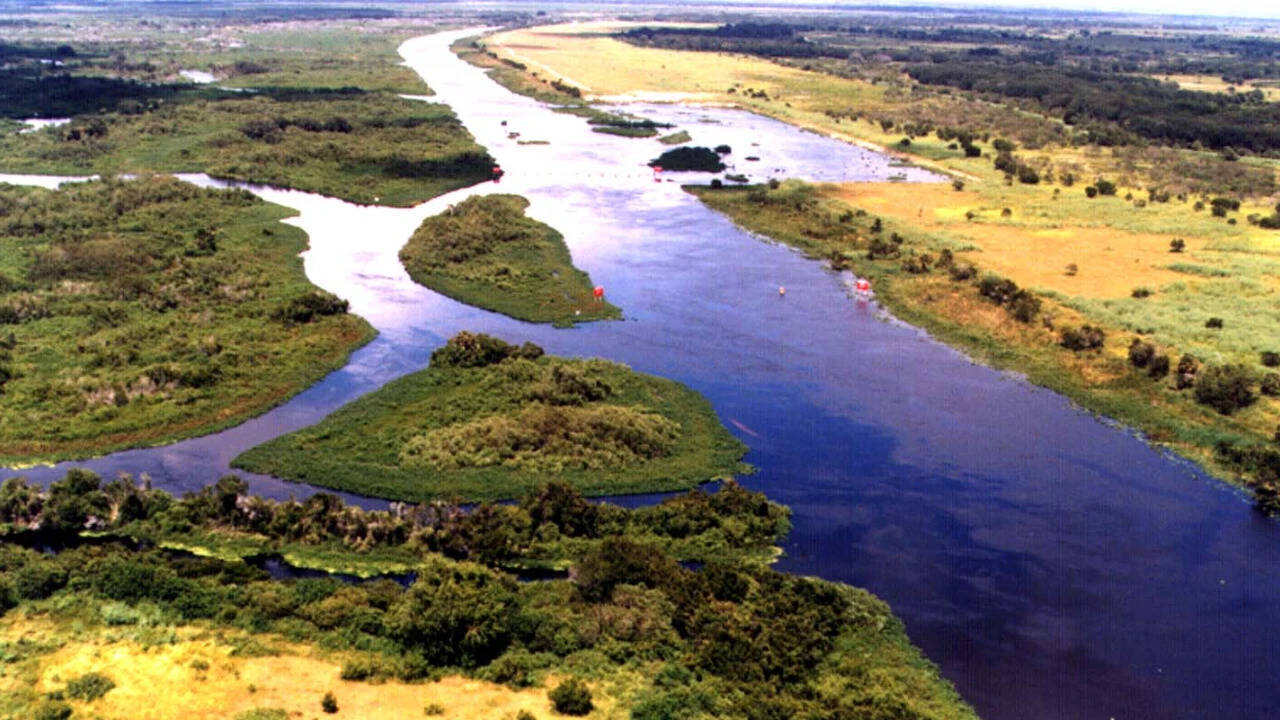
Florida wants to throw hundreds of millions of taxpayer dollars at 4,800 acres of artificial marshland at the mouth of the Kissimmee River, and the environmental press is applauding like they just cured toxic algae.
They didn't. They just bought a bigger mop while leaving the faucet wide open.
For decades, the South Florida Water Management District (SFWMD) and the U.S. Army Corps of Engineers have been locked in an endless, multi-billion-dollar game of ecological whack-a-mole. First, in the 1960s, the Corps straightened the meandering 103-mile Kissimmee River into a 56-mile drainage ditch—the C-38 canal—to stop floods. That turned the river into a high-speed nutrient chute, dumping agricultural runoff straight into Lake Okeechobee. Then, starting in 1999, engineers spent over $1 billion and twenty-two years re-flooding the floodplain to undo their own mistake.
Now, the victory lap is over, and the uncomfortable math has arrived. Even with the river restored, Lake Okeechobee is still choking on phosphorus. So the latest grand solution is a massive Stormwater Treatment Area (STA) at the river's mouth to scrub the water before it hits the lake.
It sounds noble. It reads great in a press release. And if you understand watershed biochemistry and agricultural economics, you know it is a masterclass in institutional deflection.
The Lie of End-of-Pipe Engineering
In water resource management, building a massive wetland at the bottom of a watershed is known as an "end-of-pipe" solution. I have watched state agencies and municipal boards burn through nine-figure budgets on end-of-pipe infrastructure across North America, and the trajectory is always identical: massive upfront capital costs, glowing ribbon-cutting ceremonies, and a slow, quiet realization ten years later that the system is saturating while the root cause goes untouched.
Here is the core flaw in the Kissimmee mouth wetland plan: the Northern Everglades doesn't have a filtration shortage; it has a massive, unpriced pollution subsidy.
Lake Okeechobee receives roughly 500 metric tons of phosphorus every single year. According to the state's own Basin Management Action Plans (BMAPs), the Total Maximum Daily Load (TMDL) required to bring the lake back to ecological health is just 140 metric tons. Over 90 percent of the phosphorus entering Lake Okeechobee comes from the northern watershed—specifically the Kissimmee River Basin, Taylor Creek, and Nubbin Slough.
And where does that phosphorus originate? Cattle pastures, dairy farms, sod operations, and urban sprawl stretching from Orlando down to Okeechobee County.
When you build a 4,800-acre wetland at the bottom of that funnel, you are socializing the cleanup cost of private land use. Instead of forcing upstream polluters to hold water and retain nutrients on their own acreage, the state buys up expensive real estate at the mouth of the river, excavates millions of cubic yards of dirt, builds levees and pump stations, and asks taxpayers to foot the bill for perpetual maintenance.
The Saturation Clock Nobody Mentions
Environmental reporters love describing treatment wetlands as "nature's kidneys." That metaphor falls apart the moment you look at how phosphorus actually behaves in soil.
Unlike nitrogen, which bacteria can convert into harmless gas and vent into the atmosphere, phosphorus does not evaporate. It never leaves the system unless you physically harvest the plants or dredge the dirt.
Stormwater Treatment Areas work by using submerged aquatic vegetation (like hydrilla and southern naiad) and emergent plants (like cattails) to pull dissolved phosphorus out of the water column. When those plants die, they sink to the bottom and form a new layer of peat soil, locking the phosphorus away.
That works brilliantly—until the soil reaches its phosphorus sorption capacity.
Engineers who actually operate the existing STAs south of Lake Okeechobee know this dirty secret well. Over time, as legacy phosphorus builds up in the benthic layer, the wetland stops acting like a sink and starts acting like a source. During heavy tropical rain events—precisely when the Kissimmee River is roaring—high flow velocities scour the bottom of the marsh, resuspending decades of trapped phosphorus and flushing it straight into the lake in one catastrophic pulse.
Furthermore, a 4,800-acre footprint at the mouth of the Kissimmee is constrained by basic hydrology. During dry periods, the wetland dries out. When wetland soils oxidize, bound phosphorus unlocks. The moment the summer rains return and re-flood that dried-out marsh, you get a massive "first-flush" spike of dissolved reactive phosphorus—the exact bioavailable form that triggers toxic blue-green algae blooms on Lake Okeechobee and forces the Army Corps to dump contaminated water down the St. Lucie and Caloosahatchee estuaries.
Why Restoration Alone Failed the Nutrient Test
To understand why Florida is scrambling for this 4,800-acre fix, you have to strip away the PR narrative surrounding the Kissimmee River Restoration Project.
Ecologically, re-establishing flow to 40 miles of historic river channel and restoring 20,000 acres of floodplain was an undeniable triumph for wading birds, waterfowl, and dissolved oxygen levels. On that front, the Corps and SFWMD earned their applause.
Water quality is a completely different story.
For years, politicians sold the river restoration as a silver bullet for Lake Okeechobee's nutrient crisis. The assumption was simple: slow the river down, let it spill onto its floodplain, and the natural marsh will filter out the fertilizer before it reaches the lake.
It didn't happen.
Researchers at the University of Florida Water Institute and independent hydrologists have documented why: legacy phosphorus. For half a century, cattle pastures and drained wetlands across the Kissimmee basin accumulated millions of tons of phosphorus in the upper soil profile. Even if every single rancher and developer in Central Florida stopped applying fertilizer tomorrow morning, that soil bank would continue bleeding phosphorus into the river for the next thirty to fifty years.
Worse, re-flooding drained agricultural lands on the Kissimmee floodplain actually mobilized trapped soil phosphorus in the short term. The restored river fixed the habitat, not the chemistry. So now, facing mounting political pressure over toxic algae blooms on both coasts, state officials are reaching for the only tool in their belt that looks big enough to matter on a map: a giant engineered marsh at the finish line.
Dismantling the Common Myths
If you follow Florida water policy, you have heard the standard talking points used to justify projects like this. Most of them crumble under scrutiny.
Myth 1: "We just need more storage and treatment south of the lake."
This is the rallying cry of coastal activists, and it is half-blind. Projects like the Everglades Agricultural Area (EAA) Reservoir are vital for cutting damaging estuary discharges, but they do nothing to stop the nutrient load entering Lake Okeechobee from the north. If you pour dirty water into the top of the bucket, building a bigger drain at the bottom doesn't clean the bucket. The 4,800-acre Kissimmee project acknowledges that the problem starts north of the lake, yet it still treats the symptom at the mouth rather than the source across the basin.
Myth 2: "Agricultural Best Management Practices (BMPs) are already solving upstream runoff."
In Florida, enrolling in the Department of Agriculture and Consumer Services (FDACS) BMP program gives landowners a "presumption of compliance" with state water quality standards. In plain English, if a rancher checks the boxes on a state-approved checklist—like fencing cattle out of creeks or adjusting fertilizer application rates—they are legally shielded from enforcement, even if the water leaving their property still violates nutrient limits. State audits have repeatedly shown that BMP enrollment is poorly verified and fails to achieve the steep phosphorus reductions required to hit the 140-metric-ton Lake Okeechobee target.
Myth 3: "Buying 4,800 acres at the river mouth is the fastest way to get results."
Major public works projects in South Florida move at glacial speed. Between land acquisition, NEPA permitting, engineering design, levee construction, and the two-to-three-year "grow-in" period required for wetland vegetation to establish before water can even flow through it, a 4,800-acre STA takes the better part of a decade to come online. Meanwhile, rapid suburban development around Orlando and Kissimmee is paving over thousands of acres of natural recharge land every year, increasing stormwater runoff faster than the state can build marshes to catch it.
What Actually Works (And Why Politicians Hate It)
If the goal is genuinely to stop phosphorus from destroying Lake Okeechobee—rather than just cutting ribbons on massive concrete-and-dirt monuments—the money belongs upstream, distributed across the landscape, paired with strict accountability.
- Pay for Performance, Not Practices. Stop giving agricultural landowners a free pass just for signing a BMP checklist. Shift state funding into edge-of-field monitoring and pay ranchers and farmers directly per pound of phosphorus kept off the watershed. Programs like the SFWMD's Dispersed Water Management (DWM) initiative—which pays private landowners to retain stormwater on fallow citrus groves and pastures—deliver nutrient reductions at a fraction of the capital cost of state-owned STAs, without taking land off local county tax rolls.
- Enforce Numeric Nutrient Criteria at the Sub-Basin Level. Right now, pollution from thousands of properties blends together in the C-38 canal, making individual accountability politically impossible. Deploy automated, solar-powered telemetry sensors at the outflows of major sub-basins like Taylor Creek and S-65D. When a sub-basin spikes, regulate the land uses feeding it.
- Mandate Chemical and Biochar Amendments on Hotspot Soils. For high-intensity agricultural soils saturated with legacy phosphorus, passive wetlands are too slow. Applying water treatment residuals (aluminum- or iron-based compounds that permanently bind phosphorus in soil) and biochar to hotspot pastures locks nutrients in place immediately at the source.
- Stop Subsidizing Sprawl in the Headwaters. Orange and Osceola counties are approving high-density developments across the upper Kissimmee chain of lakes with stormwater retention standards written in the 1980s. Modernize statewide stormwater rules to require net-zero nutrient discharge for all new development—no loopholes, no mitigation banking shortcuts.
The Trade-Off Nobody Wants to Own
Let's be brutally honest about the downside of shifting away from mega-wetlands toward distributed, source-control policies: enforcement is a political bloodbath, and dispersed projects are hard to control.
When the state buys 4,800 acres and builds a fenced-in STA, engineers have total operational control over pumps, gates, and water levels. When you rely on hundreds of private landowners to hold water and trap phosphorus across a 3,000-square-mile watershed, compliance becomes messy. Some landowners will game the system. Droughts and hurricanes will disrupt private retention sites. Regulatory enforcement against politically powerful agricultural and development lobbies requires governors and water board members willing to survive brutal election cycles.
Building a giant wetland at the mouth of the Kissimmee River avoids all of that political friction. Nobody gets sued. Nobody loses a subsidy. Contractors get rich moving dirt, environmentalists get a press release, and politicians get a photo op in front of wading birds.
Meanwhile, the phosphorus keeps flowing south, the soil keeps saturating, and the taxpayers get handed the bill for the next 5,000 acres when this one fills up.