The Frances Perkins Building on Constitution Avenue is a massive, brutalist concrete fortress. Inside its walls, sixteen thousand federal employees govern the daily reality of the American workplace. It is an environment built on routine, but by April of 2026, that routine had shattered.
Consider the psychological weight of a workplace when the person at the very top is falling apart. Lori Chavez-DeRemer, the previous Labor Secretary, had just resigned in a cloud of internal investigations. The allegations coming out of the inspector general’s office read less like public service and more like a tabloid script: allegations of alcohol on the job, young staffers being pressured with personal errands, and serious abuse-of-power charges involving her husband. Morale didn’t just drop; it fell through the floor. When an agency meant to protect the dignity of American workers becomes a hostile workplace itself, the irony is paralyzing. Employees stopped looking up. They focused entirely on their desks, waiting for the political storm to pass.
Every massive institution needs a mechanic. In Washington, those mechanics are usually career lawyers who understand how the gears mesh.
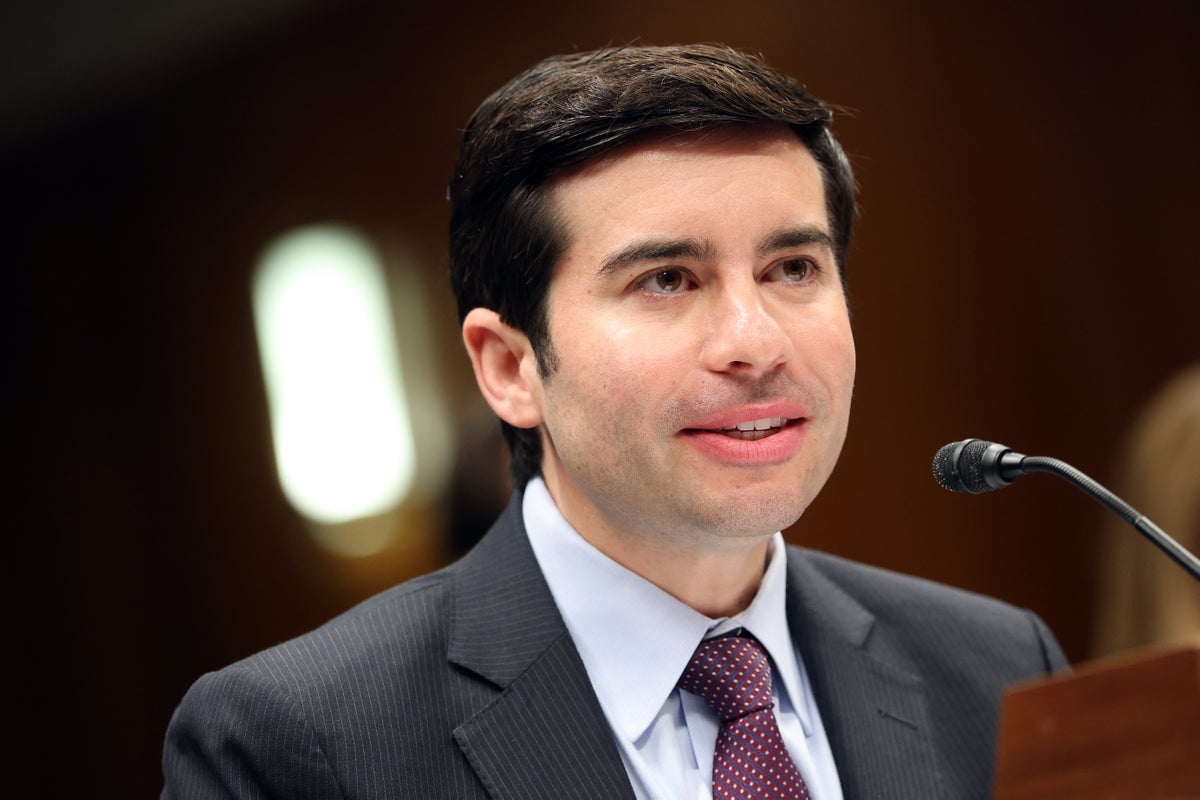
Enter Keith Sonderling.
He was already inside the building, serving as Deputy Secretary and Chief Operating Officer. He is a corporate attorney by trade, a man who spent years at a large Florida law firm counseling employers on how to navigate complex regulations. He is not a fiery populist or a career politician. He is a bureaucrat who treats government like a massive logistics operation. When the top spot opened amid chaos, Donald Trump named him Acting Secretary.
The transformation inside the building was immediate, if quiet. White House sources began whispering that the building felt structured again. People were actually showing up to work without looking over their shoulders. But the real shift lay elsewhere—not in how Sonderling managed the internal staff, but in how he viewed the vast power of the agency he now commanded.
To understand why a change at the Department of Labor matters to someone working a shift in Ohio or running a small business in Texas, you have to understand the sheer scope of its enforcement. The department oversees a fourteen-billion-dollar budget. It controls the rules for overtime, workplace safety, and the trillions of dollars sitting in private retirement funds. If the department falls asleep, people don't get paid what they are owed. If it becomes overly aggressive, small businesses choke on paperwork.
Sonderling had already built a reputation as a conservative regulatory mechanic during Trump's first term, where he managed the Wage and Hour Division. He favored clarity over surprise attacks, creating self-audit programs that let companies fix payroll errors and return millions to workers without protracted legal warfare. He viewed the law as a fixed track, not a weapon to be swung unpredictably.
But as Acting Secretary in the summer of 2026, the quiet attorney showed a different side. He turned his attention to the billions of dollars flowing through state unemployment insurance programs.
On June 17, Sonderling did something unprecedented in the history of the department. He fired off formal letters to fifty-three states and territories, accusing them of allowing rampant waste, fraud, and abuse in their unemployment systems. He didn't just issue a scolding memo. He threatened to completely cut off federal administrative funding—the vital cash flow states use just to keep their unemployment offices running.
"We are officially putting governors on notice," Sonderling announced, taking to cable news to single out large, Democrat-led states like California, New York, and Illinois. He argued that the American taxpayer was being robbed by outdated, leaky state systems that allowed fraudulent claims to slide through unchecked.
Critics immediately pointed out the missing pieces: the Department of Labor hadn't provided concrete, updated data to back up the sudden, aggressive focus on these specific states. To opponents, it looked like a calculated political strike wrapped in the language of fiscal responsibility. To supporters, it was a long-overdue reckoning for state agencies that had grown complacent with federal cash.
What the move proved beyond doubt was that Sonderling was no longer just a temporary caretaker keeping the lights on. He was willing to use every heavy lever of federal power available to him.
Donald Trump watched this performance and liked what he saw. On June 29, 2026, the president made it official, announcing on Truth Social that he would nominate Sonderling to drop the "Acting" title and become the permanent U.S. Secretary of Labor.
The choice reflects a broader strategy in the current administration. Trump has frequently used "acting" officials to bypass the grueling Senate confirmation process, letting loyalists run agencies for months or even years without legislative approval. But Sonderling represents a different breed: an insider who has already been confirmed by the Senate for prior roles, a man who knows exactly which buttons to push to execute a conservative policy shift without causing a massive public outcry.
Consider what happens next. Sonderling’s permanent nomination must still clear the U.S. Senate. The upcoming confirmation hearings will not just be a debate about one man’s resume. They will be a proxy war over the very definition of federal oversight.
One side will look at Sonderling and see a corporate-aligned lawyer who spent a brief stint as the acting head of the Office of Government Ethics and helped dismantle programs at the Institute of Museum and Library Services. They will see an administrator eager to squeeze blue states while easing pressure on major corporations.
The other side will see a steady hand who rescued an essential agency from a humiliating internal scandal, a numbers-driven professional who wants to protect taxpayer dollars from being swallowed by fraudulent state bureaucracies.
Behind the political theater and the cable news arguments, the concrete fortress on Constitution Avenue will keep humining. The sixteen thousand employees will continue processing claims, investigators will keep checking timecards, and the new leader at the top will continue adjusting the valves of American industry.
The machinery of government never actually stops. It just changes drivers.