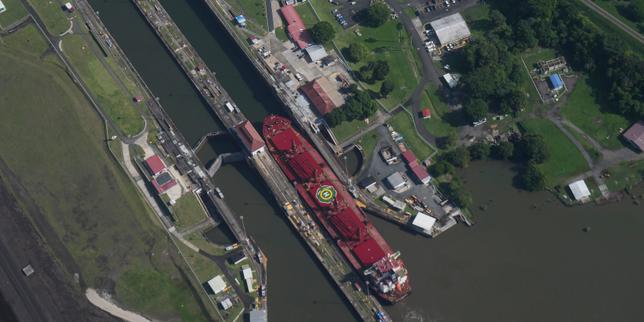
The rain used to fall with a predictable, heavy grace across the Isthmus of Panama. You could set your watch by the tropical downpours that filled Gatun Lake, the vast artificial reservoir that acts as the beating heart of the Panama Canal. Water is the invisible engine of global trade. Every time a massive container ship rises through the locks, millions of gallons of freshwater are pulled from the lake and gravity-fed into the ocean. For a century, this system felt infinite.
It is not infinite. In similar updates, read about: Why Jackson Hole Means Nothing and Kevin Warsh Will Change Nothing.
Picture yourself standing on the bridge of a massive cargo vessel, longer than three football fields, stacked ten stories high with electronics, car parts, and refrigerated containers of fruit meant for supermarket shelves three continents away. You have been at sea for three weeks. Your crew is exhausted. Ahead of you lies the narrow, jagged spine of the Americas. If you go through, you save a week of burning heavy bunker fuel around the tempestuous tip of South America. If you wait, every single day costs tens of thousands of dollars in charter fees, crew wages, and delayed promises.
Now, imagine hearing the dispatcher over the radio. The queue outside the locks stretches for weeks. Scores of ships sit motionless on the blue horizon, baking under a merciless sun, anchored in a giant maritime traffic jam born entirely from a lack of rain. Investopedia has also covered this important topic in great detail.
The El Niño phenomenon had arrived, burning away the clouds and choking the watershed of Central America. Water levels in Gatun Lake dropped to near-historic lows. To keep ships from scraping their keels against the submerged rock and concrete, the Panama Canal Authority had no choice. They had to impose strict draft restrictions. Ships had to shed weight. Cargo was unloaded onto trains, hauled across the isthmus, and reloaded on the other side. Schedules fractured.
And then, someone blinked.
Someone decided that time was worth more than gold, more than oil, more than five million dollars.
In a quiet auction room where desperation meets capitalism, a single shipowner placed a winning bid of 5.3 million dollars. That was just for the privilege of cutting the line. Just for a fast pass through the locks.
To understand the sheer weight of that number, you have to look past the spreadsheets and look at the water itself.
Water is the great unacknowledged partner of globalization. When we buy a sneaker manufactured in Asia or a television assembled across the Pacific, we rarely think about the liquid highway it traveled on. We imagine ships gliding effortlessly over boundless oceans. We forget that those oceans narrow into bottlenecks, and those bottlenecks depend entirely on local weather patterns that are rapidly destabilizing.
When the canal sneezes, supply chains catch a cold. When the rains fail in the tropical rainforests surrounding Gatun Lake, the cost ripples outward, touching the price of coffee, machinery, and imported goods halfway across the globe. The five-million-dollar toll was not merely an extravagant flex by a wealthy shipping conglomerate. It was a flashing red light. It was the market screaming that a critical artery of human commerce was running dry.
For decades, we treated maritime infrastructure as a fixed background feature of the modern world, like the horizon or the tides. We built our entire global economy on the assumption that geography could be conquered permanently by engineering. Dig a ditch through the jungle, separate two continents, and trade flows forever.
The climate does not care about our engineering.
Consider what happens next as the planet warms and weather patterns grow increasingly erratic. The Panama Canal Authority is not sitting idle; they are desperately searching for new water sources, exploring massive engineering projects to dam other rivers, and rationing every drop. Yet, physics remains undefeated. If the rain does not fall, the locks do not fill.
When that ship paid its record-breaking toll to skip the queue, it bought more than a shortcut. It bought a glimpse into our immediate future. It revealed a world where scarcity commands a premium, where the physical limits of the earth are beginning to bite back against the frictionless acceleration of modern trade.
We are entering an era where the luxury of movement can no longer be taken for granted. Every container ship on the horizon carries not just goods, but a silent question about how we will manage a planet that is simultaneously shrinking in space and expanding in friction.
The sun beats down on the locks of Miraflores. The gates open with a low, mechanical groan, heavy with history and saltwater. Inside the chamber, a multi-million-dollar leviathan rises slowly on a diminishing column of freshwater, lifting its cargo toward the other side of the world, while the empty horizon waits for the next drop of rain that may take months to arrive.