The warning issued by Riyadh carried the weight of decades of accumulated tension in global commodity markets. When energy ministers speak of systematic attacks testing the resilience of critical infrastructure, they are not offering mere rhetoric for the evening news wires. They are drawing a line in the sand regarding the physical security of the world's most vital petroleum arteries. For months, drone incursions, localized sabotage attempts, and persistent electronic interference have targeted processing facilities, export terminals, and pumping stations across the Arabian Peninsula. The objective of these operations is rarely total destruction. The strategy relies instead on psychological attrition, forcing operators into a perpetual state of defensive triage while keeping the threat of severe supply disruption constantly alive.
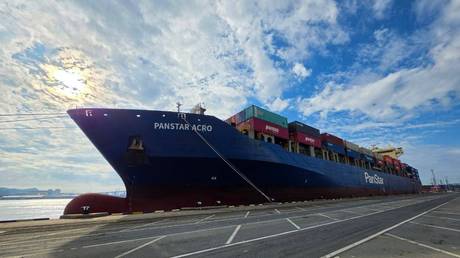
Beneath the surface of official communiques lies a much harsher operational reality. Protecting vast geographic expanses of oil and gas assets requires an economic commitment that defies easy calculation. A refinery sprawling across hundreds of square miles cannot be sealed inside a concrete bunker. It remains inherently vulnerable to low-cost aerial threats that bypass traditional air defense batteries designed for supersonic jets or ballistic missiles. When an unmanned aerial vehicle carrying a modest explosive charge manages to punch a hole in a storage tank or disrupt a fractionation unit, the financial fallout extends far beyond the cost of steel and welding rods. Insurance premiums spike across the Persian Gulf. Shipping lanes face immediate risk assessments that add millions of dollars in operational overhead to every supertanker navigating the Strait of Hormuz.
Global markets have developed an alarming habit of treating these recurring security breaches as background noise until a major node goes offline entirely. This complacency ignores the structural fragility of modern energy logistics. Refining capacity is not infinitely fungible. When a key processing hub like Abqaiq faces sustained threats, the world loses a massive slice of its daily stabilization capacity almost overnight. Spare capacity held by producers acts as a shock absorber, but that buffer is slimmer than most consumers realize. Every successful strike on a pipeline junction or a marine loading arm eats away at the margin of safety, turning minor regional disputes into potential catalysts for global price shocks.
Industry veterans who have monitored the region since the Gulf War recognize the shifting nature of the threat matrix. Traditional state-on-state deterrence models assume rational actors calculating the risk of massive retaliation. As asymmetric warfare matures, attribution becomes murkier and deniability becomes easier to maintain. Proxy networks and non-state actors operating with advanced drone technology change the calculus completely. A relatively inexpensive flying munition launched from a remote desert wadi can paralyze infrastructure worth billions of dollars, creating an asymmetric cost ratio that heavily favors the attacker. Riyadh’s recent vows to respond forcefully are driven by the realization that defensive measures alone cannot stop a determined adversary equipped with commercial off-the-shelf technology.
The economic fallout of these attacks ripples outward into financial capitals thousands of miles away from the oilfields. Energy security is the invisible floor beneath global trade stability. When that floor shakes, capital flees risk assets, manufacturing costs climb, and inflationary pressures compound in economies already struggling with structural debt. Central bankers watching core inflation metrics rarely factor localized sabotage into their projections until the damage shows up at the fuel pump. Yet the correlation remains direct and unforgiving. Physical vulnerabilities in Middle Eastern supply chains translate directly into higher manufacturing costs in Frankfurt, slower logistics turnover in Chicago, and tighter household budgets from Tokyo to London.
Fixing this vulnerability demands an evolution in security architecture that goes far beyond buying more surface-to-air missiles. Operators are accelerating investments in multilayered electronic jamming systems, acoustic sensors, and rapid-repair modular infrastructure designed to get damaged facilities back online in hours rather than weeks. Redundancy is no longer viewed as an expensive luxury item on corporate balance sheets. It is the core requirement for survival in an era where infrastructure is weaponized as a tool of economic warfare. The era of cheap, uninterrupted energy transport protected by routine naval patrols has closed for good. The new baseline is continuous vigilance, soaring security overhead, and the constant, unnerving hum of drones testing the perimeter.